
Several states have free-standing K–12 social-emotional learning competencies, and many states have Pre-K SEL competencies on the books. Most of those frameworks lean on the CASEL five competencies as a starting structure, with a growing number of states layering on Transformative SEL for a more identity and equity focused approach. If your state isn't one of the 27, you'll likely find Pre-K guidance and informal K–12 resources instead. Skip to the state examples and search steps below to find yours.
TL;DR:
- Most states have adopted standalone K-12 SEL competencies based on the CASEL framework, but only 27 states have formal, mandatory standards.
- Many states provide supplementary guidance, tools, and growth indicators, which are crucial for effective classroom implementation beyond policy adoption.
- States with the clearest success integrate standards with structural supports like growth markers or grade-band indicators, especially for adult and student competencies.
- Turning standards into practice requires systemic strategies, including building educator capacity, crosswalking standards with academic content, and scheduling ongoing professional development.
- Resources like Oregon's Transformative SEL framework and district-specific guides can serve as models for effective, equity-focused implementation across different contexts.
Table of Contents
- What Do Current SEL Standards by State Look Like Nationally?
- How Do State SEL Frameworks Differ From Each Other?
- How Do You Find Your State's Official SEL Standards?
- What Can You Learn From Oregon, California, DC, and New York?
- How Do You Turn SEL Standards Into Classroom Practice?
- Where Can You Find SEL Implementation Resources and Templates?
- Icon Literary's Take on Standards, Stories, and Classroom Reality
- Classroom Materials That Complement State SEL Standards
- Primary Sources and State Documents to Consult
- Sources
- FAQ
What Do Current SEL Standards by State Look Like Nationally?
The policy picture has shifted fast. A 2022 scan from the Penn State Prevention Research Center, conducted in partnership with CASEL, found that 27 states had adopted standalone K-12 SEL competencies, while every state in the country had some form of Pre-K SEL competencies already in place. That gap between early childhood and K-12 tells you where the policy momentum has been and where it's still catching up.

The same scan found something arguably more useful for practitioners: 44 states now offer state-specific guidance, tools, or implementation resources for SEL.
Quick Stat: Many states have free-standing K-12 SEL competencies. Numerous states provide dedicated implementation guidance, tools, or resources beyond the standards themselves, according to the Penn State/CASEL state scan.
A few trends worth flagging for anyone tracking state SEL policies:
- More states are publishing implementation roadmaps alongside standards documents, not just standalone competency lists.
- Growth indicators and grade-band benchmarks are becoming standard features rather than optional add-ons.
- "Portrait of a Graduate" initiatives are increasingly used to connect SEL language to career-readiness goals, giving SEL a foothold in workforce development conversations rather than treating it as a separate initiative.
- Dedicated state SEL websites, once rare, are now common enough that most departments of education have a specific page or hub for it.
None of this means implementation is even across the map. A state having 44 implementation resources listed doesn't guarantee a district in that state has trained staff or classroom time allocated for SEL. The standards exist; the fidelity of use still varies enormously by district budget and leadership priority. That gap between policy adoption and classroom reality is the single biggest thing to understand before you go state hunting.
How Do State SEL Frameworks Differ From Each Other?
Most states build their standards around the CASEL five competencies: self-awareness, self-management, social awareness, relationship skills, and responsible decision-making. That's the common core you'll recognize almost everywhere, whether the state calls its document "standards," "competencies," or "benchmarks."
Where states genuinely diverge is in how they organize and present that core. Some frameworks are single-page competency lists with no elaboration. Others build out full architectures with grade-band indicators, growth markers showing developmental progression, and separate benchmarks for adult (educator) SEL competencies alongside student-facing ones.
The bigger structural divide right now is the move toward Transformative SEL, often shortened to T-SEL. Instead of treating SEL as a set of internal skills a student develops in isolation, T-SEL frameworks add identity, agency, belonging, collaborative problem solving, and curiosity as explicit domains. The UMass Boston Center for Social Development and Education describes this as reframing SEL around equity and social justice, not just individual emotional regulation.
What that means for classroom practice:
- A traditional SEL lesson might ask a student to name an emotion and a coping strategy.
- A Transformative SEL lesson might ask the same student to examine how their identity shapes their experience of a classroom conflict, then problem-solve collaboratively with peers who see it differently.
- T-SEL standards documents typically include separate sections for "conditions for learning and thriving," which describe the environment adults need to build, not just the skills students need to develop.
Pro Tip: When you're comparing your state's framework against a neighboring state's, check whether it includes adult competencies. States that spell out educator-facing SEL benchmarks alongside student standards tend to have stronger professional development infrastructure behind them, which matters more for implementation success than the polish of the student document itself.
For curriculum leaders, the practical takeaway is this: don't assume "SEL standards" means the same document type everywhere. A one-page competency list and a 40-page T-SEL framework with growth indicators require completely different implementation plans, timelines, and staff training.
How Do You Find Your State's Official SEL Standards?
Locating the actual governing document, not a summary or a vendor's interpretation of it, takes a specific search approach. Generic searches for "SEL standards" often surface curriculum vendors before they surface your state's own Department of Education.
Follow this sequence:
- Search "[your state] Department of Education social emotional learning standards" and add "PDF" to the query to surface primary documents over blog summaries.
- Look specifically for a State Board of Education adoption notice or resolution. This tells you whether the standards are mandatory, recommended, or still in draft.
- Download the implementation guide separately from the standards document. Many states publish these as two files, and the guide is where grade-band mapping and growth indicators usually live.
- Check the document's publication or revision date. SEL frameworks are being updated frequently right now, so a document from 2019 may already be superseded.
- Find the contact page for your state's SEL or student support office. Most departments now have a named contact, not just a general inbox.
Before you build anything on top of what you find, run this verification checklist:
- Confirm the adoption date and whether the State Board formally approved it or just published it as guidance.
- Check whether grade bands are explicit (K to 2, 3 to 5, 6 to 8, 9 to 12) or left vague.
- Note whether the framework distinguishes "required" from "recommended" language. Many states, including California, position their SEL guidance as voluntary.
- Verify there's a named office or contact point for questions, not just a static document.
Once you've confirmed the document is current, request a crosswalk between the SEL standards and your existing academic standards if one doesn't already exist publicly. Then form a small implementation team, ideally with a counselor or social worker included, before scheduling professional learning. Standards without a team behind them tend to sit in a drawer.
What Can You Learn From Oregon, California, DC, and New York?
Four states illustrate four distinct approaches to SEL policy, and each offers something worth borrowing regardless of where you work.
Oregon built one of the most complete Transformative SEL frameworks in the country. The Oregon Department of Education's T-SEL standards, formally adopted by the State Board, organize around four components: guiding principles, conditions for learning and thriving, adult transformative SEL, and student transformative SEL. Each component comes with practices and growth indicators, so a teacher or administrator has a concrete way to measure progress rather than just a values statement.
California took a different route. The California Department of Education's T-SEL competencies are explicitly voluntary guidance, framed around "Conditions for Thriving" rather than compliance requirements. This matters if you work in a California district: nothing here is mandated from Sacramento, which puts the implementation decision squarely on local boards. The upside is flexibility for districts with equity-focused priorities already underway; the downside is uneven adoption statewide.
District of Columbia published something rarer: K-Adult SEL standards. The OSSE standards document organizes competencies by the CASEL five areas but adds explicit grade-band indicators from kindergarten through adulthood, with implementation beginning in the 2024 to 2025 school year. Including adult indicators alongside student ones is still uncommon nationally, and it directly supports the point that educator capacity matters as much as student-facing content.
New York has published SEL benchmarks through its state education department, with resources continuing to develop rather than sitting as a single finalized document. If you're in New York, treat the state site as a living resource and check back periodically rather than assuming the current version is final.
Quick Stat: Oregon's T-SEL framework and DC's K-Adult standards both include explicit growth indicators, a feature only a minority of state SEL documents currently build in.
What ties these four together is worth noticing: the states with the clearest implementation success stories are the ones that paired standards with a structural companion, whether that's Oregon's growth indicators, DC's grade-band mapping, or California's equity-focused conditions framework. A competency list alone rarely moves classroom practice on its own.
How Do You Turn SEL Standards Into Classroom Practice?
Adopting standards is the easy part. CASEL's guidance on systemic implementation is blunt about this: SEL works best when it's integrated across school climate, instruction, and policy, not treated as a 20-minute lesson bolted onto the schedule once a week.
A systemic approach means asking different questions than a curriculum adoption process usually asks. Instead of "which SEL program should we buy," the better starting questions are: How does our discipline policy align with what we're teaching about self-management? Does our staff have the capacity to model these skills, or are we only asking students to demonstrate them?
Building adult capacity is where most implementation plans fall short. Educator SEL benchmarks, coaching cycles, and measurable professional development indicators matter as much as the student-facing standards. A district that adopts a strong K-12 framework but skips educator training is building on a foundation that won't hold. Providers like EmpowerED offer professional development specifically built around SEL strategies and trauma-informed practice, which can fill that gap for districts without in-house capacity to build training from scratch.
Growth indicators, and frameworks like Webb's Depth of Knowledge, give you a way to make SEL progression assessable rather than aspirational. Instead of a vague goal like "students will demonstrate empathy," a growth-indicator approach breaks that into observable, grade-specific markers a teacher can actually track over a semester. Michigan Virtual's work on Portrait of a Graduate frameworks makes a similar point: standards without measurable indicators tend to stay aspirational and hard to act on.
A few practical moves that make the difference between standards on paper and standards in practice:
- Build a crosswalk between your SEL standards and your state's academic content standards so teachers see the overlap instead of treating SEL as extra work.
- Where your state or district has adopted a Portrait of a Graduate, map SEL competencies directly onto its exit skills. At least 20 states have formally adopted some version of this vision, and CASEL's own research notes that these portraits function best when translated into grade-level benchmarks rather than left as an aspirational statement.
- Schedule recurring, not one-time, professional development. A single training day rarely shifts adult practice on its own.
Pro Tip: If your district is short on time to build classroom materials from scratch, short activities aligned to CASEL competencies can bridge the gap between the standards document and daily instruction without requiring a full curriculum overhaul. A set of CASEL-aligned activities that run under 15 minutes is a reasonable place to start.
Where Can You Find SEL Implementation Resources and Templates?
Beyond your state's own documents, a handful of sources cover most of what you'll need to plan an implementation.
- CASEL's state scan and program guide for a national view of which states have adopted what, updated periodically as new scans are published.
- Your state Department of Education's SEL page, which is now the standard hub for adoption notices, PDFs, and contact information in most states.
- Oregon's T-SEL PDF, useful as a model for growth-indicator structure even if you're not in Oregon.
- California's T-SEL resource page, useful for equity-focused implementation language.
- DC's OSSE standards PDF, useful as a K-Adult model.
For classroom-level materials, a book selection guide for SEL titles and a librarian-focused SEL book list organized by grade band can help you build a collection that maps to your state's grade-band indicators rather than guessing at age-appropriateness.
Icon Literary's Take on Standards, Stories, and Classroom Reality
Standards documents tell you what a student should be able to do. They rarely tell you what to actually put in front of a six-year-old on a Tuesday morning. Icon Literary curates SEL-oriented books and story materials for ages 3 to 8 that map naturally to the CASEL competencies: self-awareness through character emotion, relationship skills through group story conflict, and so on. A well-chosen story does quietly what a worksheet does loudly. Teachers translating state benchmarks into daily practice often need fewer new programs and more good material they can drop into an existing routine, including game-based activities that reinforce the same six core skills without feeling like an add-on lesson.
— Derek Amarillas
Classroom Materials That Complement State SEL Standards
Icon Literary is the alternative to a generic worksheet packet for teachers trying to make SEL standards feel like a real classroom moment instead of a compliance checkbox. Duckwave Decks and Socko's Universe are story-driven products built for ages 3 to 8, designed to give young readers emotionally resonant characters rather than didactic lessons, which is exactly the gap standards documents leave open.
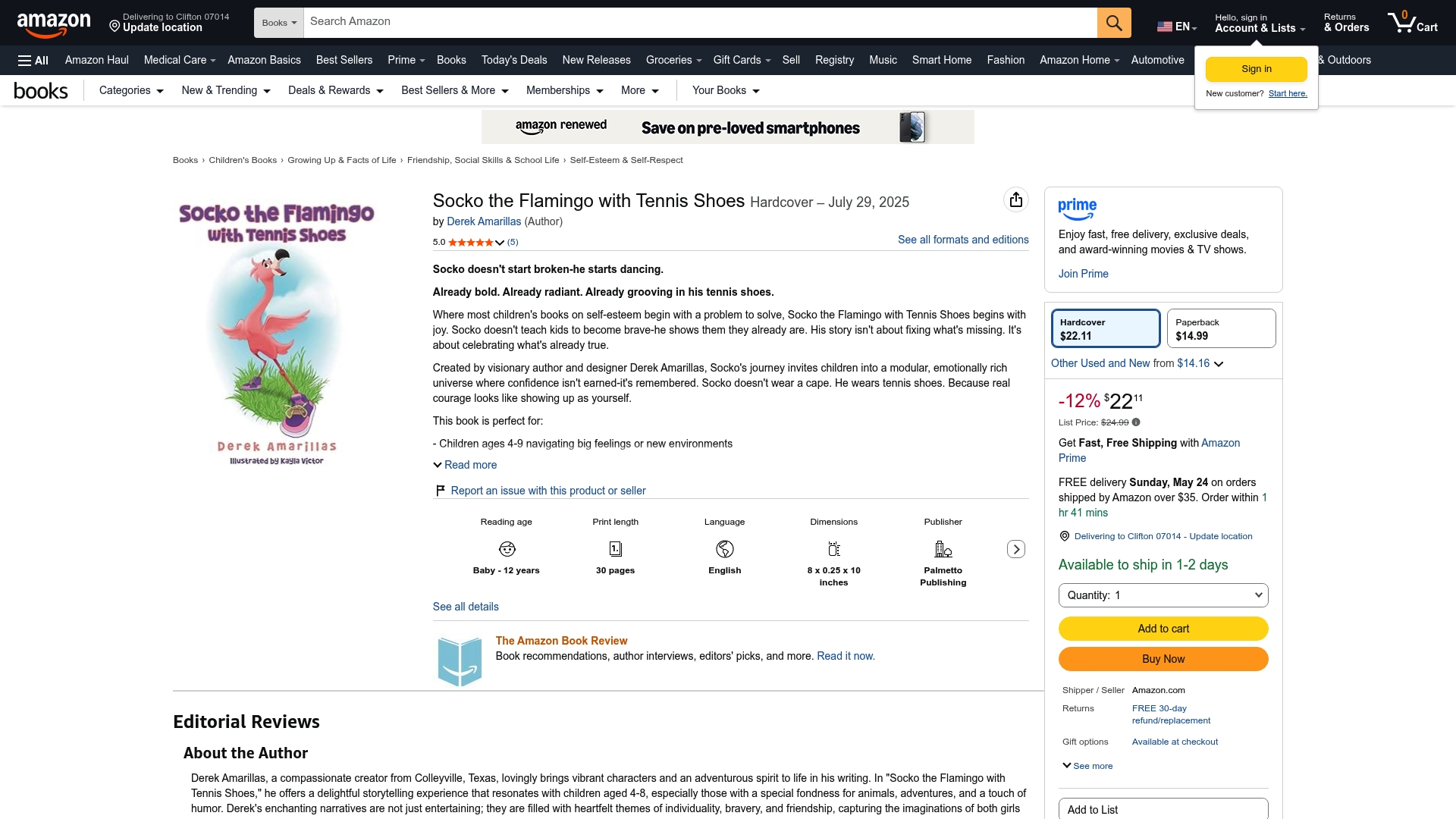
Duckwave Decks work as a self-awareness and relationship-skills warm-up: short, character-driven prompts that fit naturally into a morning meeting or small-group rotation; pricing details are available on the Icon Literary website. Socko's Universe leans into social awareness and responsible decision-making through its own cast of characters and story world, giving teachers a second entry point without repeating the same visual style twice. Neither product claims to replace your state's standards or implementation plan. They're a supplement, the kind of material that makes a growth indicator like "identifies a peer's perspective in conflict" actually land with a room full of first graders.
If you're building out your classroom library for this school year, start with Duckwave Decks or browse the full Icon Literary catalog to see which set fits your grade band best.
Primary Sources and State Documents to Consult
- Penn State/CASEL state scan brief
- Oregon T-SEL standards PDF
- California T-SEL competencies
- DC OSSE K-Adult SEL standards PDF
- CASEL state policy resources
Sources
- Penn State Prevention Research Center — Evidence-based SEL issue brief (PSU/CASEL state scan summary)
- Oregon Department of Education — Oregon’s Transformative Social and Emotional Learning Framework & Standards (PDF)
- OSSE — District of Columbia K–Adult SEL Standards (PDF)
- California Department of Education — Transformative Social and Emotional Learning (T-SEL) Competencies
FAQ
How Many States Have SEL Standards?
All 50 states have Pre-K social-emotional learning competencies, but only 27 states have adopted free-standing K-12 competencies, according to the Penn State/CASEL state scan. An additional 44 states offer state-specific implementation guidance or tools even where formal K-12 standards haven't been formally adopted.
Does California Have SEL Standards?
California has published Transformative SEL competencies and "Conditions for Thriving" through its Department of Education, but the guidance is voluntary rather than mandated statewide. Districts decide locally how much to adopt and how to implement it.
What Are the Five Main Areas of SEL?
The five core areas are self-awareness, self-management, social awareness, relationship skills, and responsible decision-making, developed by CASEL and used as the base framework in most state SEL documents. Many states now add a Transformative SEL layer on top, including identity, agency, and belonging, without dropping these five core areas.
What Are the New York State SEL Benchmarks?
New York's SEL benchmarks are published and maintained through the state education department's resources, with the framework continuing to evolve rather than existing as one final fixed document. Educators should check the state site periodically, since New York, like many states, updates its guidance as implementation feedback comes in.