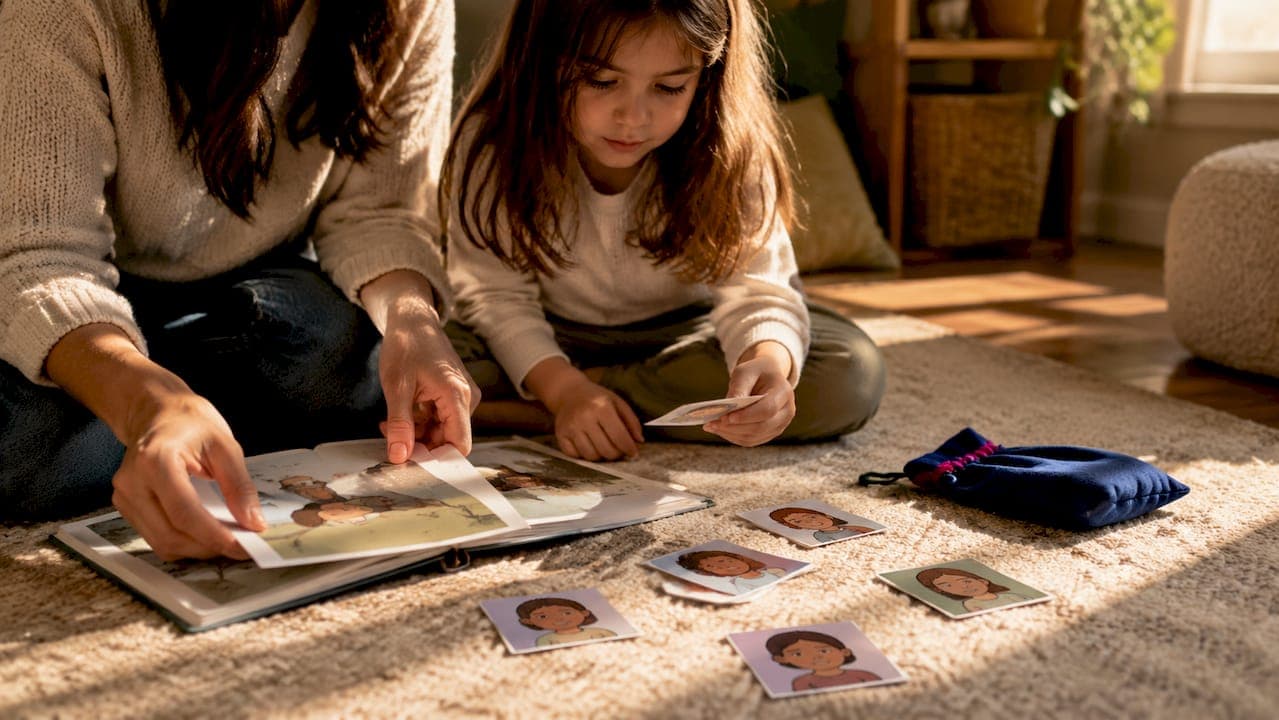
Social stories for kids, in the sense that matters to your shopping list, are SEL picture books, card decks, and activity kits built for children ages 3 to 8 that teach emotional skills through original characters. Start with a repeatable read-aloud picture book, then add one hands-on kit or card deck for practice. Research on structured, guided reading backs this pairing: an eight-week, bi-weekly picture-book intervention produced measurably better emotion regulation than passive story time alone.
TL;DR:
- Repetition and guided discussion over at least eight weeks significantly improve emotional regulation and coping strategies than passive story time alone.
- Choosing products aligned with a specific emotional skill, based on the CASEL framework, maximizes their effectiveness for children ages 3 to 8.
- The three-read method, focusing on story, feelings, and connection, is essential for translating picture books into lasting social-emotional learning tools.
- Customizing stories with relevant prompts and matching formats to children’s needs enhances engagement and skill development.
- Repeated use of well-designed books or kits over time, rather than single exposures, produces measurable improvements in emotional literacy.
Table of Contents
- What Formats Count as Social Stories for Kids?
- Does Reading Picture Books Actually Build Emotional Skills?
- How Do You Choose the Right SEL Book or Kit?
- What Is the Three-Read Method for Social Stories?
- How Do You Customize a Social Story for a Specific Child?
- What Are the Biggest Challenges With Social Stories?
- How Should Caregivers and Educators Work Together on This?
- Can You Write Your Own Social Story at Home?
- Why Icon Literary Designs Social Stories Differently
- Where to Find Icon Literary's Books, Kits, and Card Decks
- Sources
What Formats Count as Social Stories for Kids?
This guide covers purchasable SEL products, not the clinical "Social Stories" method therapists write as individualized scripts for autistic children. That is a different tool for a different job. Here, "social stories for kids" means picture books, board books, activity kits, themed card decks, printables, and digital downloads designed to build emotional vocabulary and social skills in general early childhood settings.
Board books suit toddlers and children with shorter attention spans, since they survive chewing and repeat handling. Picture books work best for ages 3 to 8, especially when paired with discussion. Activity kits and card decks extend the book into hands-on practice, which matters more than it sounds, since passive listening rarely changes behavior on its own. Parents want something for the bedtime shelf. Teachers want something durable for twenty small hands a day. Librarians want titles that hold up on a rotating shelf. Each buyer is solving a slightly different problem with the same core product.
Does Reading Picture Books Actually Build Emotional Skills?
Yes, and the evidence is more specific than "reading is good for kids." A 2025 study of 60 preschoolers found that an eight-week program of bi-weekly, structured picture-book sessions produced significantly greater gains in emotion regulation and coping-strategy use than a passive-exposure control group got. The children weren't just listening. Adults guided each session with discussion and follow-up activity, which appears to be the mechanism that matters.
That finding lines up with earlier work on shared reading. A picture-book approach study published in the Canadian Journal found that reading which deliberately highlights characters' emotions helps children build early emotion comprehension, and it works without any specialized training for the adult doing the reading. Edutopia's classroom guidance and library-practitioner sources reach a similar conclusion: repeated, discussed reads outperform one-and-done story time for building lasting emotional vocabulary.
Here's the number that should change how you shop: children in that structured program showed measurably stronger use of positive coping strategies than the control group by week eight, not week one. Emotional literacy from picture books is a practice effect, not a single-exposure effect.
The actionable takeaway is simple. Buy for repetition, not novelty. Reading the same well-designed book multiple times with discussion is more effective than reading many different books only once each.
How Do You Choose the Right SEL Book or Kit?
Match the product to a specific skill before you match it to a pretty cover. The CASEL framework organizes social-emotional learning into five competencies: self-awareness, self-management, social awareness, relationship skills, and responsible decision-making. A book about sharing toys builds relationship skills. A book about a character calming down after a tantrum builds self-management. Educator guidance on mapping picture books to CASEL competencies recommends picking the competency you want to grow first, then finding titles that center it rather than merely mention it.
Format and durability decisions come next:
- Board books for ages 2 to 4 or any setting with heavy handling.
- Picture books for ages 3 to 8, ideally with library-grade binding if the book is headed for a classroom.
- Activity kits that include reproducible printables so a classroom doesn't burn through consumables in one semester.
- Card decks for quick, repeatable practice sessions that don't require a full sit-down read.
- Digital downloads for families who want flexibility or need multiple copies at low cost.
Before buying, check for sample spreads, a teacher's guide or activity notes, a recommended age range, and genuine diversity in the cast of characters rather than a single token inclusion. Practitioners recommend leaning on reviewed collections like curated SEL selection guidance from librarians and educators rather than guessing from cover art alone. For classroom budgets, bulk or multi-pack pricing on kits often beats buying five unrelated single titles.
Pro Tip: If you're buying for a classroom, borrow one copy from the library first and test it in a real read-aloud before committing to a bulk order. A book that reads beautifully alone can fall flat with 20 fidgety six-year-olds.
When money is tight, borrowing from a library still works for most families, but buy when you want a book read dozens of times, since library copies rotate out and kits with reusable pieces get expensive to keep re-checking out.
What Is the Three-Read Method for Social Stories?
The single most effective routine for turning a picture book into an SEL tool is the staged three-read approach, and it takes no special training to run.
- First read: for the story. Just enjoy it. Don't stop to quiz. Let the child follow the plot without interruption, since interrupting the first read to explain emotions actually reduces engagement compared to letting the story land naturally.
- Second read: for the feelings. Now pause at key moments and ask, "How do you think she feels right now?" or "What does his face look like?" This is where emotional vocabulary gets built.
- Third read: for connection. Ask, "Has that ever happened to you?" or "What would you do?" This read moves the story from the book to the child's own experience, which is the step that actually changes behavior.
The staging matters because it frees children from tracking plot on reads two and three, so they can focus fully on emotional language and self-reflection, according to the structured picture-book intervention research. Skipping straight to "how does she feel" on the first read tends to backfire.
Extension activities turn a good read into a lasting habit. Try emotion-drawing after the third read, a short puppet reenactment of the story's conflict, or a simple "feelings wall" where kids post a face that matches their mood that day. Requiring an actual output, like a drawing or a two-line script, changes strategy use more reliably than discussion alone.
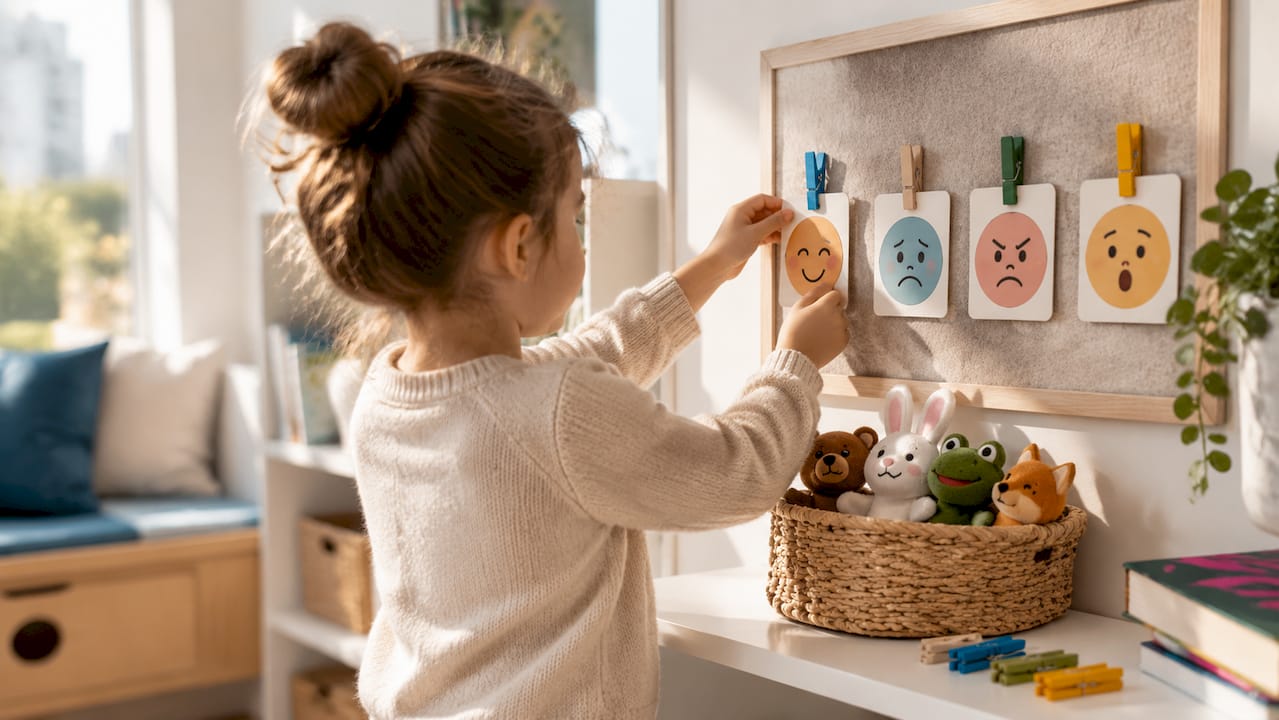
Aim for short, frequent practice rather than long infrequent lessons. Three short sessions a week beats one long monthly unit. One-on-one works well at home; small groups of three to four work best in a classroom circle, since it keeps every child talking. For more structured group formats, see how Icon Literary's guide to running an SEL book club breaks the routine into a repeatable weekly rhythm.
Pro Tip: Keep a small "feelings basket" of four or five trusted titles by the couch or in a calm-down corner. Reaching for a familiar book during an actual meltdown works better than introducing something new in the moment.
How Do You Customize a Social Story for a Specific Child?
A book about sharing toys doesn't automatically help a child who's struggling with a new sibling, a classroom transition, or a scary dentist visit. Customization starts with matching the story's core conflict to the child's actual situation, not just its general theme.
Swap the discussion prompts first, before you swap the book. If a story is about a character feeling left out at recess, and your child is actually struggling with saying goodbye at drop off, reframe the third-read question: "Remember how she felt when her friends ran off without her? Does that feel like mornings when I leave for work?" The book stays the same. The bridge to the child's life changes.
For younger or more literal thinkers, name the character's feeling explicitly rather than asking open questions. For older children in the 6 to 8 range, ask them to predict what the character will do next before turning the page, which builds problem-solving alongside emotional vocabulary.
Card decks and printable activity kits are easier to customize than bound books, since you can pull just the cards relevant to the situation at hand, whether that's a new sibling, a move, or a first day at school. Keep a running note of which specific prompts landed with a specific child. What works for a shy five-year-old rarely works word-for-word for an outgoing seven-year-old, even with the identical book.
What Are the Biggest Challenges With Social Stories?
The most common failure isn't a bad book. It's a book read once and shelved. Emotional literacy gains in the research came from repeated, guided sessions over eight weeks, not a single bedtime story. If you buy one title and never revisit it, expect little measurable change.
A second challenge is picking a book that mentions a feeling without actually centering it. A story where a character briefly feels sad on one page, then moves on to an unrelated adventure, gives you little to discuss. Check sample pages before buying to confirm the emotional arc runs through the whole story, not just a passing line.
Attention span is a real limiter for children under 4, and long picture books can lose them before the third read even starts. Shorter board books or card-based formats often work better for that age group than a dense 32-page picture book.
Classrooms face a durability problem too. Paperback picture books don't survive a full school year of daily handling by 20 children. Library binding, board formats, or kits with laminated cards solve this, though they cost more upfront.
Finally, one book rarely fits every child's situation. A title about sharing might miss a child dealing with a parent's divorce entirely. Building a small rotating collection, rather than betting everything on one bestseller, solves this more reliably than searching for a single perfect book.
How Should Caregivers and Educators Work Together on This?
Consistency between home and classroom is what makes emotional vocabulary stick. If a teacher introduces the phrase "big feelings" during a classroom read, and a parent uses the same phrase during a meltdown at home that evening, the child gets reinforcement instead of two disconnected experiences.
Start with a short conversation, not a formal meeting. Teachers can send home the specific book or card deck used that week with a one-line note: "We talked about feeling left out today. Ask her how the fox in the story felt." Parents can do the same in reverse, letting a teacher know a specific event at home, like a new sibling or a move, so the classroom read-aloud rotation can include a relevant title that week.
Librarians play a quieter but real role here too. A branch that stocks a rotating SEL shelf and mentions it during storytime gives both parents and teachers a shared, low-cost resource to pull from. Community storytime programs in particular give children practice discussing feelings in a group setting that neither home nor classroom alone provides, an angle covered in more depth in Icon Literary's piece on community storytime benefits.
The goal isn't a formal shared curriculum. It's making sure the same three or four emotional-vocabulary words show up in both settings during the same week.
Can You Write Your Own Social Story at Home?
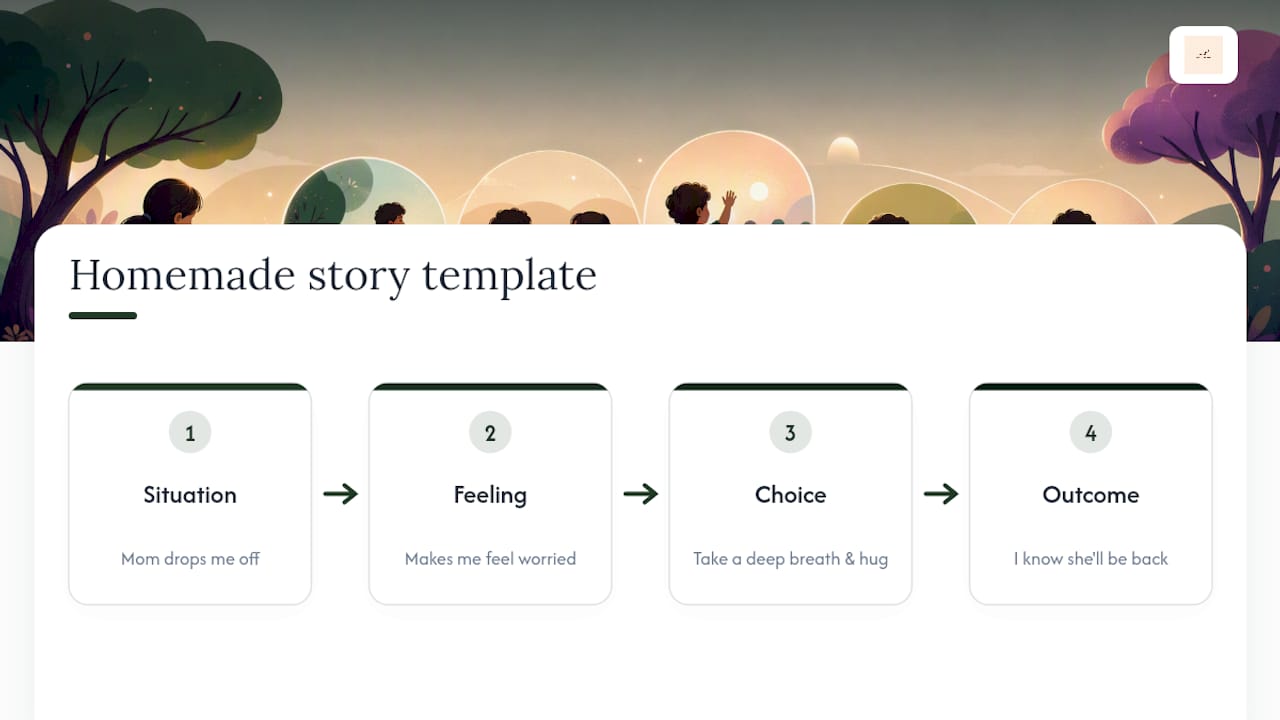
You don't need a publishing budget to build a usable one. A simple homemade template runs four parts: the situation, the feeling, the choice, and the outcome.
Start with the situation in one plain sentence: "Every morning, Mom drops me off at school." Follow with the feeling, named directly: "Sometimes that makes me feel worried." Then the choice: "I can take a deep breath and give Mom one hug goodbye." Finally, the outcome: "Then I know she'll be back, and I can go play with my friends."
Illustrate it with a few of your child's own drawings, or print a couple of photos of the actual classroom and teacher. Keep it to one page per idea. Read it the same staged way you'd read a purchased book: once for the story, once for the feeling, once for the connection to real life.
Homemade stories work best for one-off, highly specific situations, like a first haircut or a new pet. Purchased picture books and kits still do more for broad, recurring skills like sharing or patience, since professionally illustrated stories with a well-built narrative arc tend to hold a child's attention across many repeat reads better than a quick home-drawn page does.
Why Icon Literary Designs Social Stories Differently
The studio builds its picture books and activity products around a simple bet: kids remember stories with real characters and real stakes better than stories built to check a box. That shows up in how the studio maps its narrative worlds to specific CASEL competencies rather than vague good-behavior messaging, and in how its collectible card decks and activity kits are built for repeated use, not a single read.
Good SEL design isn't about slapping a moral onto a cute animal. It's about giving a child a character whose feelings are worth returning to on the second and third read. That's the standard this studio designs toward, whether the product ends up on a classroom shelf or a bedtime table at home.
— Derek Amarillas
Where to Find Icon Literary's Books, Kits, and Card Decks
The lineup includes picture books built around original characters, activity kits with reproducible printables for classroom use, and themed collectible card decks designed for the kind of repeated, quick practice sessions this guide recommends.
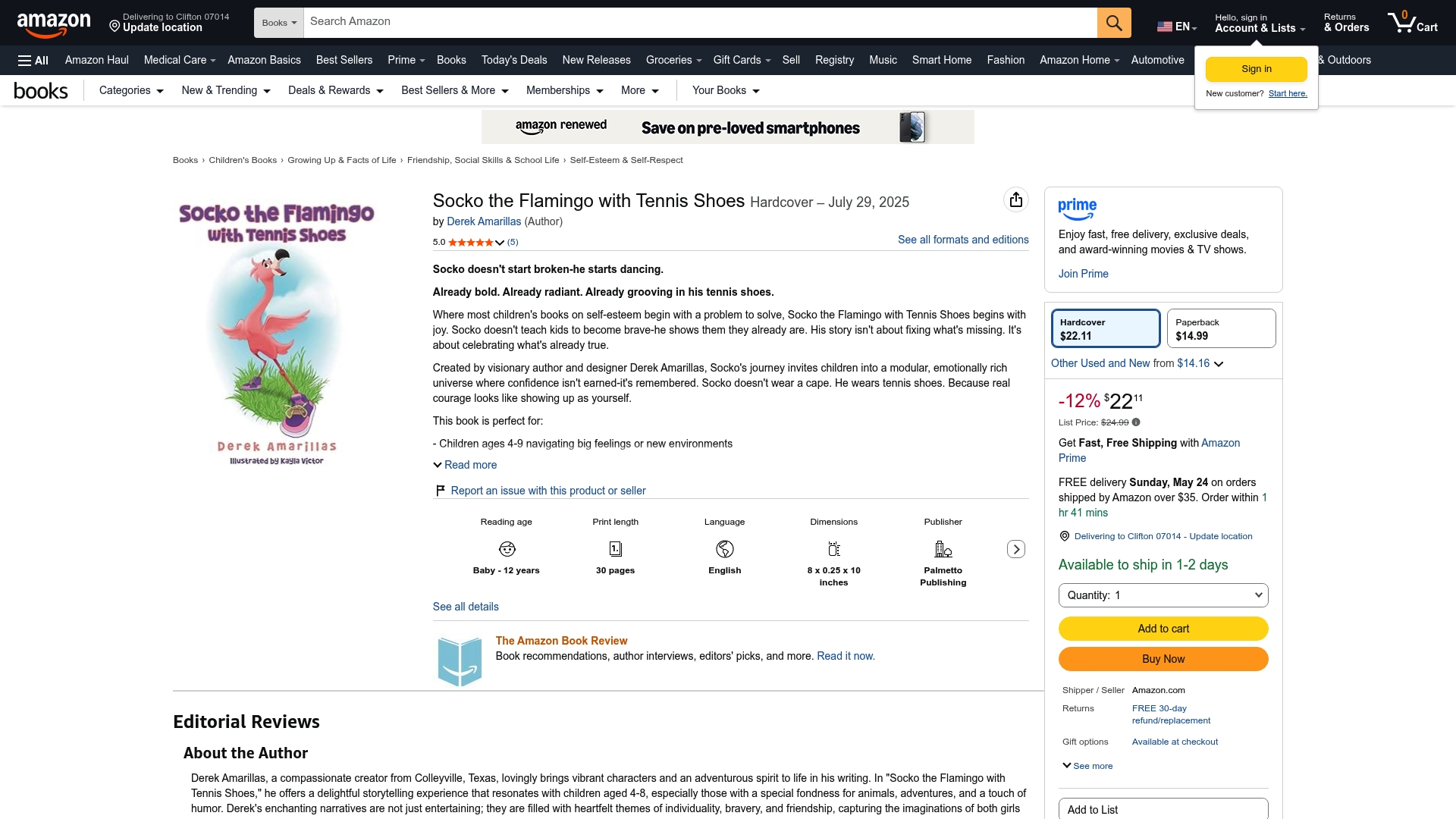
The advantage here isn't just another SEL title on a crowded shelf. The studio designs its worlds to be revisited, so the same characters that anchor a picture book also show up in a card deck or printable kit, giving you a built-in extension activity instead of a separate purchase to hunt down. If you're also looking for language-diverse or multilingual options to round out a home or classroom shelf, Sol Book Box's curated subscription is a solid complement for Spanish-language titles.
Browse the full catalog and preview sample spreads at the Icon Literary storefront to find the right starting book, kit, or card deck for your shelf.
Sources
- Reshaping the Ability–Strategy Link in Emotion Regulation: The Role of a Structured Picture-Book Intervention for Preschoolers
- Contributing to Children’s Early Comprehension of Emotions: A Picture Book Approach
- Picture books and emotional learning | Edutopia
- Practitioner recommendations on curated and reviewed SEL collections