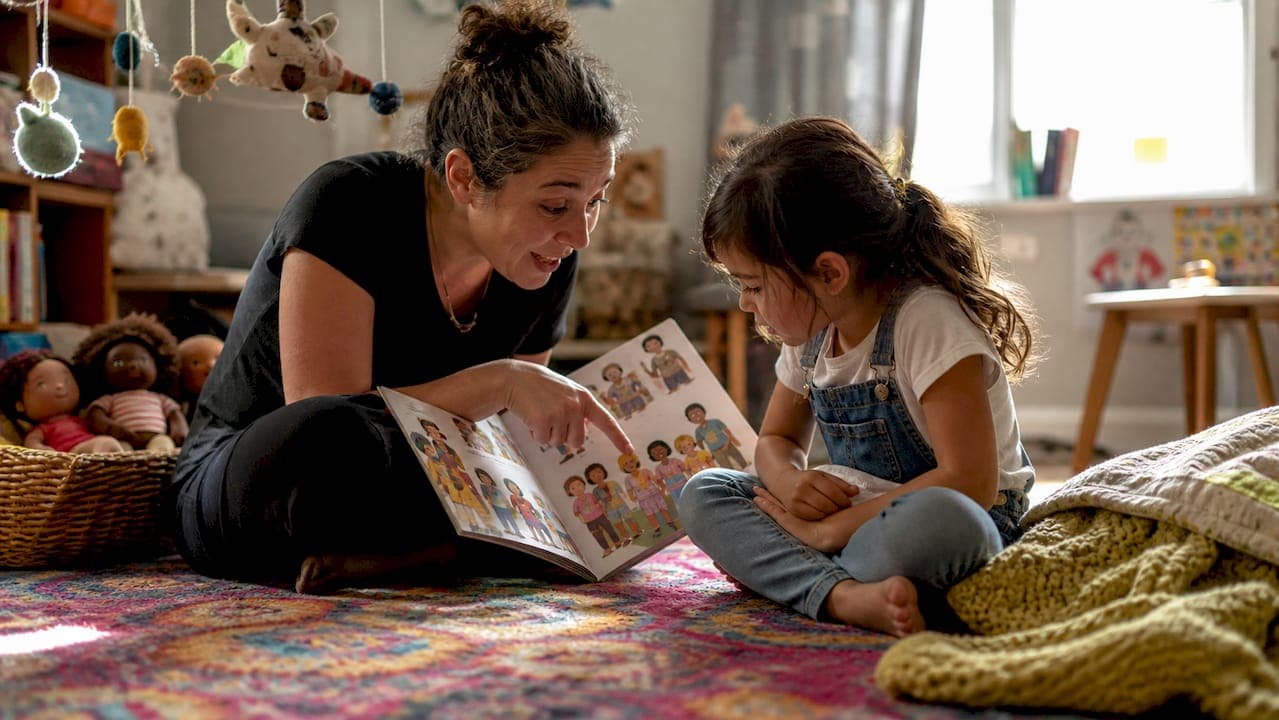
Intersectionality means that each person carries more than one identity at once, and those identities shape how they move through the world together, not separately. A child might be Black, a girl, and a wheelchair user all at the same time, and each of those things affects her experience in ways that overlap and interact. That's the core idea, and it's one children's books are uniquely positioned to show. For caregivers ready to start, Icon Literary offers picture books and SEL activity kits built specifically for ages 3–8 that put intersectional stories into children's hands in a format designed for real conversation.
- What intersectionality means for kids: More than one identity at once, and those identities work together.
- Why books help: Stories let children see themselves and others in layered, honest ways.
- Recommended starting point: Icon Literary's picture books and paired activity kits, designed for ages 3–8.
- Your first move after reading: Ask your child, "Which part of the story felt most like you, and which part felt new?"
Key Takeaways
Intersectional children's books work best when the story, the illustrations, and the caregiver's follow-up conversation all carry the weight together, not just the text on the page.
| Point | Details |
|---|---|
| Define it simply | Tell children: "You are more than one thing, and all those things belong to you at the same time." |
| Gaps are documented | A Diverse BookFinder analysis of 4,998 picture books found the largest gaps at race + gender identity, race + disability, and race + sexualities. |
| Back matter signals quality | A book with a caregiver letter and discussion questions was built for real use; check it before buying. |
| Prompts do the teaching | One open-ended question after the last page turns a read-aloud into an SEL activity. |
| Icon Literary | Icon Literary's picture books and paired SEL kits for ages 3–8 combine layered intersectional stories with structured activity tools for home, classroom, and library use. |
Table of Contents
- What does intersectionality mean for children ages 3–8?
- Why intersectional children's books matter for young readers
- How do you choose children's books that handle intersectionality well?
- Icon Literary's recommended pick for teaching intersectionality
- What kinds of stories model intersectionality best?
- Practical reading prompts and activities by age
- Where intersectional representation is still missing
- Why this work starts earlier than most people think
- Icon Literary's books and kits are built for this conversation
- Sources
What does intersectionality mean for children ages 3–8?
The simplest way to say it aloud: "You are more than one thing, and all those things belong to you at the same time."
That sentence works for a four-year-old. It doesn't erase complexity; it opens the door to it. From there, caregivers can layer in more specific language as children grow.
Here are five phrases you can actually say during storytime or at the dinner table:
- "Maya is Latina and uses a wheelchair, and both of those things are part of who she is."
- "Theo has two moms and is also deaf. His family and his hearing are both part of his story."
- "Amara is Black and a girl and loves science. All of those things make her who she is."
- "Sometimes people are treated differently because of more than one thing about them."
- "When we read about someone different from us, we learn something real about the world."
None of those sentences require a sociology degree. They just require slowing down and naming what's on the page.
Visuals and metaphors that click for young children
- A crayon box: Each crayon is its own color, but a drawing uses many at once. A person is like a drawing, not a single crayon.
- A layered cake: Each layer is different, but you taste all of them in one bite.
- A backpack: You carry everything in it at the same time. Your identities are like that.
- A family recipe: It has many ingredients, and leaving one out changes the whole dish.
Pro Tip: Don't try to explain intersectionality in one sitting. Read a book once for the story, a second time to notice the characters' different identities, and a third time to ask what changed for a character because of who they are. Three reads, three layers, zero overwhelm.
Why intersectional children's books matter for young readers
Books that show children with layered identities do two things at once: they validate the child who sees herself on the page, and they build genuine empathy in the child who doesn't. That's the mirrors-and-windows framework that librarians and educators have used for decades, and inclusive books support social-emotional learning in ways that single-axis diversity titles simply can't replicate.
The research behind this is specific. An analysis of 4,998 children's picture books in the Diverse BookFinder database found that intersectional representation is extremely low across racial categories, with the largest gaps at race combined with gender identity, race combined with sexualities, and race combined with disability. A paired librarian survey found that librarians overwhelmingly agree these books are important, yet the titles simply aren't there in sufficient numbers.
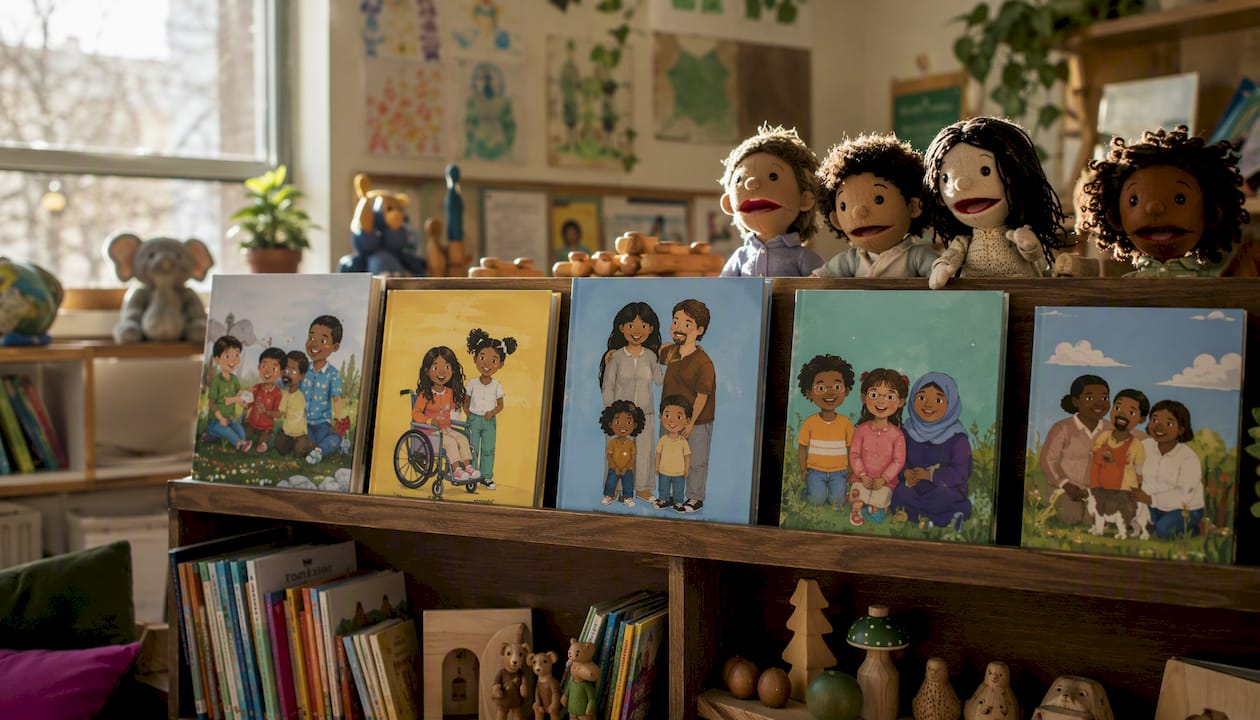
The practical outcomes for children who read intersectional stories regularly include stronger self-esteem, a broader perspective on classmates' lives, reduced peer conflict, and better classroom inclusion. SEL-aligned picture books reduce conflict and build the vocabulary children need to talk about difference without shame or confusion. Those aren't soft benefits. They show up in how children treat each other on Monday morning.
How do you choose children's books that handle intersectionality well?
The short answer: look for books where multiple identities shape the story, not just appear in it. A character who is Black and disabled should face moments where both of those identities matter to what happens, not just be described as Black and disabled in the opening paragraph.
Teaching for Change's selection guide gives educators a practical framework: check the illustrations for accuracy and dignity, examine storyline relationships for power dynamics, and watch for harmful stereotypes embedded in plot or language. That framework applies directly to intersectional titles.
Five criteria to use right now
- Layered identities in the plot: Do the character's identities interact and affect what happens? Or are they just listed?
- Own-voices authorship: Did someone with lived experience of the identities portrayed write or illustrate the book? Check the author bio.
- Age-appropriate framing: Does the story show rather than lecture? Young children learn through narrative, not definitions.
- Back matter and discussion guides: A letter to caregivers or a set of discussion questions signals the book was designed for conversation, not just display.
- Accurate, dignified illustration: Do the illustrations reflect real cultural detail, or do they rely on visual shorthand and stereotype?
A quick checklist for browsing or buying
- Read the back cover: does it name specific identities, or just say "celebrates diversity"?
- Flip to the back: is there a discussion guide, a glossary, or a letter to grown-ups?
- Check the author bio: does the creator have lived experience or documented research in the identities portrayed?
- Scan three interior spreads: do the illustrations show cultural specificity, or generic "diverse" figures?
- Search the title in Diverse BookFinder or a curated database to see how it's categorized.
Red flag: A book that features one character of color in an otherwise white cast and calls that "diversity" is single-axis representation, not intersectionality. The same applies to a book that mentions disability only as a problem to overcome. Look for stories where identity is woven into everyday life, not treated as a lesson or a burden.
Pro Tip: Back matter is your fastest quality signal. A book with a thoughtful "Letter to Grown-Ups" and three or four open-ended discussion questions was built for real use. A book with none of that was built to sit on a shelf. Evaluating back matter and author credentials takes about 90 seconds and tells you more than the cover ever will.
Icon Literary's recommended pick for teaching intersectionality
For ages 3–8, Icon Literary's picture books and paired SEL kits are built around the exact criteria above: layered identities, story-driven narrative, and back matter designed to turn a read-aloud into a guided conversation. The Duckwave Universe titles use original characters whose identities, family structures, and experiences overlap and interact throughout the story, rather than being named once and forgotten.
What makes these titles a strong fit for home, classroom, and library storytime:
- Physical picture books with original characters whose intersecting identities shape the plot, not just the cast list.
- Printable activity kits that give caregivers structured prompts, drawing activities, and reflection exercises tied directly to the story.
- Themed card decks that work as standalone conversation starters or as a follow-up to the read-aloud, useful for circle time or family game night.
- Digital downloads for classrooms and homeschool families who need immediate access without waiting for shipping.
In a classroom setting, the card decks work particularly well after the first read. A teacher can pull three cards, read each prompt aloud, and let children respond in pairs before sharing with the group. At home, the printable kits give a parent something concrete to do with a child after the story ends, which is where most of the actual learning happens.
IntersectionAllies, published by Dottir Press, offers a useful reference point for what strong back matter looks like: the book includes introductions by Kimberlé Crenshaw and Ange-Marie Hancock Alfaro and uses nine child vignettes to show how race, gender, ability, citizenship, and family structure interact. Chelsea Johnson, PhD, the book's co-author, notes that the caregiver-facing guidance was built specifically to make academic concepts accessible to children while supporting adult-led discussion. That's the standard Icon Literary's kits are designed to meet. The New York Times Wirecutter also included IntersectionAllies on its antiracist books for kids list, which reflects the kind of editorial credibility strong intersectional titles earn.
What kinds of stories model intersectionality best?
The story type matters as much as the topic. For ages 3–8, certain narrative formats make intersectionality visible without requiring a child to sit through an explanation.
Ensemble casts with vignette structures work best. When a book follows five or six children through a shared day, each child's different identity naturally shapes how they experience the same event. No character has to explain who they are; the story shows it.
Slice-of-life and family celebration narratives are the next strongest format. A story about a birthday party, a first day of school, or a family meal can show intersecting identities through food, language, family structure, and physical experience without ever using the word "intersectionality."
Allyship vignettes work well for ages 6–8. A short scene where one child notices another is being treated unfairly and does something about it teaches both empathy and action, and it works best when the child acting as ally has their own distinct identity rather than being a blank-slate "helper."
Formats and their strengths
- Picture books (ages 3–8): The primary format. Illustrations carry as much meaning as text, so visual intersectionality (showing a character's home, clothing, family, and body) matters enormously.
- Board books (ages 2–4): Best for introducing single identity concepts that build toward intersectional thinking later. Repetition and simple language are the tools here.
- Activity-first books: Combine story and structured prompts in one volume. Strong for classroom use because the teacher doesn't need to generate discussion questions from scratch.
- Interactive read-alouds with call-and-response: Work well when a caregiver pauses at key moments and asks children to predict or respond. Picture books that spark inclusion talks for ages 3–8 are built with these natural pause points in mind.
When scanning a blurb, look for phrases like "follows five friends through a school day" or "celebrates a family reunion with cousins from different backgrounds." Those signal ensemble or slice-of-life structures. A blurb that says "teaches children about diversity" with no character detail is a warning sign.
Practical reading prompts and activities by age
A read-aloud becomes an SEL activity the moment a caregiver asks one good question after the last page. The story opens the door; the conversation is where identity affirmation and empathy actually develop.
Prompts by age group
Ages 3–4
- "Which character did you like the most? What did you like about them?"
- "Did anything in the story look like your family? What was different?"
- "How do you think [character name] felt when that happened?"
Ages 5–6
- "Why do you think [character] was treated differently in that scene?"
- "Can you think of a time you felt like [character]? What happened?"
- "What would you do if you were the friend in that part of the story?"
Ages 7–8
- "What are three things that make [character] who she is? How do they work together?"
- "Did the story show something you'd never thought about before? What was it?"
- "If you could add a character to this story, who would they be and what would make them different?"
Follow-up activities
- Identity map: Give each child a blank circle divided into sections. Ask them to draw or write one thing about themselves in each section (family, language, what their body can do, what they love). Then compare maps as a group.
- Role-play: Pick a scene from the book and ask two children to act it out, then switch roles. Discuss what felt different.
- Family storytelling: Ask children to bring one story from home about a family tradition, food, or celebration. Share in a circle and find one thing each story has in common with another.
- Art response: After reading, ask children to draw the character in a place the book didn't show. What does their bedroom look like? Their school? Their favorite place?
Pro Tip: During classroom discussions, name the identities you're talking about specifically. "Let's talk about how Amara's hearing and her family's language both matter in this scene" is more useful than "let's talk about what makes Amara different." Specificity teaches children that identity is something to name with care, not something to talk around. Lesson plans and teaching notes from social-justice curriculum sites can help you prepare language before the discussion starts.
Where intersectional representation is still missing
The gaps are real and documented. The Diverse BookFinder analysis of 4,998 picture books found that books showing race combined with gender identity, race combined with sexualities, and race combined with disability are among the rarest categories in the database. That means a Black transgender child, a Latina girl with a chronic illness, or an Asian boy with two dads is statistically unlikely to find a picture book that reflects his or her full self.
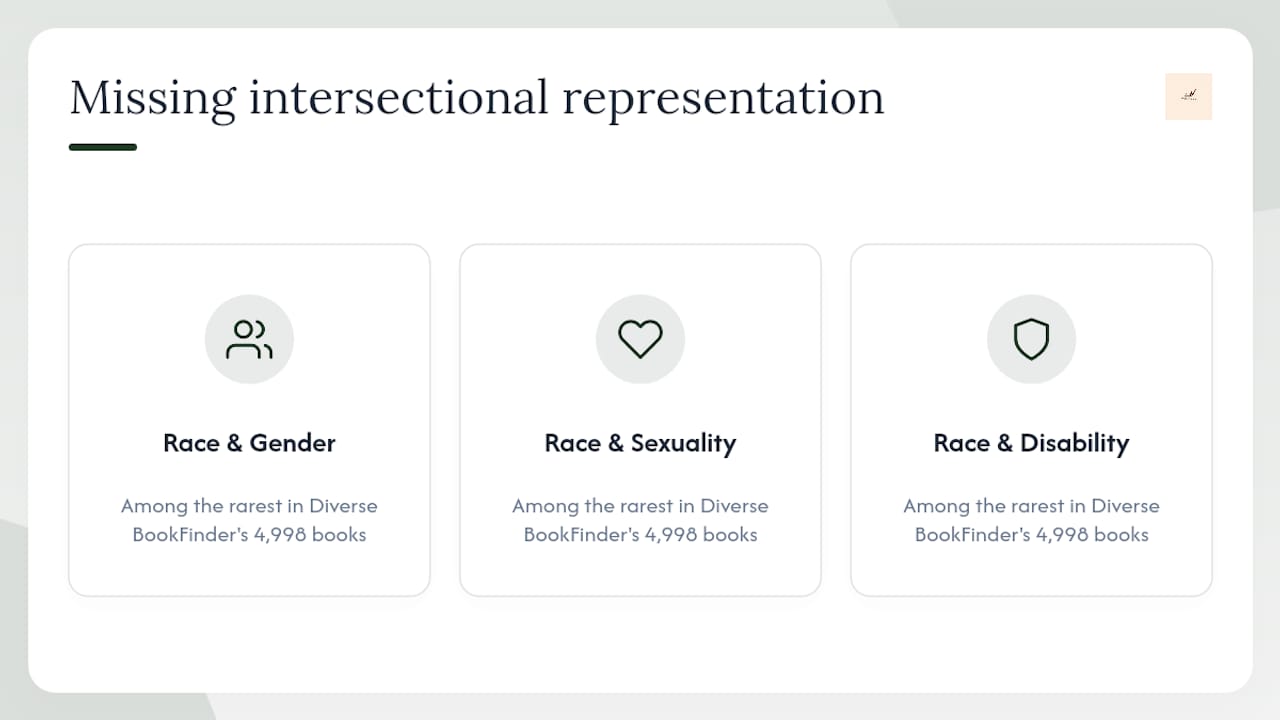
Identifying which intersectional identities are underrepresented in children's books is the first step toward filling those gaps in a home or library collection.
How caregivers and librarians can act now
- Request specific titles by intersection: When submitting purchase requests, name the identity combination you need, not just "diverse books." "Books featuring Black children with disabilities" is a request a librarian can act on.
- Use curated databases: Diverse BookFinder, SocialJusticeBooks, and ALA's recommended lists filter by identity category. Quantity in a database doesn't guarantee quality, so read the editorial notes alongside the listings.
- Partner with publishers who prioritize own-voices authorship: Small and independent publishers often lead on intersectional titles. How librarians evaluate inclusive children's books covers acquisition criteria that go beyond bestseller lists.
- Donate strategically: If your school or library has a wish list, add specific intersectional titles with a note explaining the gap they fill.
- Catalog accurately: A book about a Black girl with a disability should be cataloged under both race and disability, not just one. Accurate cataloging makes the book findable for the families who need it most.
Sample request email for librarians and teachers
Subject: Purchase request — intersectional picture books for [grade/age range]
Hi [Name],
I'm writing to request additions to our picture book collection that reflect children with more than one identity (for example, race + disability, or race + gender identity). Current research shows these intersections are significantly underrepresented in children's publishing. I'd suggest starting with titles from [publisher or list], which have been vetted by [ALA / SocialJusticeBooks / Teaching for Change]. Happy to share a specific list if that helps.
Thank you for considering this.
Why this work starts earlier than most people think
The conventional wisdom is that intersectionality is too abstract for young children. That framing gets it backwards. Children ages 3–8 are already living intersectional lives. They already notice that their friend has two moms and uses a wheelchair. They already feel the difference between being the only kid in class who speaks Spanish at home and being one of many. What they lack is language and story to make sense of what they're already experiencing.
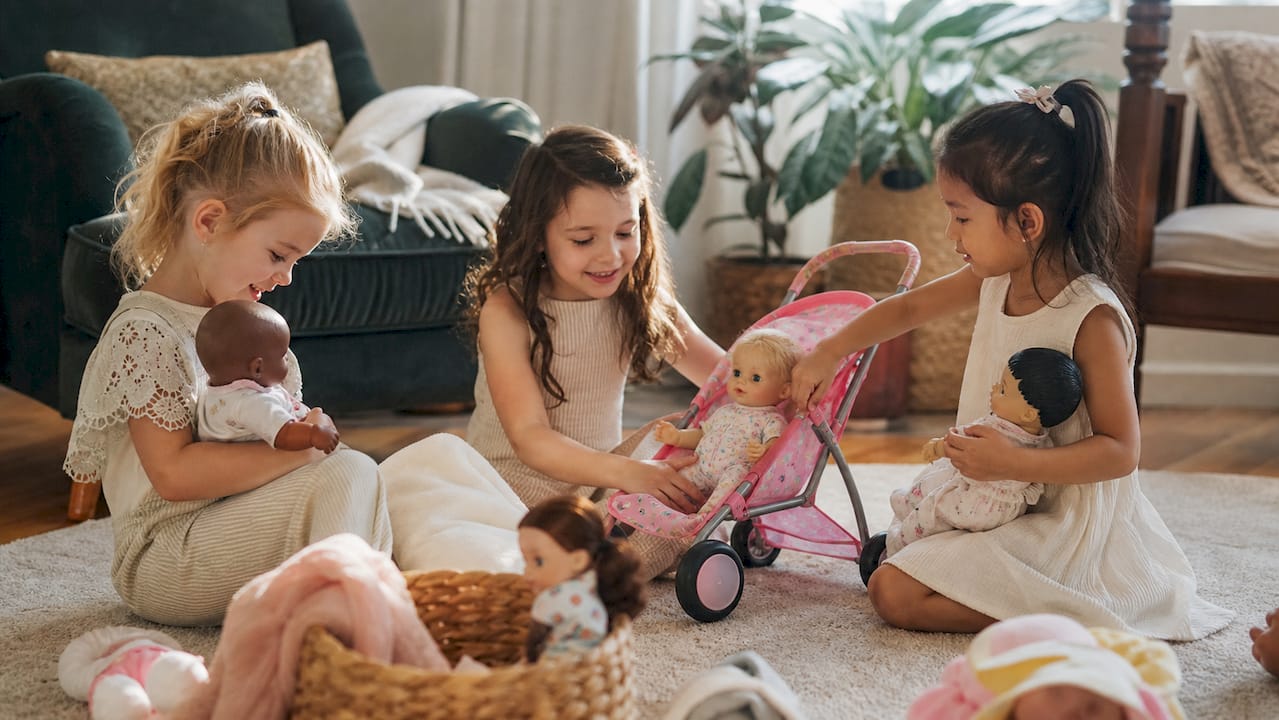
The mistake most adults make is waiting until children "ask the right questions" before introducing these ideas. But children ask the questions they have language for. A child who has never heard the word "disability" used with dignity won't ask about it with dignity. A child who has only seen families that look like hers won't know to wonder about families that don't.
ALA practitioner guidance is clear on this point: the goal is not to find one perfect book that teaches intersectionality completely. The goal is to build a collection of layered, authentic stories that invite ongoing conversation. No single title does all the work. The conversation does the work. The book just starts it.
What Icon Literary's approach gets right is treating the book and the activity kit as a unit, not two separate products. The story opens the door; the kit gives caregivers the specific language and prompts to walk through it with a child. That's not a nice extra. For most caregivers, it's the difference between a book that gets read once and a book that changes how a child sees the world.
Icon Literary's books and kits are built for this conversation
Children's picture books that show intersecting identities are only as useful as the conversations they start. Icon Literary's titles and SEL kits are designed so that the story and the tools for discussing it arrive together, not separately.
The book introduces characters whose layered identities shape what happens in the story. The paired printable activity kit gives caregivers structured prompts, drawing exercises, and reflection questions they can use the same day. The themed card decks extend the conversation into circle time, family game night, or a quiet one-on-one moment. Every format is available for ages 3–8, and the full bundle is accessible as physical books, digital downloads, or printables through the Icon Literary storefront.
If you're ready to put an intersectional story into a child's hands today, start at Icon Literary and find the title and kit that fits your setting.
Sources
The best place to start is a curated database that filters by identity intersection, not just by "diversity." Here are the most useful resources for caregivers, educators, and librarians:
- Research paper on intersectional representation gaps (Diverse BookFinder analysis) — Portland State University repository
- Practitioner guidance on intersectionality in children's books — ALA download
- IntersectionAllies — Dottir Press
- Guide for Selecting Anti-Bias Children's Books — Teaching for Change