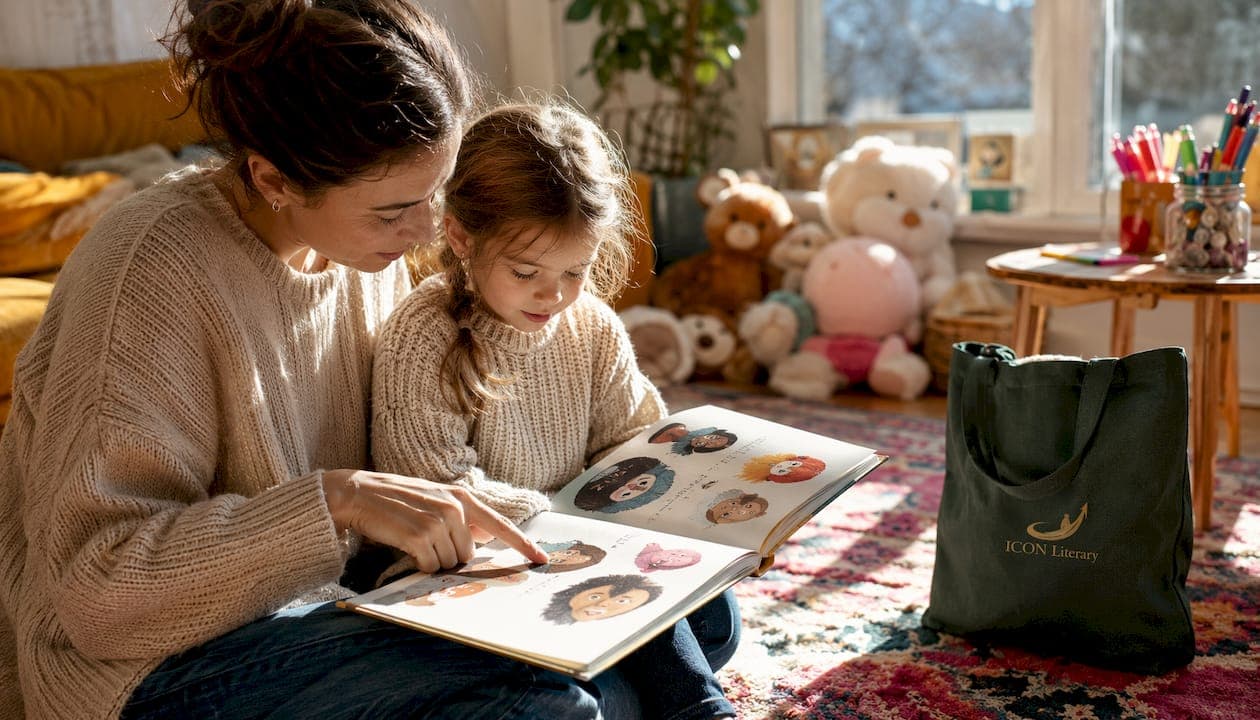
Feelings books do more than entertain. They build the emotional architecture children carry into every relationship, conflict, and decision they face. For homeschool families, these books function as social-emotional learning (SEL) tools woven directly into daily life, no separate curriculum required. Shared book reading activates both right-brain imaginative functions and left-brain analytical skills simultaneously, making literature one of the most neurologically complete methods for emotional growth available to parents. Children gain emotional vocabulary, empathy, self-awareness, and the ability to read social situations, all through the act of following a character they care about.
The core benefits homeschool children gain from feelings books:
- Emotional vocabulary: Stories name feelings children already experience but cannot articulate.
- Empathy: Following a character's inner life trains perspective-taking in a low-stakes setting.
- Self-awareness: Recognizing a character's mistake or fear often triggers quiet recognition in the reader.
- Social skill rehearsal: Narrative scenarios model how to handle conflict, loss, and connection.
- Gradual formation: Literature respects each child's developmental pace, never forcing conclusions before a child is ready.
Table of Contents
- How shared reading builds social-emotional skills in homeschool children
- Why literature suits homeschool children's emotional development better than most methods
- How storytelling and narrative play help children practice social behaviors at home
- Icon Literary's approach to emotionally resonant storytelling
- Feelings-focused books that work well for homeschool children
- How parents can guide emotion discussions using books
- What research says about reading and emotional growth in homeschool settings
- Key Takeaways
How shared reading builds social-emotional skills in homeschool children
The conversation around a book matters as much as the book itself. When a parent reads aloud and pauses to ask, "Why do you think she felt that way?" the child practices perspective-taking without any formal lesson plan. That dialogue is where emotion comprehension deepens through reflective engagement and what researchers call dialogic storytelling.
Selecting books with strong, authentic emotions rather than generic "happy/sad" scenarios gives children more to work with. A character who feels jealous of a sibling but also loves them, or who is proud and embarrassed at the same time, mirrors the complexity children actually live. That specificity is what sharpens recognition.
Shared reading also removes the pressure of direct disclosure. A child who would never say "I feel left out" can say "I think Max feels left out" and process the same emotion at a safe distance. That indirection is a feature, not a workaround.
Key practices that make shared reading effective for emotional learning:
- Pause at emotionally charged moments and ask open questions rather than leading ones.
- Name the emotion you observe in the character before asking the child to name it.
- Let silence sit after a difficult scene; not every feeling needs immediate discussion.
- Revisit the same book at different ages; children extract different emotional meaning each time.
Why literature suits homeschool children's emotional development better than most methods
A worksheet on emotions tells a child what to feel. A story shows them what feeling looks like from the inside. That distinction is the whole argument for literature as an emotional education tool.
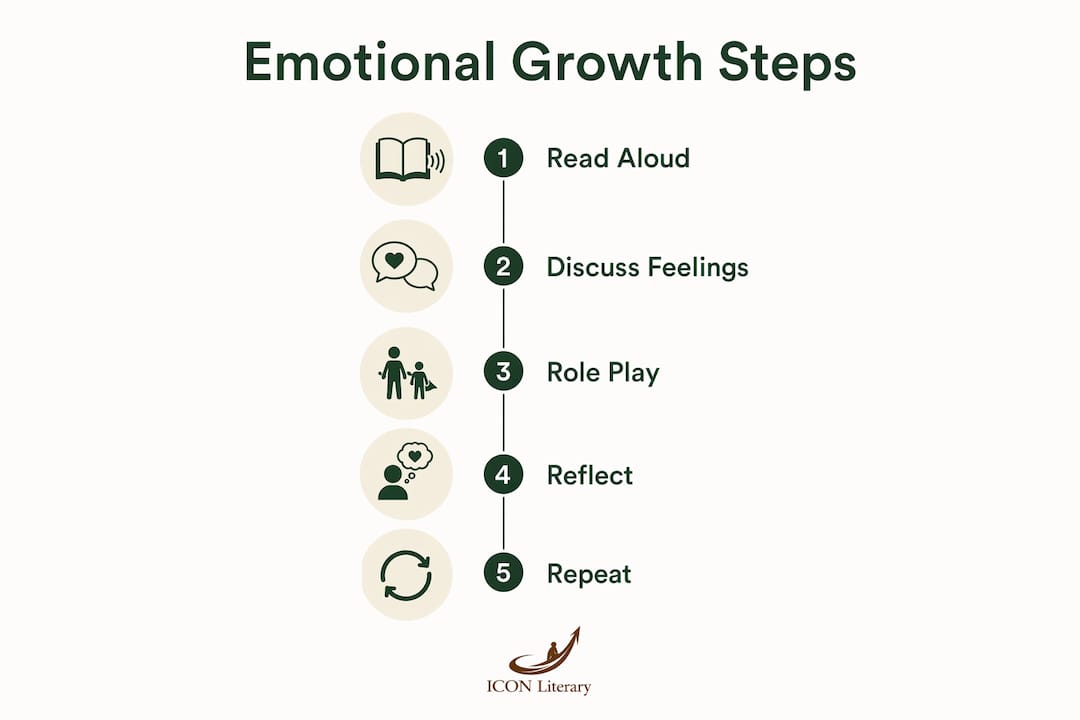
Homeschooling advocate Betsy describes literature as a faithful companion for emotional formation that doesn't rush conclusions but nurtures growth over time. A novel's extended arc lets a child watch a character move through grief, anger, confusion, and eventually something like peace, without any adult summarizing the lesson. That patience is rare in structured curricula.
Marc Brackett of the Yale Center for Emotional Intelligence notes that literature allows discussion of tricky emotions through characters' experiences, giving children a safe interior space to examine complex feelings without personal exposure. A child can explore what betrayal or regret feels like through a fictional character long before they have the words or the safety to name it in their own life.
Homeschooling amplifies this advantage. Without the social pressure of a classroom, a child can sit with a difficult chapter, reread it, and bring it up days later when it finally connects to something real. That slow, relational path to emotional wisdom is exactly what literature is built for.
How storytelling and narrative play help children practice social behaviors at home
Reading a feelings book is the first step. What happens after the last page often matters more.
Narrative play, where children act out, retell, or extend a story's scenarios, functions as a low-risk laboratory for social skill practice. Research on methods like Story Magician's Play Time found that children often know the socially responsible choice in a given situation but struggle to execute it under real pressure. Storytelling play gives them repeated rehearsal without real stakes.
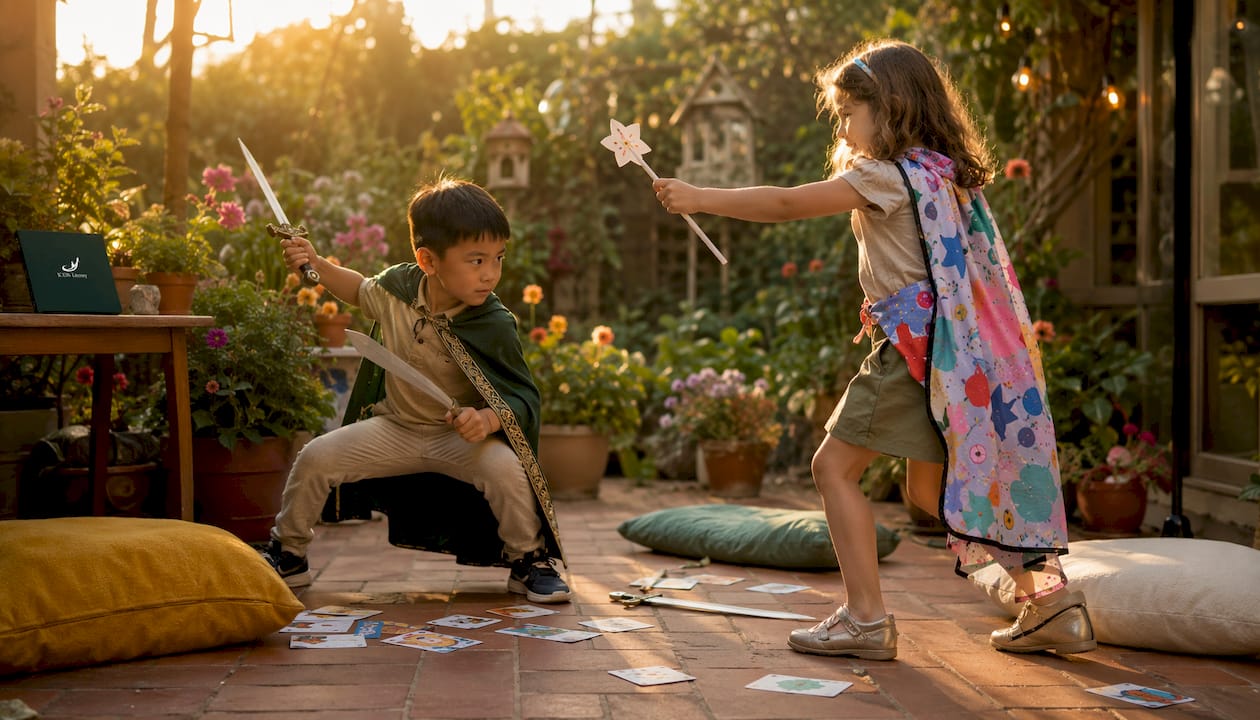
Role-play after reading lets a child try on the character who apologizes, the one who stands up for a friend, or the one who walks away from a fight. Art activities tied to a story, drawing a character's face mid-conflict or writing an alternate ending, push emotional processing beyond the verbal and into the embodied. Both approaches deepen what the narrative started.
Homeschooling's structural flexibility makes this integration natural. A morning read-aloud can flow into an afternoon of drawing, building, or dramatic play without the interruption of a bell schedule. Emotional learning doesn't need a dedicated slot; it needs continuity.
Icon Literary's approach to emotionally resonant storytelling
Icon Literary operates at the intersection of world-building and emotional depth. As a multidisciplinary creative studio, the brand develops original graphic narratives and immersive universes, including the Duckwave Universe, that blend luxury aesthetics with what its founder Derek Amarillas describes as playful chaos. The result is storytelling that doesn't talk down to its audience, whether that audience is a child discovering empathy through a character's choices or a collector drawn to the mythic weight of a well-built world.
The studio's philosophy aligns directly with what research confirms about effective emotional storytelling: specificity, authenticity, and narrative stakes matter. Stories that carry real emotional weight, where characters want things, lose things, and change, are the ones that build the emotional imagination children carry forward.
For homeschool families who already understand the power of narrative art, Icon Literary's catalog offers something beyond a reading list. It offers a world to inhabit, which is a different and deeper kind of emotional education.
Pro Tip: When introducing a new graphic narrative to a homeschool child, read it together first without stopping to analyze. Let the story land. Then revisit specific panels or scenes the next day, when the emotional residue has had time to settle.
- Icon Literary stories prioritize emotional authenticity over tidy resolutions.
- The Duckwave Universe uses satire and mythic imagination to explore social dynamics children recognize.
- Collectible design elements make the physical book an object of attention, slowing the reading experience in productive ways.
Feelings-focused books that work well for homeschool children
The best feelings books for homeschoolers share a few qualities: they present emotions in authentic, specific contexts rather than as abstract lessons, and they leave room for discussion rather than closing every question.
The Invisible String by Patrice Karst addresses grief and separation through a concrete metaphor children can hold onto. Enemy Pie by Derek Munson works through jealousy and friendship with enough narrative tension to generate real conversation. In My Heart by Jo Witek gives younger children precise language for physical sensations tied to emotions, which is a bridge many kids need before they can discuss feelings abstractly.
For older homeschool readers, Wonder by R.J. Palacio builds empathy through multiple perspectives on the same events, a structural choice that mirrors the perspective-taking skills literature is meant to develop. Graphic novel formats, including those in Icon Literary's children's stories catalog, add visual emotional cues that support readers who process feeling through image before language.
How parents can guide emotion discussions using books
The most effective facilitation is also the simplest: ask about the character, not the child. "What do you think was going through her head?" opens more than "Have you ever felt that way?" The first question invites analysis; the second can feel like an interrogation.
After a scene with strong emotional content, try reflecting before questioning. "That part felt heavy to me" gives the child permission to agree, disagree, or say nothing, all of which are valid responses. Emotional literacy builds through repeated low-pressure exposure, not through single breakthrough conversations.
Parents can also use curated booklists to sequence emotional themes intentionally, starting with books about everyday feelings before moving to grief, injustice, or identity. That progression mirrors how therapists build emotional vocabulary with children, and it works just as well at a kitchen table.
What research says about reading and emotional growth in homeschool settings
The evidence is consistent. Storybook reading promotes empathy-related skills including theory of mind, perspective-taking, and prosocial behavior, with one-to-one reading sessions showing stronger gains than group settings. That finding maps directly onto the homeschool advantage: a parent reading with one child creates the conditions research identifies as optimal.
Narrative-based interventions that combine oral storytelling with reflective activities show meaningful increases in children's emotional intelligence scores. The mechanism is straightforward: repeated exposure to characters' emotional experiences, combined with guided reflection, builds the neural pathways children use to recognize and regulate their own feelings.
The emotional benefits of books compound over time. A child who reads widely across emotional themes develops a richer internal model of human motivation, which is the foundation of both empathy and self-understanding. Homeschooling, with its flexibility and relational depth, is one of the best environments in which that compounding can happen.
Key Takeaways
Feelings books are among the most research-supported tools homeschool families have for building children's emotional intelligence, empathy, and social skills through shared, relational reading.
| Point | Details |
|---|---|
| Shared reading activates both brain hemispheres | Storytelling engages imaginative and analytical functions simultaneously, deepening emotional growth. |
| Literature offers a safe emotional space | Children explore complex feelings through characters without personal exposure or pressure. |
| Narrative play extends the learning | Role-play and art after reading help children rehearse social behaviors in low-stakes conditions. |
| Authentic emotions in books sharpen recognition | Books with specific, strong emotions help children identify and name their own feelings more accurately. |
| One-to-one reading maximizes empathy gains | Research shows individual read-aloud sessions produce stronger empathy skill development than group settings. |