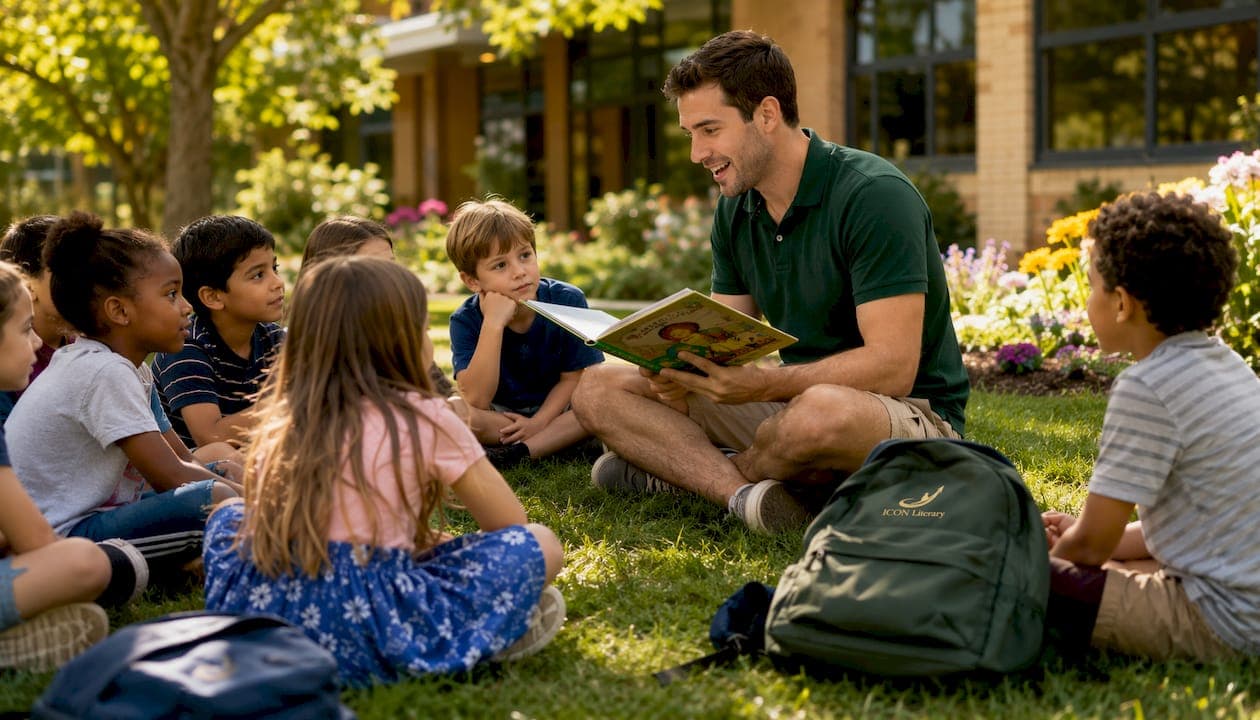
Books build classroom belonging by mirroring children's identities, creating shared emotional language, and giving students low-risk ways to practice social connection. Pick one inclusive picture book, read it aloud this week, and follow it with a single concrete action: invite a classmate, notice something kind, or share a memory. The National Council of Teachers of English (NCTE) frames classroom libraries as core instructional tools, not extras. Bibliotherapy research from UCL confirms that purposeful book use helps students feel seen and discuss hard emotions safely. Icon Literary offers curated, emotionally resonant titles and creative kits designed exactly for this purpose.
Table of Contents
- How do books address classroom belonging?
- What should you look for when choosing books for ages 3–8?
- Classroom routines that turn read-alouds into belonging practice
- How can teachers adopt a bibliotherapeutic approach safely?
- What timeline and budget should you expect?
- A checklist for parents, gift-givers, and donors
- Key Takeaways
- Books for belonging: what the research actually asks of us
- Icon Literary books and kits for classroom belonging
- Useful sources and further reading
How do books address classroom belonging?
Books support belonging because they make students feel heard and connect them to peers through shared narrative experience. That is the short answer. The fuller picture involves three mechanisms that bibliotherapy research has documented: mirroring, distancing, and safe emotional exploration.
Mirroring happens when a child sees a character who looks, speaks, or feels the way they do. That recognition is not trivial — it signals to the child that their experience belongs in the room. Distancing works the opposite way: a student who cannot yet talk about their own loneliness can talk about the character's loneliness, which is far less threatening. Together, these two moves open space for the third mechanism, safe emotional exploration, where students practice naming and responding to feelings without real social stakes.
"Picturebooks' multimodal nature — words combined with images — uniquely engages emotions, supporting empathy development and community building when used intentionally." — BYU ScholarsArchive, Building Classroom Community with Picturebooks
A six-week class bibliotherapy intervention using picture books showed qualitative benefits for community-building and coping strategies, though quantitative results were mixed. Teacher experience and text selection mattered most. NCTE is direct on this point: classroom libraries increase student motivation, engagement, and achievement, and they validate diverse students' identities when curated with equity in mind. The importance of books in classrooms, then, is not just academic — it is relational.
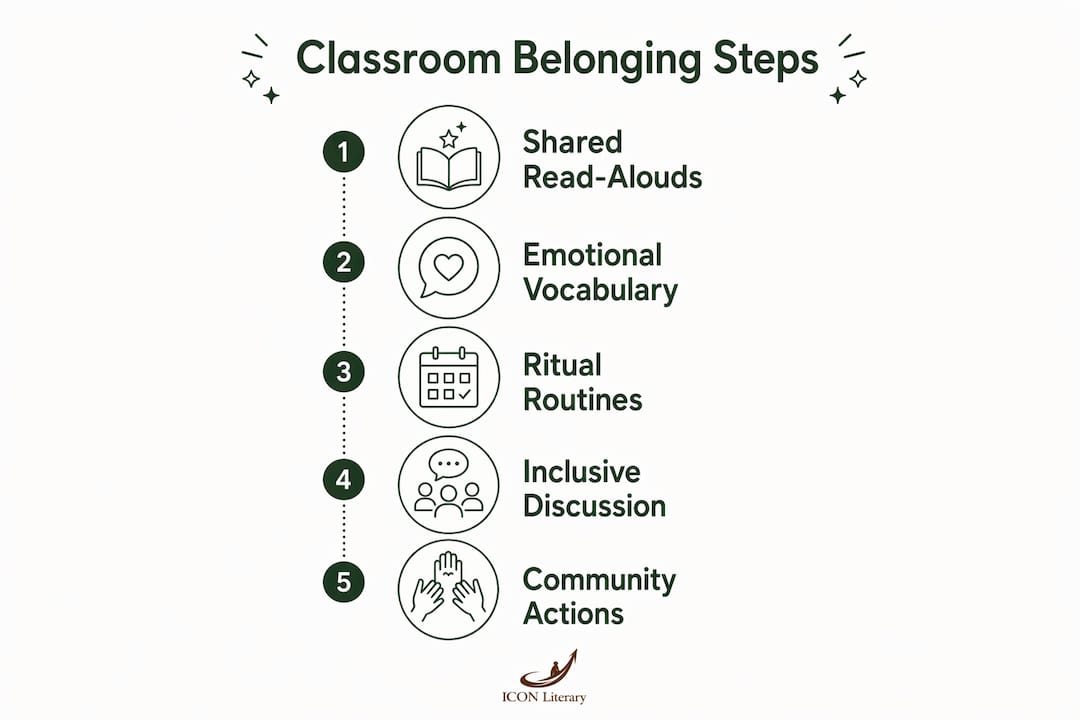
At the classroom level, the mechanisms show up in four concrete ways. Shared read-alouds build a common emotional vocabulary students can reference all week. Predictable reading routines calm and focus the group before transitions. Picturebook images invite participation from students who are not yet confident readers. And the teacher's curation itself sends a message: the identities in these books matter here. Libraries that prioritize emotional literacy amplify all four effects.
What should you look for when choosing books for ages 3–8?
Not every book that mentions friendship actually builds belonging. Here is what to check before you buy or donate:
- Representation of diverse identities — characters whose race, language, family structure, or ability reflects your actual students, not a generic classroom
- A clear emotional arc — the character feels excluded or uncertain, takes a step, and arrives somewhere better; children need to see the full arc, not just the happy ending
- Concrete action moments — scenes where a character shares, invites, or notices someone left out; these become the behavioral scripts students carry into recess
- Accessible language and strong pictures — for ages 3–8, images carry as much meaning as words; look for expressive illustration that tells the story even without text
- Durability and gift appeal — collectible hardback editions hold up to repeated classroom reads and make meaningful donations; paperbacks work well for take-home copies
Age matters too. At 3–4, ritual and predictable structure matter most; children need the comfort of knowing what comes next. At 5–6, emotion labeling and simple problem-solving become central — books that name feelings explicitly give children the vocabulary to use them. By 7–8, students can handle complex peer dynamics and ambiguous emotions, so richer narratives with multiple perspectives pay off. A guide on what makes an SEL book effective can help you match titles to developmental stage.
Pro Tip: Before you open to page one, spend two minutes on the cover, dedication, and endpapers. These peritextual elements are low-risk entry points — ask students what they notice, who they think the story is about, and whether anyone in the picture reminds them of someone they know. You surface prior knowledge and identity links before a single word of the story is read.

Classroom routines that turn read-alouds into belonging practice
The research is clear: moving from read-aloud to concrete classroom action produces deeper belonging than discussion alone. Use a predictable read-aloud routine paired with one activity to convert emotional insight into behavior.
A simple read-aloud script looks like this. Before reading, point to the cover and ask: "What do you notice? Who might feel left out here?" During reading, pause at key emotional moments and mirror the character's language back: "She felt invisible. Has anyone ever felt invisible?" After a charged page, use a 30-second turn-and-talk so students process with a partner before the whole group. After reading, name the feeling the class just shared and pivot to action.
Three activities that move the story into the room:
- Notice and Invite Circle — students sit in a circle and each name one person they noticed doing something kind that day. The teacher records names on a shared chart. Over weeks, the chart becomes visible proof that the class sees each other.
- Empathy Role-Play Station — set up two chairs facing each other with a simple scenario card drawn from the book's conflict. Pairs take turns playing the character who feels left out and the one who reaches out. Rotate partners weekly.
- Collaborative Story Map — the class maps the book's emotional journey on a large paper: problem, feeling, action, outcome. Then they write their own class version: "In our class, when someone feels left out, we..." That document becomes a posted classroom agreement.
Discussion prompts teachers can adapt for K–2 and grades 2–3:
- "How did [character] feel when no one sat with them?"
- "What did [character] do that helped? Could you do that?"
- "Has anyone ever felt the way [character] felt? You don't have to share — just think about it."
- "What's one thing our class could do this week that the character did in the story?"
- "Who in the story noticed something? How did noticing help?"
- "If you were [character's] friend, what would you say?"
For diverse learners and students with limited English proficiency, add gesture cues to every prompt, post picture-based sentence starters at each station, and allow bilingual responses. Shared whole-book read-alouds create a bonding experience that choice-only reading models cannot replicate, and they work precisely because every student, regardless of reading level, accesses the same story at the same time.
How can teachers adopt a bibliotherapeutic approach safely?
The shift from academic read-aloud to bibliotherapeutic read-aloud is mostly a question of which questions you ask. UCL research is direct: teachers benefit from training to make this shift effectively, because the instinct is to ask comprehension questions rather than connection questions.
Connection prompts: "What did you notice about how [character] felt?" / "Did anything in the story remind you of your own life?"
Coping-strategy prompts: "What helped [character] feel better? Do you have something like that?" / "What could [character] have tried that they didn't?"
Action-oriented prompts: "What's one thing you could do this week that [character] did?" / "Who could you invite or notice tomorrow?"
Safety practices matter. Before reading books that touch on exclusion, loss, or family change, send a brief note home so families know the topic. Give students an explicit opt-out: "You never have to share — thinking quietly counts." Watch for students who become withdrawn, tearful beyond the moment, or who disclose something that suggests they need more support than a classroom conversation can provide. Those are referral signals — connect with a school counselor rather than continuing the discussion in the group setting.
What timeline and budget should you expect?
Modest, measurable shifts in participation and peer interactions are often visible within 4–8 weeks of consistent routines. Affective and cultural shifts take longer.
| Timeframe | Activity | Expected signal |
|---|---|---|
| Week 1–2 | Weekly shared read-aloud | Students use character names in peer conversations |
| Week 3–4 | Paired activity (role-play or story map) | Increase in voluntary partner invitations |
| Week 5–8 | Monthly reflection circle | Fewer reported exclusion incidents; rise in peer support behaviors |
| Month 3+ | Sustained routine + new titles | Students initiate belonging language without prompting |
Simple ways to measure progress:
- Participation counts — track how many students contribute to discussion each week; a rising trend is a signal
- Peer nomination — ask daily: "Who invited someone today?" Tally names over time
- Smiley-face surveys — a three-question weekly check-in (Do you feel welcome? Do you have someone to sit with? Did someone notice you this week?) gives you trend data without burden
- Teacher observation logs — a two-minute end-of-day note on one belonging behavior you observed
On budget: Single paperback editions typically cost $8–$15. Collectible hardback gift editions are $18–$28 and hold up to repeated classroom use. A single-class activity kit with a book, discussion cards, and printable activities ranges from $25 to $45. Downloadable printable kits are the most affordable option, often under $10. Bulk orders of five or more copies often qualify for discounts, and many publishers accept school purchase orders. Donors might give a $25–$30 collectible hardback with a teaching note as a lasting gift.
A checklist for parents, gift-givers, and donors
Before you buy or donate, run through these:
- Age suitability — confirm the book matches the developmental stage of the class receiving it (3–4, 5–6, or 7–8)
- Representation — does the book reflect the actual students in that classroom, not just a generic diverse cast?
- Durability — hardback for classroom shelves; paperback for take-home copies
- Teacher preferences — when donating, ask the teacher first; a quick email saves everyone time
- Packaging — remove price tags; include a brief teaching note or one-page activity sheet so the teacher can use the book immediately
A sample gift note: "This book is for your classroom library. It explores [theme] and includes a discussion prompt on the back page. I hope it sparks great conversations." Short, specific, and useful.
When to choose a collectible edition: if the book will live on a classroom shelf and be read repeatedly, invest in hardback. If you are sending a book home with a child or donating to a lending library, a sturdy paperback is the better fit. Including a classroom gift donation guide with your purchase helps teachers make the most of what you give.
Pro Tip: Add a sticky note to the inside cover with one open-ended question tied to the story. Teachers are more likely to use a donated book immediately when the first discussion prompt is already written for them.
Key Takeaways
Books build classroom belonging through mirroring, shared emotional language, and routines that move students from reading to acting on what they notice.
| Point | Details |
|---|---|
| Start with one read-aloud | Choose one inclusive picture book and read it aloud this week with a single paired activity. |
| Use bibliotherapy mechanisms | Mirroring and distancing let students explore belonging safely before acting on it in real life. |
| Measure within 4–8 weeks | Track participation counts, peer nominations, and smiley-face surveys to see early shifts. |
| The typical budget per classroom ranges from $8 for single paperbacks to $45 for activity kits and collectible hardbacks, with bulk orders frequently qualifying for discounts. | |
| Icon Literary for curated options | Icon Literary's emotionally resonant picture books and creative kits are designed for classroom read-alouds and belonging-focused activities. |
Books for belonging: what the research actually asks of us
There is a version of this conversation that stays comfortable — pick a diverse book, read it aloud, feel good about it. The research asks for something harder.
UCL's bibliotherapy work and NCTE's classroom library guidance both point to the same gap: most educators believe representation matters, yet most classroom libraries still fall short of reflecting the students actually in the room. The books are not the problem. The gap between intention and curation is.
What I find most overlooked is the role of the teacher's own comfort with emotional questions. A teacher who pivots every feeling-based prompt back to plot comprehension is not running a bibliotherapeutic read-aloud — they are running a literature lesson with a diverse cover. The shift is not about the book. It is about which questions you are willing to sit with. Training helps, but so does starting small: one open question, one turn-and-talk, one week of noticing who speaks and who goes quiet.
The belonging gains that show up in peer interactions and participation data are real. They take time, and they require the adult in the room to be as present as the story. A guide on choosing books on identity and belonging is a useful next step for anyone ready to go deeper on curation.
Icon Literary books and kits for classroom belonging
Icon Literary's collectible picture books and creative kits are built for exactly this use: read aloud, discuss, and act. Each title in the catalog features original characters, immersive story worlds, and SEL-aligned themes designed for children ages 3–8.
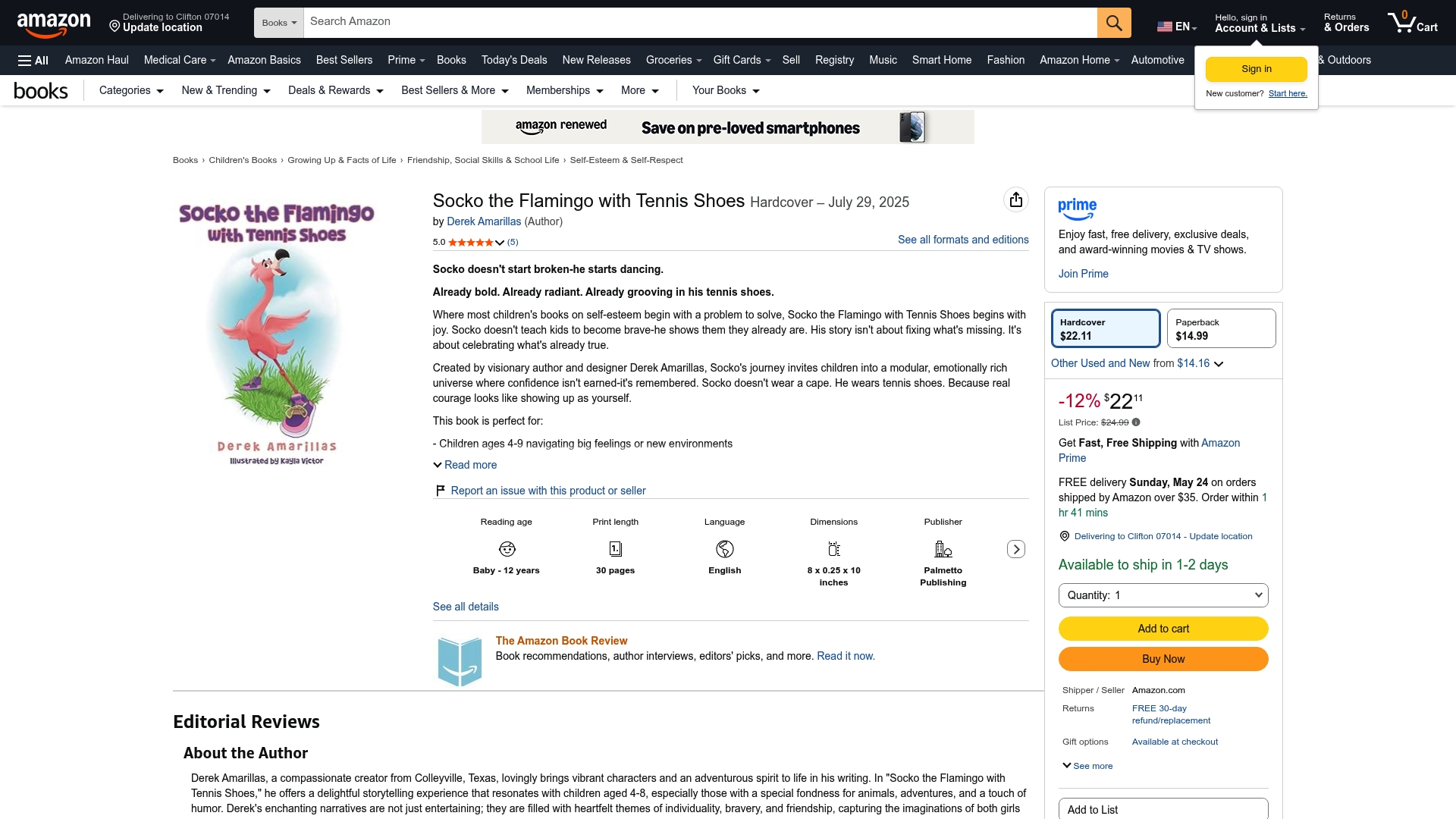
The catalog includes collectible hardback editions for classroom shelves, classroom-friendly paperbacks for take-home use, teacher activity kits with discussion cards and printable activity sheets, and downloadable kits for immediate use. Bulk orders for classroom sets are available, and each order can include a teaching note to support donation packaging. For educators and gift-givers ready to build a belonging-focused classroom library, the Icon Literary catalog is the place to start. Browse the full range of titles and kits at iconliterary.com and find the right fit for your classroom or gift.
Useful sources and further reading
- NCTE Statement on Classroom Libraries — the authoritative policy statement framing classroom libraries as essential instructional tools that support access, motivation, and diverse student identities. Start here if you are making the case to administrators.
- UCL Bibliotherapy Thesis (Straker, 2024) — a detailed examination of a six-week class bibliotherapy intervention; essential reading for teachers who want to understand what works, what does not, and why teacher training matters.
- Building Classroom Community with Picturebooks (BYU ScholarsArchive) — practical guidance on using peritextual elements and multimodal features of picturebooks to build community; includes discussion frameworks.
- Students Should Read Whole Books (Edutopia) — makes the case for shared whole-book read-alouds as a belonging tool, particularly in a digital era where students can feel isolated.
- Building Students' Sense of Belonging With Picture Books (Edutopia) — annotated book recommendations with classroom strategies for newcomer children and diverse learners; directly applicable to K–2 classrooms.
When implementing a bibliotherapeutic approach, consult your school counselor or a trained reading specialist — especially when books surface disclosures or emotional responses that go beyond what a classroom setting can safely hold.
This article is general educational information, not professional counseling or therapeutic advice. For individual student concerns, consult a qualified school counselor or mental health professional.