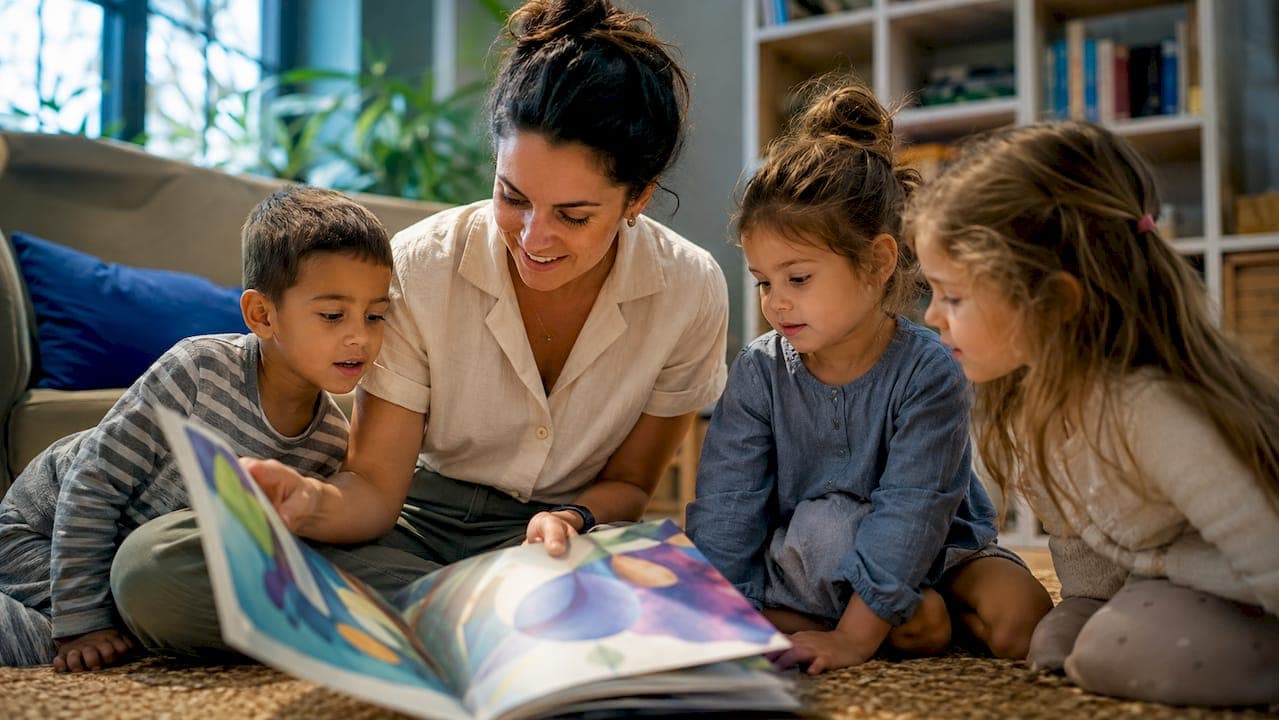
Icon Literary's kindness-themed picture books give parents and teachers a reliable place to start, and you can shortcut the search two ways: pick by your child's age or pick by the specific behavior you want to reinforce, like sharing, inclusion, or standing up for a friend. Practical read-aloud tactics and follow-up activities follow below, so a single book can do more than sit on a shelf.
TL;DR:
- Choosing the right book depends on the child's age, theme focus, and representation, with shorter formats better for toddlers and preschoolers.
- Effective kindness lessons involve previewing the story, asking open questions during reading, and engaging in follow-up activities like kindness challenges or role-play.
- Repetition of a few select titles paired with conversation prompts is more impactful than frequently introducing new books, as it deepens understanding and skill-building.
- Look for books with diverse characters and cultural backgrounds without making difference the story's central issue to promote inclusive empathy.
- Follow-up discussions and activities are essential for solidifying kindness lessons, with adult modeling and repeated practice being key to changing behavior.
Table of Contents
- Curated Kindness Picture Books Worth Adding to Your Shelf
- How to Turn a Read-Aloud Into a Kindness Lesson
- How to Choose the Right Kindness Book Fast
- Who's Behind These Picks
- Making Sure Every Child Sees Themselves on the Page
- What Actually Moves the Needle on Teaching Kindness
- Ready to Add These Books to Your Shelf?
- Sources
Curated Kindness Picture Books Worth Adding to Your Shelf
You don't need thirty books. You need six or eight that hit different angles of kindness, so you can grab the right one for the moment. The list below groups picks by theme rather than alphabetically, because that's how most parents and teachers actually search for a book: "I need something about a kid who feels left out," not "I need a K author."
Icon Literary's emotional-literacy picture books are built around original characters who wrestle with real feelings, not tidy moral lessons handed down at the end. They pair naturally with the activity kits and printable resources the studio also produces, so a single title can anchor a week of classroom or bedtime routines rather than a single night's read.
Here are the picks, organized by what each one teaches:
- Sharing and everyday generosity (ages 3–6): An Icon Literary storytime title works well here because the character's small act of sharing has visible consequences for a friend. Try asking, "What do you think happens if he keeps the toy to himself?" before turning the page.
- Inclusion and noticing who's left out (ages 4–8): Each Kindness by Jacqueline Woodson pairs a quiet, unresolved ending with real emotional weight. It's a companion title worth having on hand, and Penguin Random House's discussion guide for the book offers ready-made prompts for exactly this conversation.
- Bystander to upstander behavior (ages 5–8): Look for titles where a side character chooses to intervene, not just feel bad. Ask kids afterward, "What could you say instead of walking away?"
- Empathy and perspective-taking (ages 3–7): Wordless or near-wordless pages work surprisingly well here, since kids narrate the feelings themselves instead of being told what to feel.
- Self-kindness and self-talk (ages 4–8): An Icon Literary character who struggles with self-doubt before finding confidence gives you a natural bridge into conversations about how kids talk to themselves.
- Everyday acts of service (ages 3–6): Curated lists from Doing Good Together frame the strongest kindness books as interactive tools, not passive stories, which is the standard worth holding every pick to.
Reputable lists like Brightly's kindness roundup consistently mix classics with newer titles and tag everything by theme and age. That's a useful model for building your own shelf: a few anchor classics, a few contemporary titles, organized so you can grab what fits the moment.
How to Turn a Read-Aloud Into a Kindness Lesson
Reading the book is step one. What you do in the ten minutes before and after the last page is where the lesson actually sticks.
Start with a quick preview: show the cover, ask what the child thinks the story is about, and name the feeling you expect to show up. During the read, pause on wordless or image-heavy pages and ask open questions like "What do you think she's feeling right now?" instead of narrating it for them. Greater Good Science Center notes that kids pick up empathy largely by watching adults model it, so narrate your own reactions out loud too: "That made me feel sad for him, didn't it make you feel that way?"
After the book closes, a short activity does more work than a second read. Try one of these:
- Bucket-filling chart — kids add a sticker each time they notice themselves being kind during the day.
- Kindness challenge calendar — one small, specific act per day for a week, tied back to the book's plot.
- Classroom compliment circle — each child names one kind thing a classmate did that week.
- Role-play scripts — act out the book's conflict with a different, kinder ending.
- Simple craft tie-in — draw the character's face showing the feeling from the book's turning point.
Keep the follow-up short and frequent rather than long and rare. Doing Good Together recommends pairing books with conversation prompts and repeatable activities, since kindness becomes a practiced skill through repetition, not a single big lesson.
Pro Tip: Re-read the same book three times in one week instead of moving to a new title each night. Kids notice new details on repeat reads, and the activity gets easier to run once they already know the plot.
How to Choose the Right Kindness Book Fast
Standing in a bookstore or library aisle with a squirming three-year-old, you need a fast filter, not a syllabus. Run through these checks:
- Age and format fit: For toddlers and younger preschoolers, a board book's short length and repetition often work better than a full picture book, even if the child could technically sit through longer text. Attention span, not reading level, drives this call.
- Theme match: Decide whether you need inclusion, upstander behavior, or self-kindness before you start browsing, since a book aimed at bystander intervention won't land the same lesson as one about sharing.
- Representation: Check that characters reflect a range of backgrounds and family structures, not just one default look.
- Activity adaptability: Flip to the back cover or ask a bookseller if the title includes a discussion guide, since publisher pages for titles like Each Kindness often come with teacher prompts built in.
- Red flags: Skip books where the moral gets stated outright in the last line instead of left for discussion, and watch for child characters who have no real agency in fixing the problem.
For inclusion-specific conversations, Icon Literary's guide to inclusion talks for kids 3–8 walks through age-appropriate framing in more depth.
Who's Behind These Picks
. Icon Literary built its catalog around emotional-literacy storytelling specifically, which means every title on this list was chosen against a standard the studio applies to its own work: does the character have real feelings and real choices, or just a lesson stapled to the ending?
Kindness books fail when they explain the moral instead of letting a child sit with the discomfort of a character's choice. The best ones trust the reader to do that work.
Icon Literary pairs its picture books with printable activity kits and SEL tools designed for exactly this kind of follow-up. For more classroom-ready examples, see Icon Literary's preschool kindness book roundup and its longer empathy reading list.
Making Sure Every Child Sees Themselves on the Page
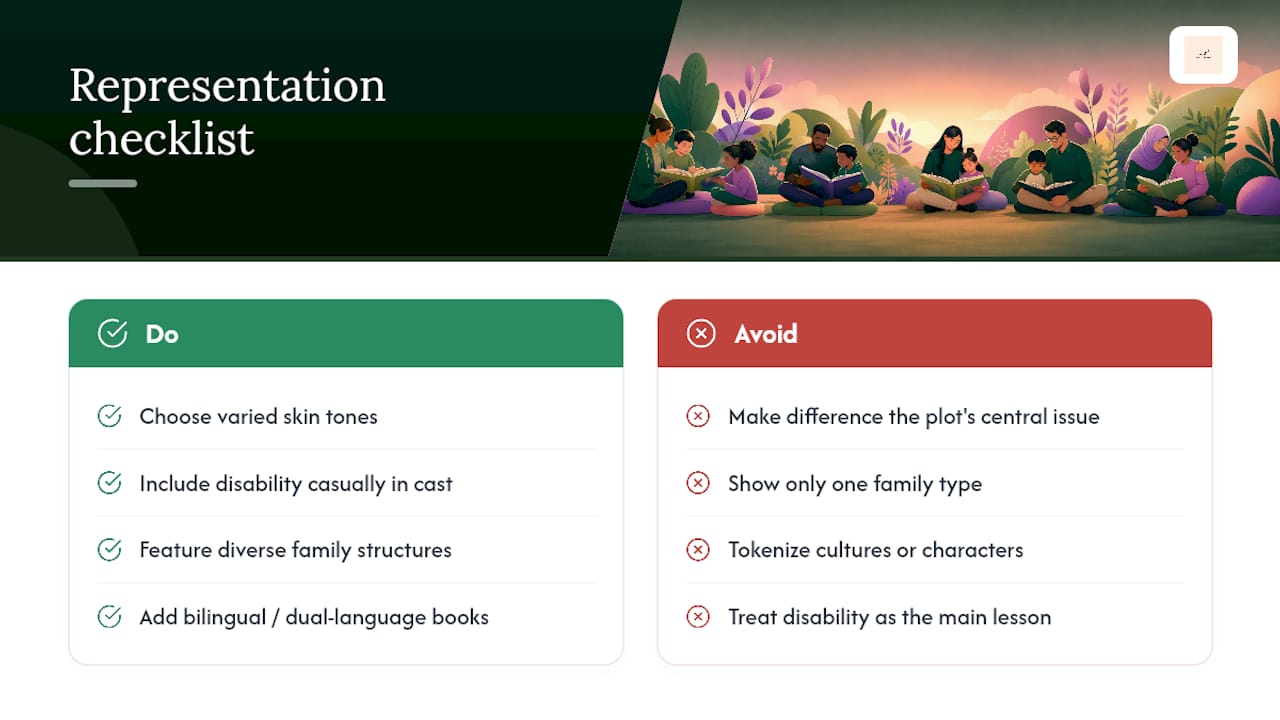
A kindness book that only features one type of family or one skin tone teaches a narrower lesson than it intends, even when the plot itself is solid. Representation matters here for a specific reason: kids extend empathy more readily to characters who feel familiar, but they also need practice extending it to characters who don't look or live like them.
Look for books that include disability, diverse family structures, and a range of cultural backgrounds without turning any of it into the plot's central "issue." A character who happens to use a wheelchair while also being the one who notices a classmate sitting alone teaches inclusion more naturally than a book explicitly about disability awareness. Icon Literary builds its character worlds with this in mind, favoring casts where difference is simply part of the world rather than the lesson itself.
Bilingual and dual-language options deserve a place on the shelf too. Partners like Sol Book Box curate bilingual book selections for young readers, which can be a useful complement if you're raising or teaching kids in a multilingual household or classroom.
What Actually Moves the Needle on Teaching Kindness
Most advice on kindness books stops at "read more of them," which misses the actual lever. The research points somewhere more specific: books work as practice tools, not as lessons that transfer on their own. A single beautiful read-aloud with no follow-up conversation teaches less than a mediocre book paired with one honest question afterward.
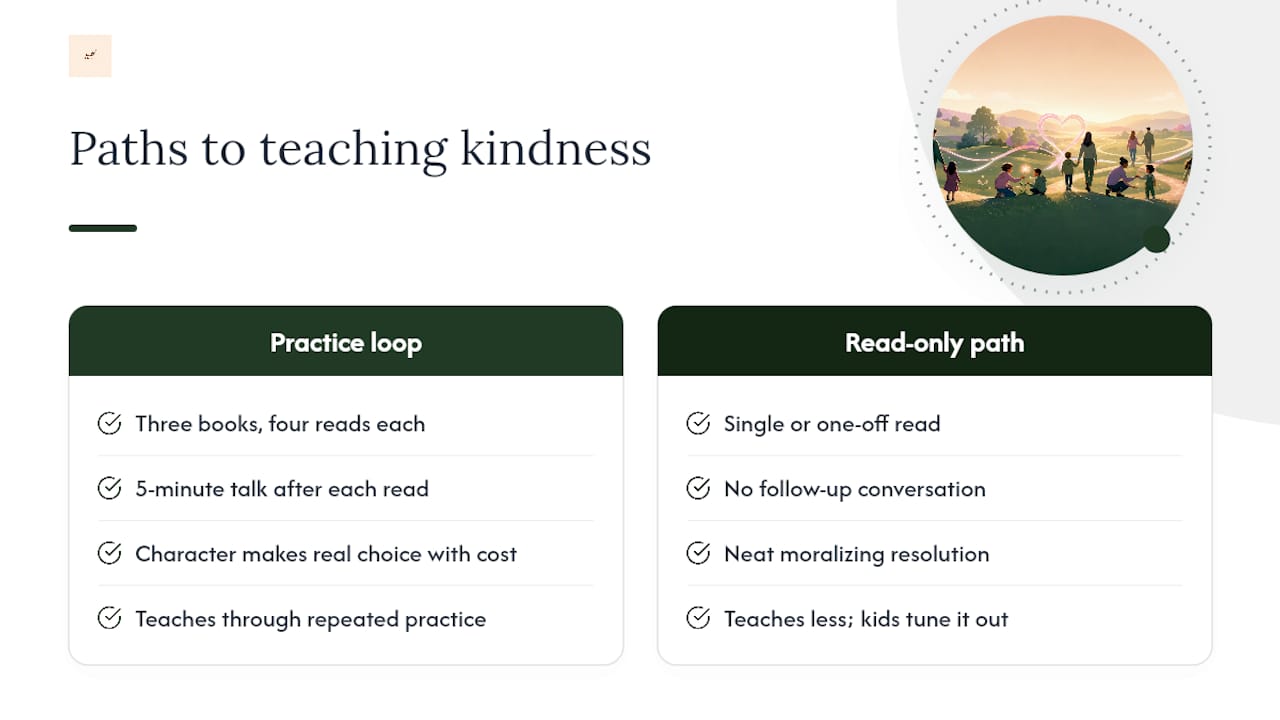
The conventional wisdom oversells the moralizing ending, the neat resolution where the character learns their lesson in the last three pages. Kids tune that out fast. What works better is a character who makes a real choice with a real cost, then room for the adult to ask an open question instead of supplying the answer.
If you take one thing from this guide, prioritize repetition and conversation over collecting new titles. A shelf of twenty unread kindness books does less than three books read four times each, with a five-minute talk after every one.
— Derek Amarillas
Ready to Add These Books to Your Shelf?
Icon Literary is built specifically around emotional-literacy storytelling for ages 3 to 8, which means the books, activity kits, and printable resources all work as one system instead of separate purchases you have to stitch together yourself.
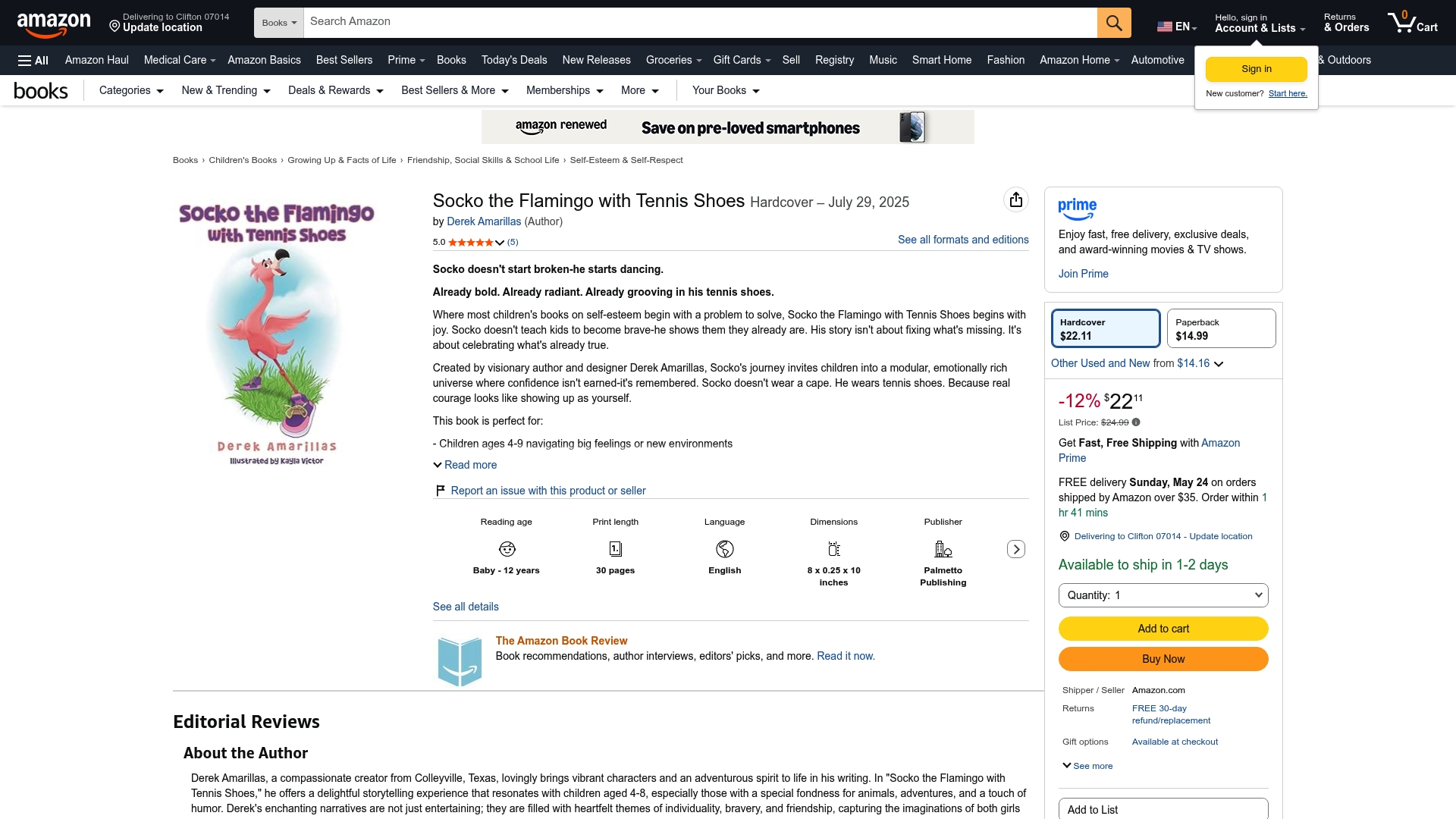
The physical books work well for bedtime and one-on-one reading, while the downloadable activity kits and card decks give teachers a faster way to run a classroom compliment circle or kindness challenge without building materials from scratch. Parents get the same benefit at home: a printable chart or craft that ties directly to the book you just read, instead of a generic worksheet with no connection to the story. Explore the full catalog at Icon Literary and find the title or activity kit that matches the lesson you're working on this week.
Sources
- Creative picture books to inspire everyday acts of kindness | Doing Good Together
- How to be a kindness role model for your kids | Greater Good Science Center
- Children's books about kindness | Brightly
- Each Kindness by Jacqueline Woodson | Penguin Random House