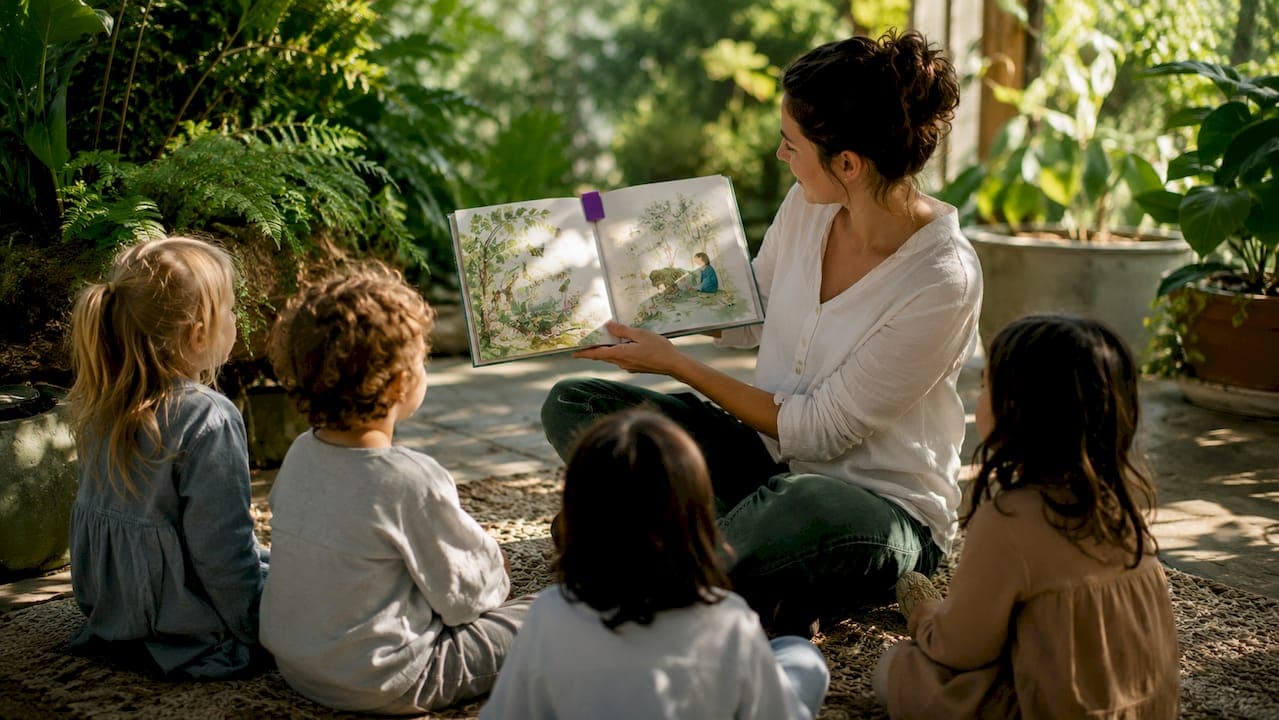
Poetry picture books are the strongest read-aloud choice for children ages 2 to 8 because rhythm and illustration work together to build listening skills, vocabulary, and emotional understanding at once. Icon Literary curates titles built for exactly this kind of lap read or classroom moment. Parents and teachers get a shortcut past guesswork with picks matched to age, pacing, and read-aloud style.
TL;DR:
- Not all poetry picture books maintain their rhythm and rhyme past the second reading, so preview aloud to ensure flow and pacing suit young listeners.
- The best titles treat page turns as deliberate pauses, giving children time to anticipate and engage with the poem’s rhythm and visual storytelling.
- Two-voice and call-and-response formats create classroom and group reading engagement that surpasses solo narration, especially for SEL and repeated readings.
- Matching complexity to age is crucial, with toddlers needing short lines and repetition, while older children can appreciate longer stanzas and narrative arcs.
- Prioritize books with disciplined pacing, clear visual cues, and formats that require active participation over those with solely impressive language or art.
Table of Contents
- Why Poetry Picture Books Help Kids Learn to Listen and Feel
- How to Choose a Poetry Picture Book That Actually Works
- Icon Literary's Curated Poetry Picture-Book Picks
- Read-Aloud Moves That Get More Out of Every Poem
- Why Trust These Picks
- The Different Styles of Poetry You'll Find in Picture Books
- Authors and Illustrators Who Shaped the Format
- An Editorial Take on What Actually Makes These Books Work
- Where to Find These Picks
- Sources
Why Poetry Picture Books Help Kids Learn to Listen and Feel
Rhythm and rhyme do more than entertain. They train a child's ear to notice syllables, beats, and word patterns, which is the foundation of phonological awareness and, eventually, reading fluency. Illustrations carry the rest of the load. When verse pairs with strong visual storytelling, children get a second channel for understanding: the picture explains what the words imply, and the words name what the picture shows.
Most poetry picture books run 32 to 64 pages, a length that fits the attention span of a 2 to 8-year-old without cutting a poem's momentum short. A picture poem adapts verse across an entire illustrated book, so the rhythm and the artwork move as one unit from page to turn.
Where these books earn their keep:
- Bedtime, where a steady beat settles kids down and builds sound awareness at the same time
- Circle time and small-group instruction, where repetition invites choral response
- Independent browsing, where strong illustrations pull reluctant readers into the text
Librarians and teachers reach for poetry specifically at bedtime and circle time because the soothing rhythm and the sound-play happen in the same breath. That dual function is rare in picture books generally.
How to Choose a Poetry Picture Book That Actually Works
Not every rhyming book holds up past a second read. Here's a quick checklist to run through before you commit shelf space or bedtime minutes to a title.
- Read two spreads out loud in the store or on preview. If the rhythm feels forced or the rhyme strains for a word, the book will grate by the fifth reading.
- Watch the page-turn pacing. The strongest titles treat the page turn as a deliberate pause, giving a child a moment to guess what comes next.
- Look for back matter and two-voice formats. Books labeled for two or more voices with discussion notes at the back carry far more classroom value than a single straight read-through.
- Match complexity to age. A 2-year-old needs short lines and heavy repetition; an 8 year old can handle narrative arcs and longer stanzas.
- For toddlers, check tactile features. Die-cuts, flaps, and textured pages add a hands-on reveal that keeps younger listeners in the moment.
- Check publisher education pages when available. Many publisher listings note page count and grade band, which saves guesswork when you're matching a title to a classroom.
Pro Tip: Read the book aloud to yourself once before reading it to kids. If you stumble over the rhythm as an adult, a five-year-old will stumble twice as hard.
For more on how page design shapes comprehension, Icon Literary's piece on illustration pacing breaks down why the page turn matters as much as the words on it.
Icon Literary's Curated Poetry Picture-Book Picks
The catalog is built around emotional literacy, so the poetry-format titles earn their spots through read-aloud performance, not just pretty verse. Here's how the current picks break down by use case.
- Best for bedtime: Titles with slow, repeating refrains and muted color palettes that wind a child down rather than wind them up. Look for short stanzas and a predictable closing line children can say along with you.
- Best for group reading: Pieces written for two voices or call-and-response, where one half of the class reads a line and the other answers. These hold attention in a way solo narration cannot match.
- Best for introducing poetic form: Books that mix free verse and rhyme within the same story, so children absorb the difference without a grammar lesson attached.
- Best for emotional check-ins: Verse built around a single feeling, paired with illustrations that show a character working through it, useful for SEL-focused circle time.
- Best for read-again value: Titles with wordplay dense enough that kids notice something new on the third or fourth pass.
| Use case | What to look for | Read-aloud tip |
|---|---|---|
| Bedtime | Slow refrain, muted art, predictable close | Whisper the last line and let the child finish it |
| Group reading | Two-voice or call-and-response structure | Split the class into two sides before you start |
| Introducing poetic form | Mixed free verse and rhyme | Point out where the rhythm changes and ask why |
| Emotional check-ins | Single feeling per spread | Pause after each page and ask what the character feels |
| Repeat engagement | Layered wordplay | Ask kids to spot one new word each reading |
Icon Literary's full lineup, including SEL-anchored story worlds built for ages 3 to 8, sits in the Icon Literary Catalog. Titles are organized so a parent looking for a calming bedtime piece isn't wading through group-read material meant for a classroom of twenty.
If you're shopping for a specific age band rather than a specific mood, Icon Literary's gift guide for ages 4 to 7 narrows the catalog down by developmental stage instead of by poem style.
Read-Aloud Moves That Get More Out of Every Poem
A poem read flat, at one speed, with no pauses, wastes most of what the format offers. Here's a routine that gets more mileage out of the same page.
- Set a pace before you start. Read the first stanza silently to yourself, find the natural beat, and match your voice to it out loud.
- Use the page turn as a pause, not a rush. Let a beat of silence sit before you turn, especially if the illustration hints at what's coming.
- Invite an echo. After a strong line, repeat it and let the child say it back. This works especially well with refrains.
- Try two-voice formats with a partner or the whole group. One reader takes the left-page lines, another takes the right, and the poem becomes a duet instead of a monologue.
- Extend with a small activity. A quick drawing of the poem's main image, a wordplay game hunting for rhymes on the page, or a tactile prompt (tracing letters, touching textured pages) locks in what was just heard.
Pro Tip: With toddlers, cut the pause length in half and add more physical movement, clapping on the beat or bouncing on a strong syllable. Early elementary kids can handle longer silences and more complex echo patterns.
Icon Literary's SEL playbook for picture books walks through several of these extension activities in more depth, and it's worth a look if you're running a full storytime block rather than a single bedtime poem. For toddlers just learning to talk through play, narrating everyday moments alongside poetry read-alouds reinforces the same language patterns outside of book time.
Why Trust These Picks
These recommendations come from Derek Amarillas, a contributor who covers early literacy and classroom-ready storytelling for the editorial team, with additional session-plan and SEL guidance woven in from catalog work.
- Derek Amarillas has contributed session-plan and SEL-focused pieces, including guidance on pairing picture books with classroom discussion.
- The catalog is built specifically around emotional-literacy themes for ages 3 to 8, which shapes which poetry-format titles make the cut.
- For teachers building a full unit, the SEL playbook and the age-tagged gift guide both extend the picks above into ready lesson material.
The Different Styles of Poetry You'll Find in Picture Books
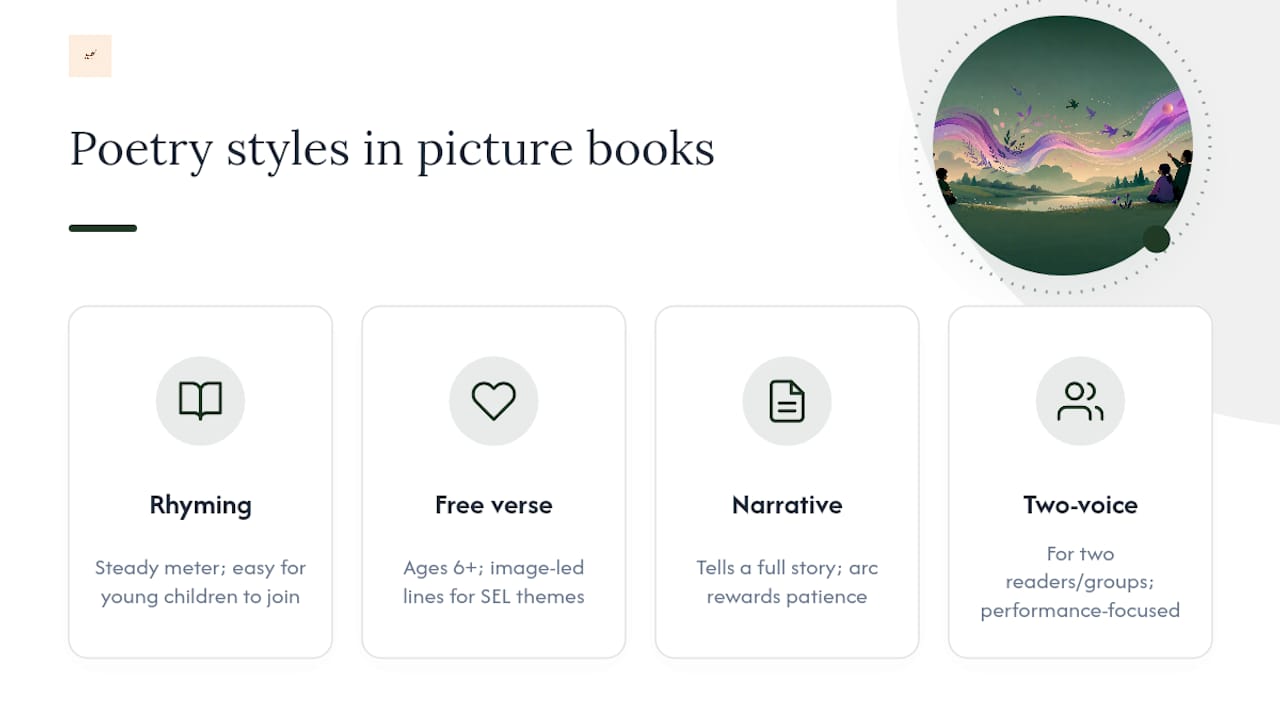
Rhyming verse is the style most parents picture first, and it's still the workhorse of the format. Strong end rhyme and a steady meter make lines easy to predict, which helps young children join in before they can read the words themselves.
Free verse shows up more in books aimed at slightly older kids, usually 6 and up. It drops the rhyme scheme but keeps a strong image or emotional beat per line, which works well for SEL-themed titles where the feeling matters more than the bounce.
Narrative poetry tells a full story in verse, often across the entire book, with characters, a problem, and a resolution just like prose fiction. This style rewards patience. It's less immediately catchy than rhyme but pays off with a satisfying arc by the last page.
A fourth category worth knowing: the two-voice poem, written for two readers or two groups to trade lines back and forth. It's technically a performance format more than a poetic style, but it changes how a poem lands in a group setting more than any other single choice on this list, and it's why multiple-voice formats show up so often on teacher recommendation lists.
Most strong collections mix two or three of these styles rather than committing to one. A single book might open with a rhyming introduction, shift into free verse for an emotional peak, and close with a narrative wrap-up. Watching for that mix is one more thing worth checking before you buy.
Authors and Illustrators Who Shaped the Format
Poetry picture books didn't start as a distinct category. They grew out of the nursery rhyme tradition, adapted over decades into longer illustrated works that could carry a full poem or a themed collection across dozens of pages. Poets.org's archive of classic poems, including works like Remember, shows the kind of source material illustrators have long drawn on when adapting standalone poems into full picture-book treatments.
The format's evolution owes a lot to illustrators who treat the page turn as a storytelling tool rather than decoration. The strongest pairings in the genre happen when an illustrator reads a poem's rhythm and translates it into visual pacing, slowing a spread down where the poem lingers, speeding it up where the language quickens.
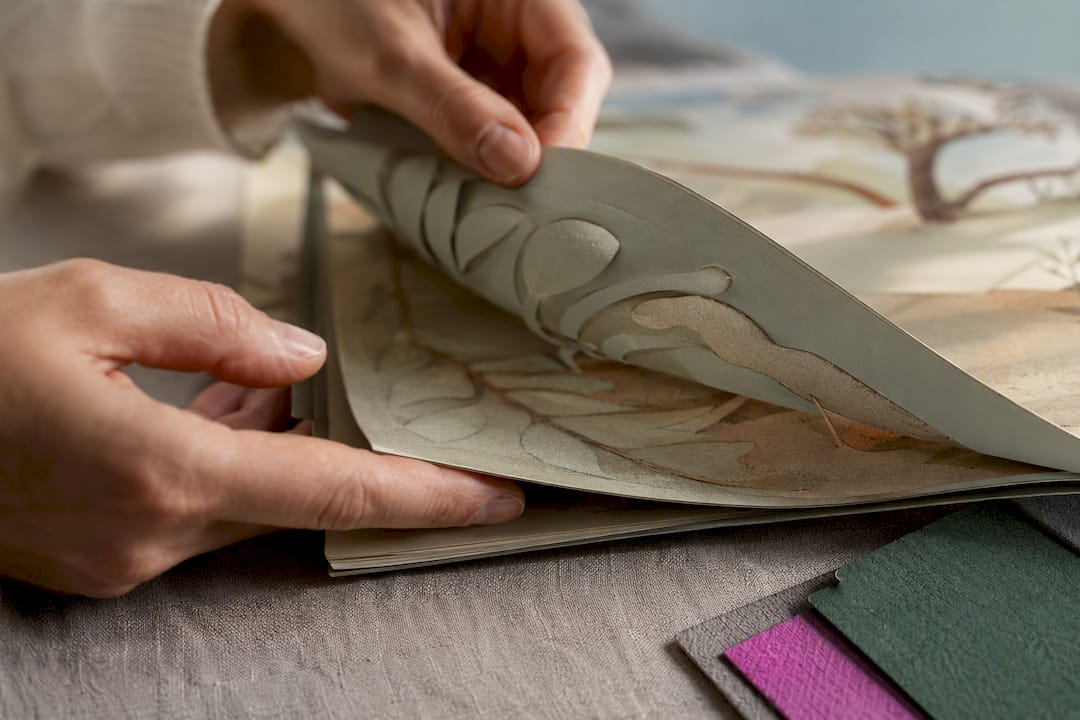
Modern picture-poem creators increasingly design for hands-on engagement too. Die-cut spreads and textured pages, once rare, now show up regularly in titles aimed at preschoolers, adding a physical reveal to match the verbal one. That shift reflects a broader trend: poetry picture books work best as bridges between the nursery rhymes toddlers already know and the longer, more complex poems they'll encounter in school.
An Editorial Take on What Actually Makes These Books Work
Most advice on poetry picture books focuses on literary merit, whether the language is clever, whether the rhyme scheme is tight. That's the wrong first filter. The books that survive fifty bedtime readings without losing a parent's patience are the ones with disciplined pacing, not the ones with the most impressive verse.
Conventional lists also tend to treat rhyme as the default and everything else as a variation. In practice, the two-voice and free-verse formats do more heavy lifting in classrooms than straight rhyme ever does, because they force participation instead of passive listening. A kid who has to deliver a line on cue remembers that poem in a way a kid who just listened rarely does.
If you take one thing from this guide, prioritize the page-turn test over the cover art. Read two spreads aloud before buying. A book that earns a genuine pause at the right moment will outlast a dozen books with prettier illustrations and sloppier rhythm.
— Derek Amarillas
Where to Find These Picks
This is a direct route to poetry-format picture books built specifically around emotional-literacy themes, so you're not sorting through a catalog designed for a different purpose entirely. Titles in the collection are organized by age band and use case, the same categories covered above, which means less browsing and more time actually reading with your kids.
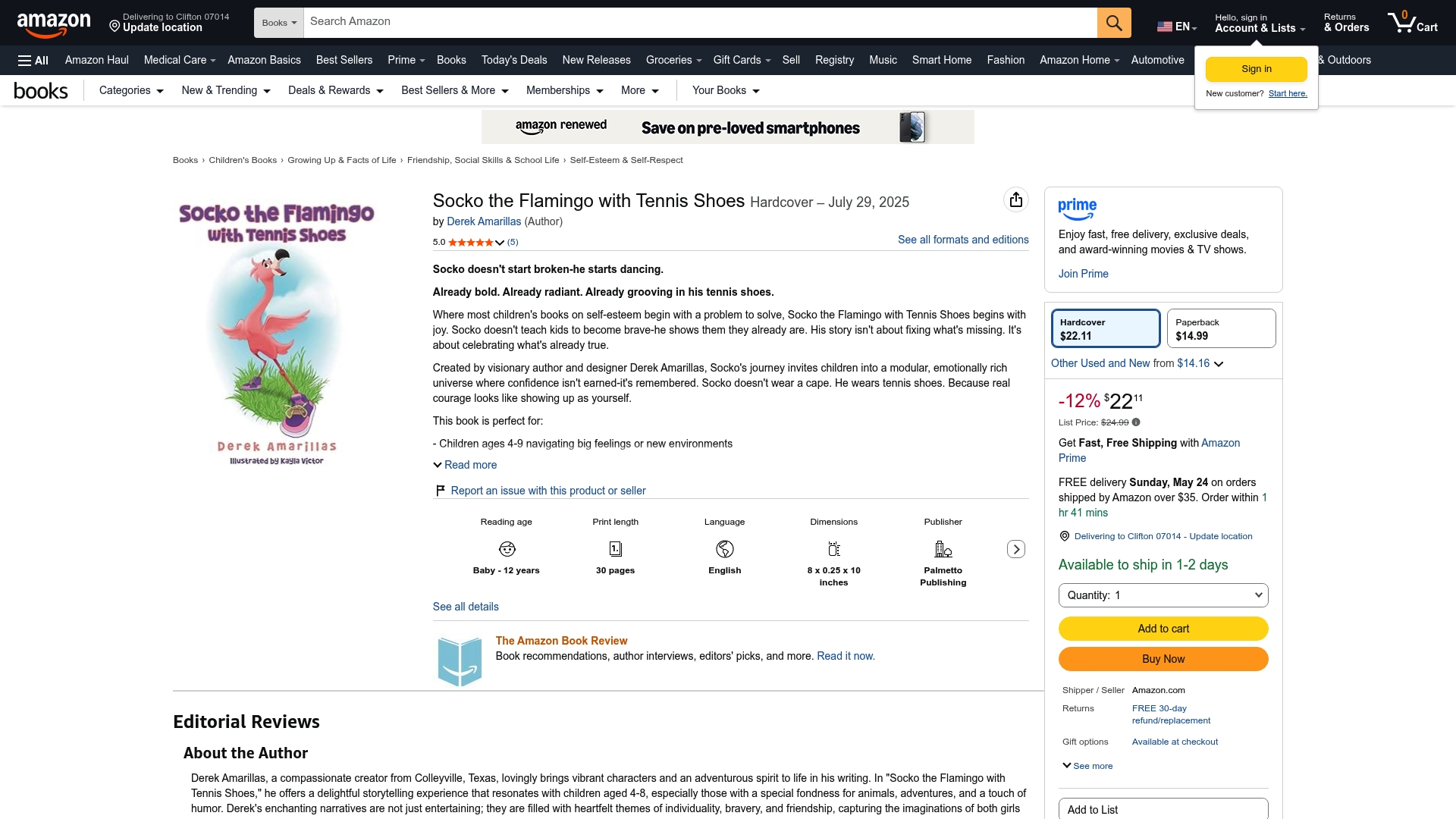
If bedtime rhythm is what you're after, or you're stocking a classroom shelf for circle time, the Icon Literary Catalog sorts titles by exactly those needs. Teachers looking for printable extensions or SEL discussion prompts to pair with a read-aloud can find additional downloadable material through the member site. Start by browsing the catalog for your child's age band and pick one title to read this week. The rhythm test from this guide takes thirty seconds and tells you everything you need to know before you commit.
Sources
- Picture books & poetry: motion and rhythm (Reading Rockets)
- Favorite Poetry Picture Books to Read Aloud to Kids (NYPL)
- Goldfinches (Penguin Random House Elementary Education listing)
- Poets