
A short, well-chosen stack of picture books about courage, paired with a few pointed questions during read-aloud, teaches bravery faster than any lecture ever will. Look for titles that show everyday acts of nerve, sort them by age and fear type, and ask one good question at the right pause. That combination turns a bedtime story into a lesson that sticks.
TL;DR:
- Choose books that focus on everyday acts of bravery, such as speaking up or trying again, tailored to the child's age and specific fears.
- Use reading pauses to ask children how characters feel, what they would do, and when they felt brave to reinforce lessons during storytelling.
- Revisit the same books regularly over weeks rather than a single read to embed the concepts of courage and build behavioral change.
- Select characters who make active choices and reflect diverse, authentic backgrounds to enhance representation and understanding of bravery.
- Match the book's theme and complexity to the child's developmental level and specific fears for more effective learning and engagement.
Table of Contents
- The Best Picture Books About Courage for Home and Classroom
- Finding the Right Book by Age and Fear
- How to Turn Storytime Into a Courage Lesson
- Why Representation Changes What "Brave" Means to a Child
- Where These Picks Come From
- What Most Courage Book Lists Get Wrong
- Build a Courage Reading Habit With Icon Literary
- Sources
The Best Picture Books About Courage for Home and Classroom
Courage in a good picture book rarely looks like a cape or a sword. It looks like a kid raising a shaky hand, a toddler naming a scary feeling out loud, or a character trying again after falling short. The ten titles below cover that range, from board books for toddlers to read-alouds built for a classroom circle.
-
A Kids Book About Courage (Tasneem Halloum). This one skips the superhero framing entirely and treats courage as a series of small choices kids make every day, from speaking up in class to admitting a mistake. Minimal text, direct address to the reader, best for ages 5 to 9. Read-aloud tip: pause after each page and ask, "When did you choose courage like that this week?"
-
Let's Be Brave (Little Voices series). A board book that breaks bravery into concrete, toddler-sized moments. Reviewers have praised its inclusive illustrations and accessible language, which make it one of the few courage titles that genuinely works for ages 2 to 4. Read-aloud tip: point at each picture and let your toddler name what the character is feeling before you turn the page.
-
Billy's Bravery (Tom Percival). Billy is scared of an upcoming performance, and the book doesn't rush him past that fear. It shows a relatable hero confronting nerves and trying anyway, which makes it especially useful for kids with performance or social anxiety, ages 4 to 7. Read-aloud tip: ask, "What's one thing that makes your tummy feel like Billy's before something big?"
-
I Am Courage (Susan Verde and Peter H. Reynolds). This title reframes courage as something you practice, not something you're born with. It's built around everyday acts like breathing through fear, speaking up, and asking for help, and it's become a common SEL read-aloud in elementary classrooms, ages 4 to 8. Read-aloud tip: try the breathing exercise from the book together before discussing the story.
-
Gertie Braves the River (Louis Papadakis). A rhyming picture book where the lesson is squarely about persistence: courage means trying again and finding a new way when the first plan fails, a message that lands well for ages 3 to 8 in mixed storytime groups. Read-aloud tip: stop right before Gertie's solution and ask kids to guess what she might try next.
-
The Dot (Peter H. Reynolds). A quieter kind of courage, the willingness to make an imperfect mark and call it art. Works well for ages 4 to 8, especially reluctant creators.
-
Ish (Peter H. Reynolds). A companion to The Dot that tackles the courage to keep making things even when they don't look "right." Good for ages 4 to 8, particularly perfectionist kids.
-
The Girl Who Never Made Mistakes (Mark Pett and Gary Rubinstein). Shows the courage in admitting an error out loud. Fits ages 5 to 9 and pairs naturally with classroom discussions about growth mindset.
-
Giraffes Can't Dance (Giles Andreae). Gentle rhyming text about a giraffe who finds his own kind of bravery after being mocked. Works for ages 3 to 7, especially in group settings.
-
The Invisible Boy (Trudy Ludwig). A quieter story about the courage of including someone who's been overlooked. Best for ages 5 to 9, strong for classroom empathy units.
Mixing board books with classroom-length narratives means you can pull from this list whether you're rocking a very young child to sleep or leading a circle of kindergartners — and subscribing to a Spanish/dual-language children’s book subscription service can make finding diverse-language options easy.
Finding the Right Book by Age and Fear
Age and specific fear type matter more than most parents expect when picking a courage book. A toddler doesn't need a story about public speaking, and a second grader has already outgrown separation-anxiety board books. Sorting by both variables gets you to the right book faster.
By age:
- Toddlers (2 to 3): board books like Let's Be Brave work because they map concrete acts, like asking for help or taking a breath, that toddlers are just learning to name.
- Preschool (3 to 5): Gertie Braves the River and Giraffes Can't Dance both use rhyme, and rhyme and repetition aid memory and re-readability at this age, which matters if you're reading the same book fifteen times in a row.
- Early elementary (5 to 8): A Kids Book About Courage, I Am Courage, and The Girl Who Never Made Mistakes all hold up in a classroom setting, where kids can discuss the text without needing every idea illustrated literally.
By theme:
- Everyday bravery: books that model small daily acts, like speaking up, trying something new, or asking for help, rather than dramatic feats, tend to generalize better to a child's actual life. I Am Courage and A Kids Book About Courage both live here.
- Facing specific fears: Billy's Bravery targets performance anxiety directly. Separation anxiety and storm fears show up more in board books and are worth searching for by that exact keyword when you're shopping.
- Biography and real-world inspiration: stories about real people who showed courage under pressure give kids proof that bravery isn't fictional. These work particularly well with early elementary readers who are starting to understand history and consequence.
One-line rule of thumb: match the book's reading level to your child's attention span first, then match the theme to whatever specific fear is showing up at home or in class that week.
How to Turn Storytime Into a Courage Lesson
Reading the book is only half the job. The conversation around it is what actually builds the skill, and adding simple prompts and follow-up activities significantly increases how much a book list actually gets used in a classroom or at home.

Start by framing the word itself before you open the book. For a toddler, say, "Brave means doing something even when it feels scary." For a second grader, you can go further: "Courage isn't about not being scared. It's about doing the hard thing anyway."
Then use this sequence during the read:
- Read the first few pages without stopping, so the child settles into the story.
- Pause at the character's first moment of fear and ask, "What do you think they're feeling right now?"
- Pause again right before the character acts and ask, "What would you do here?"
- After the resolution, ask, "Was there a moment you felt brave, like they did?"
- Close with one action step: draw the scariest moment, or name one brave thing to try this week.
A few follow-up activities extend the lesson past the last page. Try a "bravery jar" where the child drops in a slip of paper each time they do something brave, role-play the book's scary moment and let the child pick a different ending, or pair kids up to share one thing that scares them without anyone being allowed to laugh.
Some kids will get quiet or upset at certain pages, especially ones dealing with a fear close to their own. That's a good sign the book is working, not a reason to skip ahead.
Pro Tip: For a child who shuts down when asked directly about fear, ask about the character instead. "Why do you think Billy was so nervous?" gets an honest answer faster than "Are you ever scared like that?" ever will.
For kids who freeze up specifically around social situations or performing in front of others, pairing this approach with strategies for reducing social anxiety through books gives you a more targeted toolkit.
Why Representation Changes What "Brave" Means to a Child
A child who never sees a character who looks like them, prays like them, or lives like them showing courage will quietly assume bravery belongs to someone else. Representation in a courage book isn't a bonus feature. It's the difference between a child absorbing the lesson and just watching someone else's story.
A few things to check before adding a book to your stack:
- Does the character choose to act, rather than get rescued or told what to do?
- Is the cultural or family context specific and authentic, not vague or decorative?
- Has the book been reviewed by sensitivity readers or community members from the culture it portrays?
- Does the story avoid the "brave because of a disability or difference" trope, where courage is treated as compensation rather than character?
Titles like A Kids Book About Courage work partly because the direct, inclusive presentation avoids a single narrow image of what a brave kid looks like. Pair each book with a question that honors the character's specific identity, like "What do you think made that harder for her?" instead of a generic "Was she brave?"
Where These Picks Come From
Icon Literary builds children's stories and SEL tools around the idea that emotional skills, courage included, are learned through repetition and story, not lecture. This list draws on that same philosophy: pick books that model real choices, then give adults simple language to talk about them.
Derek Amarillas, whose work informs Icon Literary's approach to social-emotional storytelling, has focused on making bravery feel practical for kids rather than abstract. If a shy or introverted child in your life needs more targeted picks, seven books for kids who need to feel seen and strategies for building confidence in introverted kids both extend this list well.
What Most Courage Book Lists Get Wrong
Most "best books about courage" lists lean hard on dramatic plots: a fire, a monster, a rescue. That's the wrong emphasis. Kids don't face dragons. They face show-and-tell, a new classroom, or a friend who won't play fair, and the books that actually change behavior are the ones that treat those moments as courage, not as something smaller than the "real" thing.
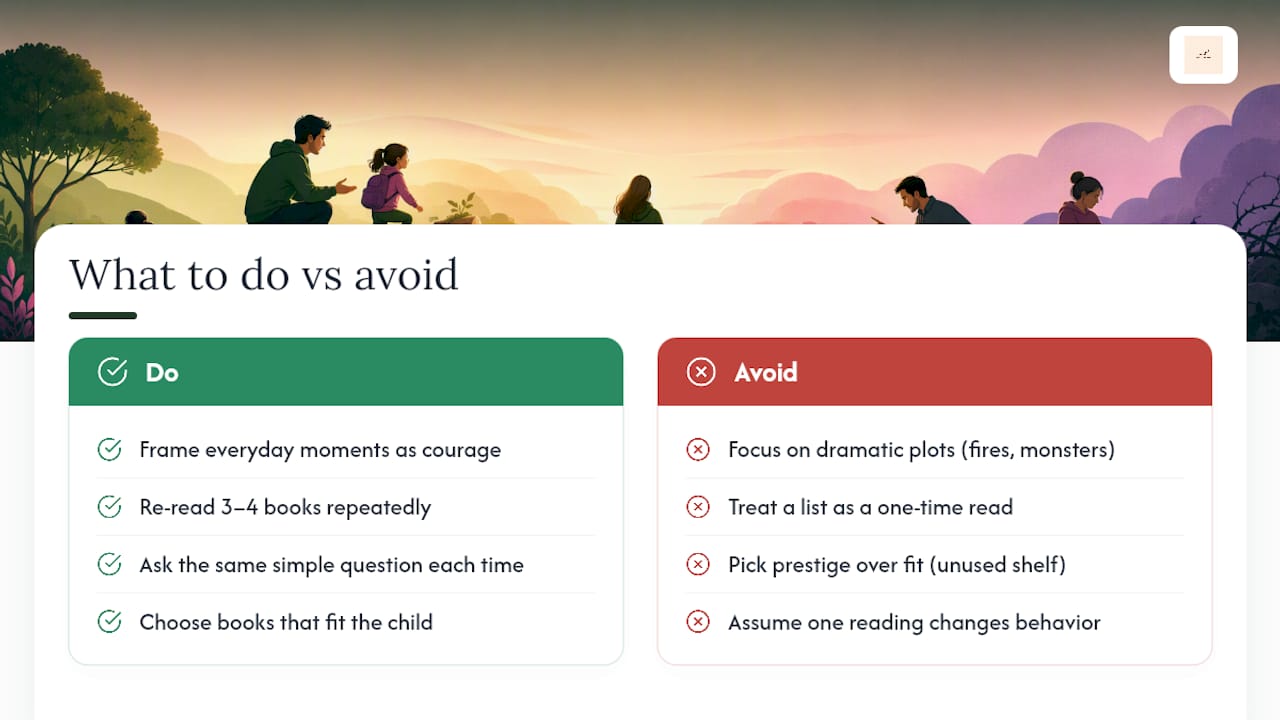
The other mistake is treating a book list as a one-time read instead of a returnable tool. A single reading of I Am Courage won't shift a kid's behavior at recess. Coming back to the same three or four books over a month, with the same simple question each time, does.
If you take one thing from this list, prioritize fit over prestige. The award-winning title that doesn't match your child's specific fear will sit unread on a shelf. The board book that names their exact feeling gets read fifteen times, and that repetition is where the actual learning happens.
— Derek Amarillas
Build a Courage Reading Habit With Icon Literary
For parents and educators looking for children's books that treat a child's fear as specific, not generic, there are options available. Some catalogs focus on everyday emotional-literacy moments that fit directly into the read-aloud framework covered above, rather than dramatic hero stories. The full catalog of children's stories and creative worlds includes titles designed around SEL themes like bravery, honesty, and confidence, with characters built to spark exactly the kind of pause-and-ask conversation this article walks through.
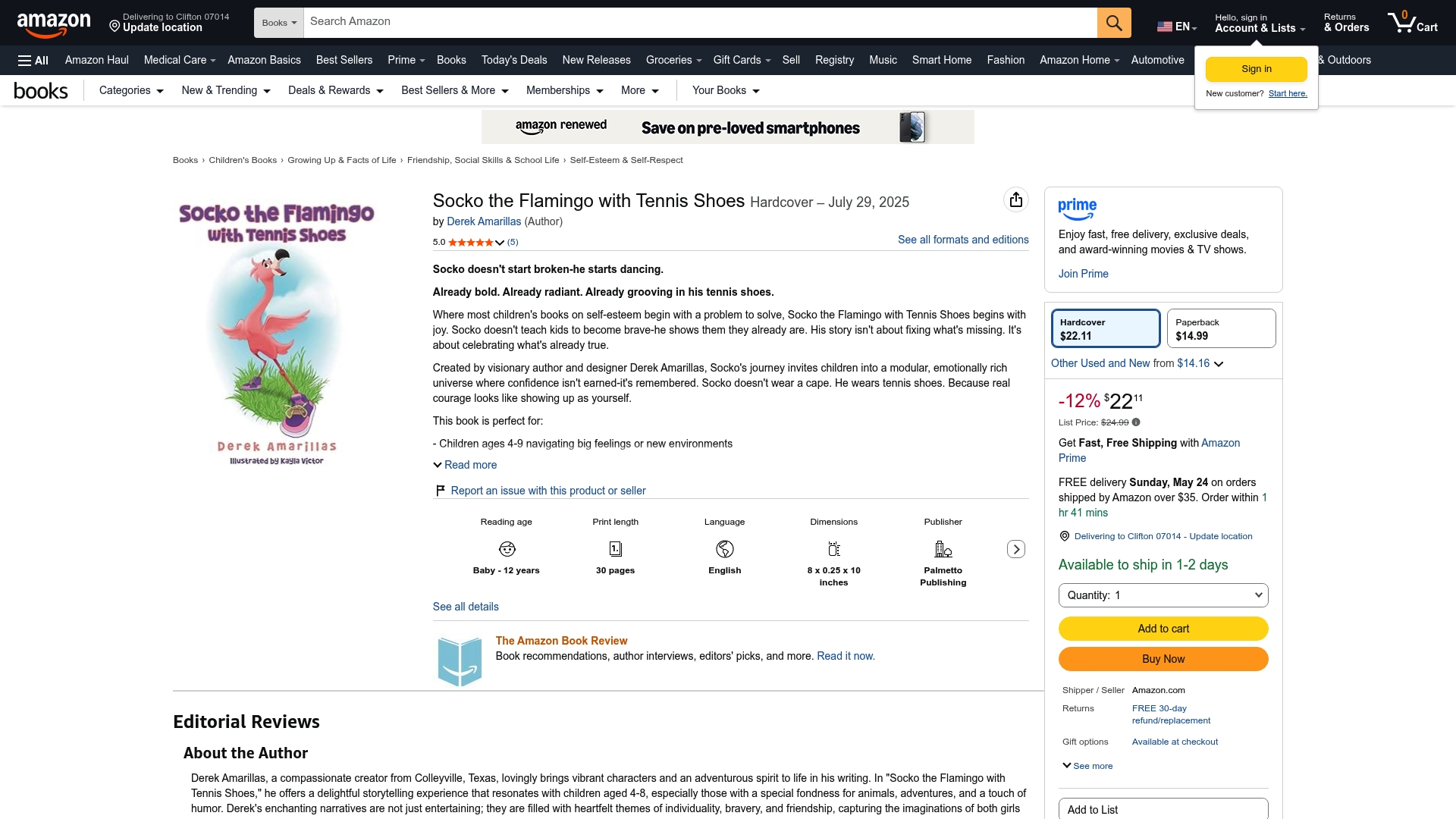
If you're building a longer-term SEL plan rather than a single bedtime story, the Icon Literary member resources give educators and caregivers deeper classroom material to pair with a courage unit. Browse the Icon Literary homepage to see the current lineup, and start with one title that matches the specific fear your child or classroom is facing this month.
Sources
- A Kids Book About Courage — Penguin Random House
- Let's Be Brave — Penguin Random House Retail
- Billy's Bravery — Bookroo
- I Am Courage — Abrams product page