
Counselors need a shelf they can trust, not a Pinterest board they scroll forever. This list gives you 12 to 15 vetted picture books grouped by SEL topic, plus grade-band picks (K through 5) and quick lesson hooks for each one. Icon Literary's own story-driven resources show up near the end as one more option worth a look.
TL;DR:
- Most effective counseling shelves include 12 to 15 core titles focused on feelings, coping skills, social behavior, growth mindset, and grief to ensure versatility across lessons.
- Color-coded emotion systems like those in The Color Monster and Big Feelings Little Feelings significantly help young children identify and regulate their emotions reliably.
- Choosing books with concrete frameworks, clear coping strategies, inclusive representation, and manageable length ensures they remain useful for repeated classroom, group, and individual sessions.
- Regularly reviewing and rotating books based on actual usage and student engagement helps maintain a relevant, budget-friendly collection that supports ongoing SEL needs.
- Pairing books with practical follow-up activities or story-driven tools like iconographic decks enhances engagement and reinforces emotional learning beyond the read-aloud.
Table of Contents
- The Best School Counselor Book List for Elementary SEL Lessons
- How to Turn Any of These Books Into a Ready Lesson
- Grade-Band Picks That Actually Match Reading Level
- What Makes a Book Worth Adding to Your Shelf
- Getting Parents and Caregivers on Board With the List
- Keeping the List Current Without Starting Over Every Year
- Where to Find Affordable or Donated Books for Your Shelf
- Measuring Whether the Books Are Actually Helping
- Why Story Still Beats the Worksheet
- Bring Story-Driven SEL Tools Into Your Counseling Office
- Sources
- FAQ
The Best School Counselor Book List for Elementary SEL Lessons
A strong counseling shelf covers six territories: feelings, coping skills, social skills, growth mindset, inclusion and bullying, and grief or transition. Counselor blogs that maintain recurring "must-have" lists consistently land on about a dozen titles that get reused year after year rather than shelved after one lesson, according to The Responsive Counselor. That repetition is the point. A title earns a permanent spot on your school counselor book list for elementary grades when it works in a whole-class lesson, a small group, and a one-on-one office visit without you reinventing the wheel each time.
Feelings and emotional vocabulary
- The Color Monster by Anna Llenas gives kids a jar-sorting visual for sorting mixed-up emotions by color, which works especially well for K to 2. Have students draw their own "monster" and color in what they're feeling that day.
- My Many Colored Days by Dr. Seuss pairs primary colors with moods for a quick emotional-vocabulary warm-up. Use it as a two-minute morning check-in: "What color is your day?"
- Big Feelings, Little Feelings uses a concrete, color-coded framework that helps early elementary kids name what's happening in their bodies before it overwhelms them, a structure Penguin Random House's own book notes describe as designed with input for emotional accuracy. Pair the read with a body-scan activity where kids point to where they feel a specific emotion.
Coping and self-regulation
- Breathing Makes It Better by Christiane Buchet builds rhythmic, sing-song language directly into the text, so the read-aloud itself becomes a calming exercise, a feature counselor lists specifically call it out for its built-in breathing cues, per Self-Regulation Strategies: A Guide for Educators. Read it slowly and let kids breathe along with the page turns.
- A Kids Book About Coping Skills skips the cute animal metaphor entirely and talks to kids directly about what coping tools actually look like, based on the idea that structured, stepwise tools genuinely build a child's coping repertoire, according to the Penguin Random House Library. Follow it with a "build your own toolbox" worksheet where each student lists three go-to strategies.
- Taste Your Words by Bree Hartlage connects kindness and self-talk to a physical sense (taste), which lands well with kids who respond to sensory framing. Ask students to describe what a mean comment "tastes like" versus a kind one.
Social skills and behavior
- Strictly No Elephants by Lisa Mantchev tackles exclusion and friendship head-on without ever using the word "bullying," making it a gentle entry point for K to 2 groups. Use it to open a discussion on who gets left out at recess and why.
- Just Kidding by Trudy Ludwig addresses the "I was only joking" excuse kids use to soften real unkindness. It's a strong fit for a small group built around teasing versus playful joking.
Growth mindset and individuality
- Bubble Gum Brain by Julia Cook contrasts a flexible "bubble gum brain" with a rigid "brick brain" to make growth mindset concrete for second and third-graders. Have kids catch themselves using "brick brain" language during the week and report back.
- One by Kathryn Otoshi uses colors and numbers as a stand-in for standing up to a bully, and counselor lists cite it repeatedly as teaching bravery and speaking up, per The Responsive Counselor. Pair it with a bystander role-play where kids practice the exact words to say.
Grief, transition, and connection
- The Invisible String by Patrice Karst reframes separation and loss as a connection that can't be cut, which makes it a go-to for grief groups, new-student transitions, and even deployed-parent situations. Have kids draw their own "string" connecting them to people they love who aren't in the room.
How to Turn Any of These Books Into a Ready Lesson
You don't need a new lesson plan for every book. One template covers almost all of them:
- Opening (2 minutes): Ask one question that primes the topic ("Has anyone ever felt left out?").
- Read-aloud (5 to 8 minutes): Read the book straight through once without stopping for discussion.
- Discussion (5 minutes): Ask what the main character felt, what they tried, and what worked.
- Practice (5 to 10 minutes): Run a matching activity, like our emotion sorting activities, a breathing exercise, or a short role-play script based on the book's conflict.
- Closing (2 minutes): Have each student name one thing they'll try before the next session.
For groups of four to six, extend the practice step into a role-play where each kid gets a turn. For whole-class lessons of 20 or more, swap the role-play for a paired discussion or a worksheet. You can find more full lesson breakdowns in our guide to getting SEL books working in classroom lessons.
Pro Tip: Keep a laminated "feeling, trigger, strategy" card in your read-aloud basket. After any book, walk students through naming the feeling, naming what caused it, and picking one coping strategy. That three-step scaffold, sometimes called a "feelings formula," is a structure practitioner resources point to specifically because it transfers to situations outside the book.

Grade-Band Picks That Actually Match Reading Level
K to 1: Stick to short, rhythmic text and bright, single-concept illustrations. The Color Monster, My Many Colored Days, and Strictly No Elephants all work as five-minute read-alouds. Activity hook: have kids point to a picture that matches their mood that morning.
2 to 3: Kids at this level can track a full narrative arc with a clear problem and resolution. Bubble Gum Brain, Just Kidding, and One all hold attention through a complete story. Activity hook: pause mid-book and ask kids to predict what the character will do next.
4 to 5: Older elementary kids can handle more direct, less metaphor-heavy language, which is where A Kids Book About Coping Skills and Big Feelings, Little Feelings fit best, based on the grade-band and teacher notes publishers attach to titles like these, according to Penguin Random House. Activity hook: have students write their own one-page "kids book about" a feeling they want to explain to a younger student.
What Makes a Book Worth Adding to Your Shelf
Before you buy or request a new title, run it through a short checklist:
- Concrete emotion framework. Does the book give kids a clear, repeatable way to name a feeling, rather than a vague mood?
- A named coping strategy. Can a kid walk away and actually do something with what they read?
- A built-in lesson hook. Does the story naturally suggest a discussion question or activity, or will you have to invent one from scratch?
- Representation. Does the cast reflect the range of kids actually sitting in your group?
- Read-aloud length and vocabulary. Can you get through it in one sitting at the intended grade band?
- Availability. Is it still in print and easy to reorder when a copy gets damaged?
Books that use color-coded or otherwise concrete emotion systems consistently make it easier for young kids to identify and talk about what they're feeling, a pattern publisher research on titles like Big Feelings, Little Feelings backs up directly, per Penguin Random House.
Pro Tip: Pair any coping-skills book with a printable follow-up activity, like our emotions coloring pages, so the lesson doesn't end when the last page turns.
Getting Parents and Caregivers on Board With the List
Send the list home, don't just keep it in your office. A one-page flyer with three or four titles per grade band, plus a single discussion question per book, turns a school resource into a bedtime routine. Ask teachers to share the list at back-to-school night or through a monthly newsletter blurb.
Offer a lending option. Many counselors keep a small "take home and return" shelf so families without easy book access can still read the same titles kids are discussing in group. Include a bookmark with two or three questions parents can ask, like "What did the character do when they felt left out?"
Invite feedback. Parents dealing with a specific issue, a divorce, a move, a new sibling, often know which topic their child needs before you do. A short survey at the start of the year asking what themes matter most at home helps you prioritize which titles to buy first and which lesson hooks to build out.
Consider a family read-along night once a semester where you read one book aloud to a mixed group of kids and parents, then send everyone home with the same discussion card. It reinforces that the school counselor book list for elementary students isn't just a classroom tool. It's something families can use too.
Keeping the List Current Without Starting Over Every Year
Treat your shelf like a rotation, not a museum. Experienced counselors tend to keep a compact core of titles they return to year after year, adding depth through lesson-ready activities rather than constantly swapping in new books, a pattern reflected in recurring "most-used" lists like Counselor Keri's archive of favorites.
Set a yearly review point, ideally over the summer, where you flip through each book and ask two questions: did this get used at least three times this year, and did it land with kids? Anything that sat on the shelf untouched is a candidate to swap out or move to a specific grade level instead of the general rotation.

Track requests. If three different teachers ask for a book on the same topic within a semester, that's a signal to add a new title rather than stretch an old one to cover ground it wasn't built for. Keep a running note, even a simple spreadsheet, of which books get pulled most often and which sit untouched, so your next order is based on actual use instead of guesswork.
Retire damaged copies fast. A torn cover or missing pages sends a subtle message that the book, and the topic, doesn't matter enough to fix.
Where to Find Affordable or Donated Books for Your Shelf
Counseling budgets rarely stretch far, so get resourceful early. Donors Choose and similar classroom-funding platforms let you post a specific book wish list that parents, alumni, or community members can fund directly. Local libraries sometimes run "de-accession" sales where retired copies sell for a dollar or two.
Reach out to your PTA or PTO before assuming there's no budget. Many parent groups have a small discretionary fund earmarked for exactly this kind of request, and a short, specific ask, "I need these six titles for our SEL program", is easier to approve than a vague request for "more books."
Check with school psychologists, social workers, or district SEL coordinators. They sometimes have grant access or bulk-order agreements that individual counselors don't know about. Local bookstores occasionally offer educator discounts if you ask directly rather than assuming the standard price is fixed.
Finally, look at printable and digital options to stretch a tight budget further. A printable activity or story-based deck can extend the life of a physical book you already own, letting one title cover several lessons instead of just one read-aloud.
Measuring Whether the Books Are Actually Helping
A book list only earns its place on your shelf if you can point to some evidence it's working. Start simple: a short pre and post survey using faces or a 1 to 5 scale, asking kids to rate how confident they feel naming their emotions or picking a coping strategy before and after a unit built around a specific title.
Watch behavior referrals and office visit patterns during and after a themed unit. If Just Kidding anchors a six-week unit on teasing and your recess referral count for exclusion-related conflicts drops, that's a real signal the material is landing, not just being read.
Ask teachers directly. A two-question email, "Have you noticed kids using language from our recent SEL unit?", gives you qualitative feedback that a formal assessment tool might miss entirely. Keep a simple log noting which book, which group, and what you observed afterward. Over a year, that log becomes its own evidence file you can bring to an administrator when budget time comes around.
Why Story Still Beats the Worksheet
Story does something a worksheet can't: it lets a kid rehearse a hard feeling from a safe distance, through a character instead of themselves. That's not a soft claim. It's the entire reason a well-chosen picture book outperforms a printed feelings chart in a one-on-one session, because the kid gets to process the emotion as an observer before they're asked to name it as their own experience.
At Icon Literary, that belief drives everything we build, from original character worlds to the activity tools that pair with them. Good SEL design doesn't lecture. It builds a world a kid wants to return to, then lets the emotional work happen inside that world.
— Derek Amarillas
Bring Story-Driven SEL Tools Into Your Counseling Office
A story-driven SEL toolset offers an alternative to piecing together a shelf title by title. Instead of hunting down a dozen separate books from a dozen separate publishers, you get story-driven characters and printable activities built around the same checklist this list is based on: concrete emotion frameworks, built-in lesson hooks, and diverse, age-appropriate storytelling for ages 3 to 8.
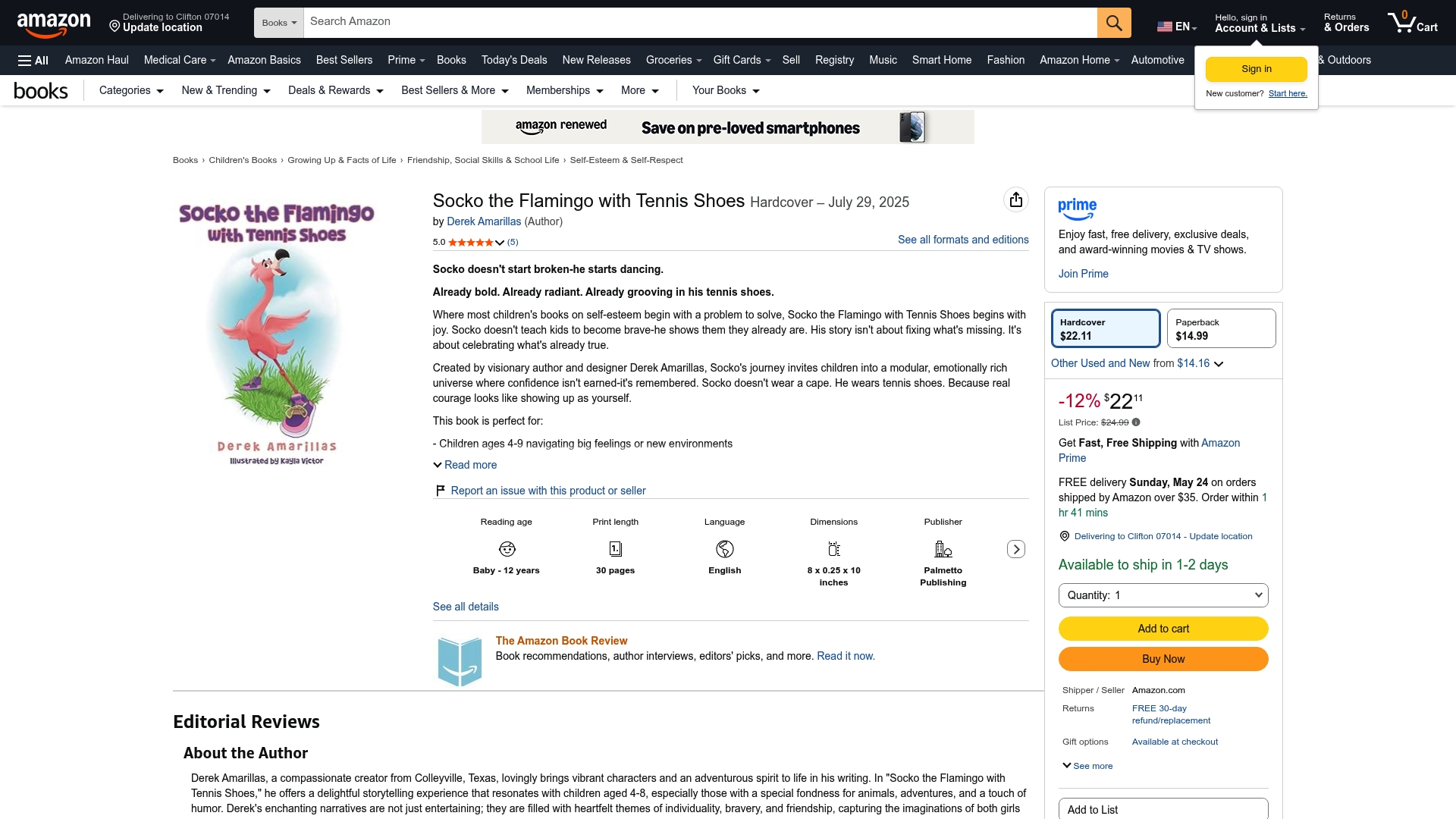
The Duckwave Decks run $7 as a one-time purchase and work well for small groups or a quick individual counseling session when you need a low-cost, high-engagement activity on hand. For a broader look at story worlds and activity kits, including Socko's Universe, browse the full catalog and see which set fits your caseload, whether that's classroom read-alouds, small groups, or a one-on-one toolkit in your office. Start with one deck, test it in a single session, and build out from there.
Sources
- 12 Must - Have School Counseling Books
- Big Feelings, Little Feelings | Penguin Random House Elementary Education
- Felix Feelings Formulas — NCYI
FAQ
What are some good books for elementary school counselors?
Strong picks include The Invisible String for grief and transition, One for bravery and social skills, and Big Feelings, Little Feelings for concrete emotional vocabulary. A solid school counselor book list covers feelings, coping, social skills, growth mindset, and inclusion so no single topic gets left out.
What are the must-haves for an elementary school counseling office?
Beyond a curated book shelf, most offices keep fidgets, a feelings chart, a calm-down corner, and small-group activity supplies like Icon Literary's Duckwave Decks on hand. The goal is having something ready to grab whether a student needs a whole lesson or a five-minute reset.
What is the 80/20 rule for school counselors?
Definitions of this rule vary by district and program, so there's no single agreed-upon standard to cite here. Most counselors use it loosely to mean spending the bulk of their time on direct student services rather than administrative tasks, but the exact split isn't a fixed, universal figure.
What makes a good elementary school counselor?
A good counselor pairs strong relationship skills with practical tools, ready-to-use books, structured coping strategies, and clear lesson formats that don't require reinventing a plan every session. Consistency matters as much as content: kids respond better to a familiar routine like the "name it, find the trigger, pick a strategy" scaffold than to a new approach every week.
How many books should a school counselor's shelf have?
Somewhere around 12 to 15 well-chosen titles, organized by SEL topic, covers most elementary needs without becoming unmanageable. Counselor blogs that maintain recurring lists tend to land in that same range, prioritizing books they reuse every year over constantly adding new ones, per The Responsive Counselor.