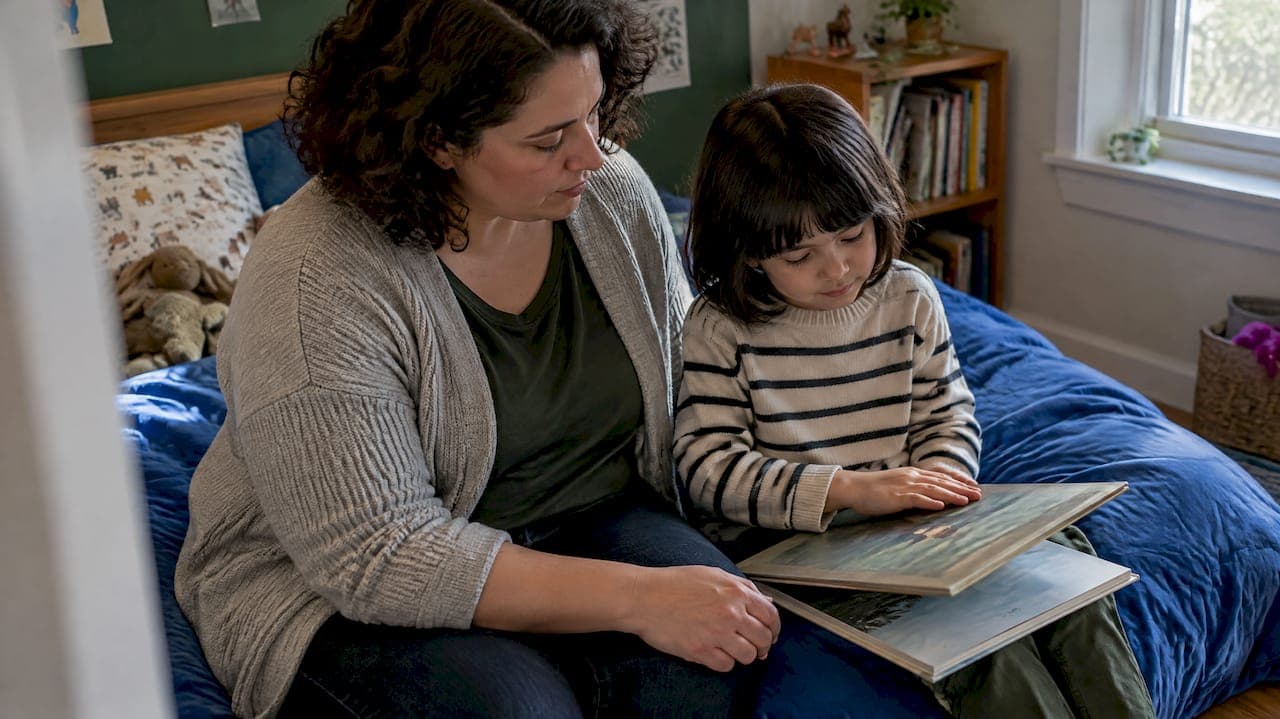
Use regular, adult-guided shared reading of developmentally appropriate picture books to build emotional vocabulary and coping skills. The books work best when a trusted adult reads with the child, names feelings, and asks open questions. Add a brief follow-up activity and keep the routine short and predictable, such as one session a week.
TL;DR:
- For separation worries, The Invisible String fits ages 4 to 8; Wemberly Worried suits ages 3 to 6, and Breathe Like a Bear models breathing.
- For trauma or a frightening event, read A Terrible Thing Happened with a counselor’s guidance, pause whenever needed, and end with a calming activity.
- Developmental bibliotherapy addresses everyday transitions, while clinical bibliotherapy targets specific needs; screen each book for age fit, representation, coping skills, and cultural respect.
- The READING and FEELING program produced gains in emotional vocabulary and recognition of masked feelings within about nine weeks.
- Wordless books suit ages 3 to 5 because children can build the story together and focus on feelings rather than text.
Table of Contents
- 1. Which therapy picture books fit which concern?
- 2. How do you read and discuss these books together?
- 3. What should you check before choosing a book?
- 4. What does the research say about shared reading?
- 5. Why do we build stories the way we do?
- 6. Where can you find ready-made prompts and activities?
- FAQ
- Sources
1. Which therapy picture books fit which concern?
Pick by the child's current need, then match the title to the child's age. We list well-known titles here; check each one yourself before reading it aloud, since fit depends on the child.
Anxiety
- The Invisible String by Patrice Karst (ages 4–8): helps with separation worries. Ask, "Who is on the other end of your string right now?"
- Wemberly Worried by Kevin Henkes (ages 3–6): shows a worrier finding a friend. Ask the child to draw one worry and one thing that helps.
- Breathe Like a Bear by Kira Willey (ages 4–8): models a coping skill. Practice one breathing exercise together after reading.
Grief and loss
- The Memory Box by Joanna Rowland (ages 4–8): invites a child to collect memories. Build a small memory box afterward.
- The Heart and the Bottle by Oliver Jeffers (ages 4–8): shows how grief can feel heavy. Ask, "Where do you feel big feelings in your body?"
Trauma and big change
- The Rabbit Listened by Cori Doerrfeld (ages 3–7): shows that sitting with someone helps more than fixing. Practice being a good listener in a short role-play.
- A Terrible Thing Happened by Margaret Holmes (ages 4–8): follows a child who keeps a frightening event secret. Read it with a counselor's guidance, and stop whenever the child needs a break.
Social skills
- Enemy Pie by Derek Munson (ages 5–8): turns a rivalry into a friendship. Ask, "What would you do differently?"
- Have You Filled a Bucket Today? by Carol McCloud (ages 4–8): makes kindness concrete. Fill a paper bucket with kind acts from the week.
Mindfulness and self-regulation
- The Color Monster by Anna Llenas (ages 3–6): sorts feelings into colors. Sort feelings into jars by color.
- Moody Cow Meditates by Kerry Lee MacLean (ages 5–8): teaches calming down. Try the stillness practice together.
- Wordless pick: Flotsam by David Wiesner (ages 3–8): lets you co-create the story. Ask, "What do you think happens next?"
For more empathy-focused titles, see our guide to books that teach kids empathy.
2. How do you read and discuss these books together?
A simple four-step routine turns story time into a therapeutic moment.
- Prepare. Choose a calm time, sit close, and tell the child there are no wrong answers.
- Read interactively. Pause and ask open questions: "What do you think she's feeling here? Why?"
- Validate and label. Name the feeling aloud: "That sounds scary. Many kids feel that way."
- Follow up briefly. Draw, act out a scene, or practice one coping skill for a few minutes.
Sample language you can adapt: "I noticed his shoulders dropped. What might that mean?" or "Has your body ever felt like that?" Our read-aloud feelings guide has more prompts for ages 3–8.
Wordless books suit co-creating a story. Let the child narrate while you reflect their words back. For sensitive topics, keep the framing safe and contained: choose a book about a character, not about the child's own event, and end every session on something calming. Our wordless picture book list includes questions that build empathy.

Pro Tip: Let the child close the book when they are done. Feeling in control of the pace makes hard topics easier to approach.
3. What should you check before choosing a book?
Screen every book before you buy or borrow it. Child Mind Institute describes two kinds of bibliotherapy: developmental, for everyday transitions, and clinical, for targeted help. Both call for developmentally appropriate books and active adult facilitation.
- Age and read-aloud level: match vocabulary and length to the child's attention span.
- Clear emotional arc: the character should face a feeling and move through it.
- Realistic representation: look for characters and families a child can recognize.
- Coping strategies: a skill the child can try, such as breathing or asking for help.
- Caregiver support: notes or activities in the back are a bonus.
- Accessibility: large type and predictable pacing help younger or tired readers.
- Wordless or low-text books: these let you co-create the narrative with the child.
- Text-rich for ages 6–8 and up: longer stories carry more complex emotions.
Beyond diversity checks, notice whether the book respects the family's culture. Trauma, loss, and help-seeking look different across communities.
4. What does the research say about shared reading?
Structured reading with an adult shows consistent benefits. A Frontiers review found that structured shared reading of social-themed picture books can increase prosocial behavior and empathy, with empathy often explaining the gain in prosocial behavior. A 2025 narrative review concluded that structured discussion during reading improves emotion comprehension and perspective taking.
The READING and FEELING program produced measurable gains in emotional vocabulary and recognition of masked feelings within about nine weeks. That is a short window, which suggests steady weekly reading can matter.
Clinicians stress that the shared reading space matters most: your validation and conversation count more than trying to fix feelings fast. Bibliotherapy also needs active facilitation, so handing a child a book alone is not enough. For a plan you can follow, see our 6–8 week emotions plan.
5. Why do we build stories the way we do?
We design character-driven worlds with playful, polished art so children can reflect on feelings without being lectured. A story that invites a child in tends to open conversation better than one that tells them what to feel. Our printables and decks are meant to sit beside a read-aloud: read the story, draw a card, and talk about it.
— Derek Amarillas
6. Where can you find ready-made prompts and activities?

If you want story prompts and activities to extend shared reading, we offer design-forward emotional-literacy tools built around original characters.
- Duckwave Decks: collectible card decks with story-driven prompts, from $7 one-off.
- Socko's Universe: character-driven stories and companion materials in our catalog.
- Downloads and printables: activity ideas to use after reading.
Browse the decks and catalog, pick one set, and try it at your next weekly reading.
This article is general information, not a substitute for advice from a qualified doctor. Consult a qualified healthcare professional about your own circumstances before acting on anything here.
FAQ
What are therapy picture books?
Therapy picture books are illustrated stories chosen to help children understand and manage feelings or situations. They fall into developmental bibliotherapy for everyday transitions and clinical bibliotherapy for targeted help, according to Child Mind Institute.
How often should we read them?
Short, regular sessions work best. APA-affiliated research recommends predictable weekly sessions of about 30 minutes, and you can shorten that for younger children.
Can a book alone help my child?
Usually not. The adult's role is to ask questions, validate feelings, and add a short activity. A book handed over without conversation misses the part that does the work.
Are wordless books useful for young children?
Yes, especially for ages 3–5. They let you and the child build the story together, which keeps attention on feelings instead of text.
When should I involve a professional?
If your child's distress is intense or tied to a traumatic event, read with a counselor's guidance. Child Mind Institute advises modeling calm behavior and practicing coping tools together.
Sources
- Frontiers | The effectiveness of social-themed picture book reading in promoting children’s prosocial behavior
- Top Children's Books About Mental Health - Child Mind Institute
- Shared book reading and promoting social and emotional competences in educational settings: a narrative review