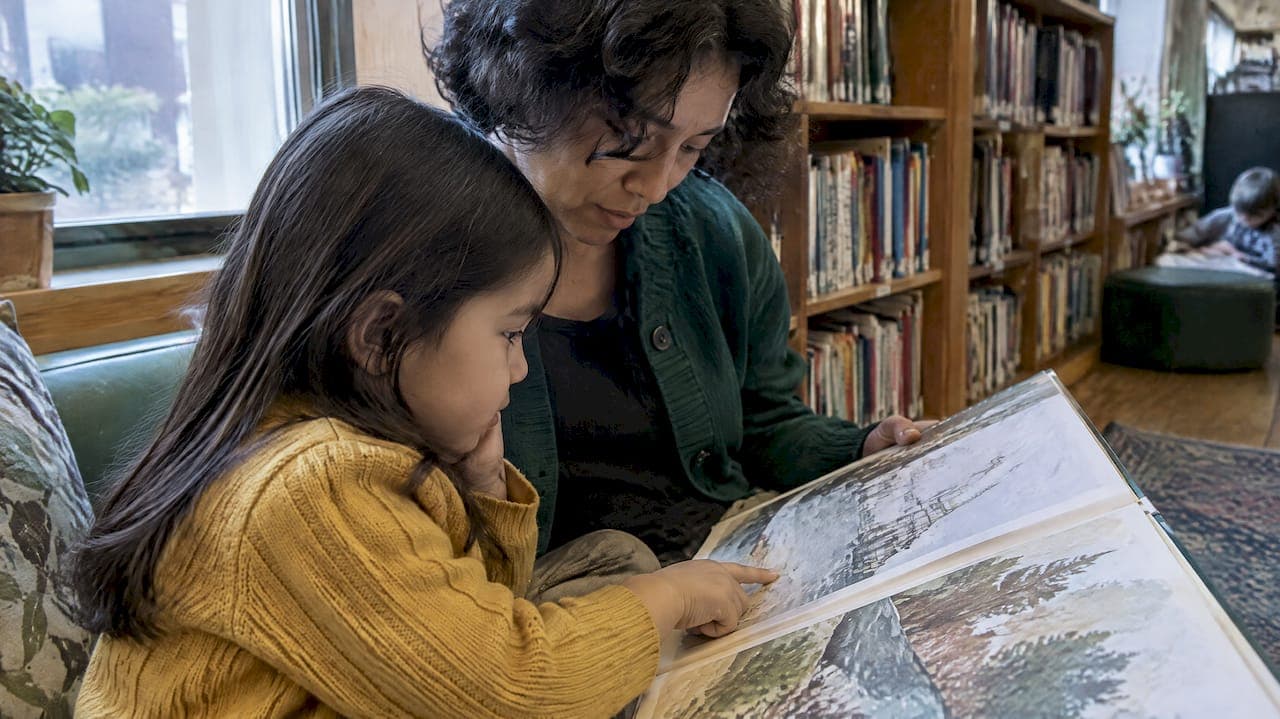
Yes, wordless picture books reliably support empathy and prosocial skills when an adult co-constructs the story with a child. A 2025 meta-analysis of 21 studies and a 2025 parent-child intervention study both point the same direction: the picture matters, but the conversation around it matters more. Below, we share a practitioner-tested shortlist, mediation prompts, and session plans you can use today.
TL;DR:
- A 2025 review of 21 studies and over 2,000 children linked individual reading and adult prompts to stronger empathy gains than group reading alone.
- Parents and children read twice weekly for eight weeks; empathy gains among children aged four and five fully explained later increases in helping behavior.
- Ask how a character feels and what visual evidence supports that reading, then adapt prompts from simple labels to predictions or actions as children grow.
- Choose Sidewalk Flowers or The Snowman for home reading, and reserve Migrants for small groups prepared to discuss displacement, loss, and harder feelings.
Table of Contents
- 1. Wordless picture books that build empathy skills
- 2. How to read wordless books to teach empathy
- 3. Ready-to-run session plans for home, storytime, and the classroom
- 4. What the research says about reading and empathy
- 5. A classroom moment that shows empathy in action
- Tools that make empathy-building easier to repeat
- FAQ
- Sources
1. Wordless picture books that build empathy skills
Each of these titles gives you room to ask questions instead of reading answers aloud. Pick based on your setting: some work the best one-on-one at bedtime, others shine in a circle of twenty.
- Sidewalk Flowers (JonArno Lawson and Sydney Smith): A small girl notices and gives away flowers on a city walk; ages 3-6; ask, "Why do you think she picked that flower for that person?"
- I Walk With Vanessa (Kerascoët): A silent act of kindness spreads through a schoolyard after a child witnesses bullying; ages 4-8; ask, "What changed in her face from the first page to the last?"
- Wolf in the Snow (Matthew Cordell): A girl and a lost wolf pup help each other find their way home in a storm; ages 4-7; ask, "What do you notice about how they're moving toward each other?"
- Where's the Elephant? (Barroux): A search-and-find story about vanishing habitats that doubles as an environmental empathy lesson; ages 4-8; ask, "What do you think the animals are feeling as their home changes?"
- Chalk (Bill Thomson): Dinosaurs drawn in chalk come to life, and children must solve the problem their imagination created; ages 5-8; ask, "What would you do if you were in their place?"
- Migrants (Issa Watanabe): A procession of animals journeys through loss and hope, offering an unflinching look at displacement; ages 6-10; ask, "What do the colors tell you about how the journey feels?"
- The Snowman (Raymond Briggs): A boy's friendship with a snowman that cannot last gives young children a gentle introduction to loss; ages 3-6; ask, "How do you think he felt when morning came?"
- Flotsam (David Wiesner): A boy discovers a camera full of impossible underwater photos, inviting wonder and perspective shifts across generations; ages 5-9; ask, "Who do you think took this picture, and what were they feeling?"
- The Lion and the Mouse (Jerry Pinkney): A classic fable retold through expressive illustration, perfect for teaching reciprocity; ages 3-7; ask, "Why does the lion help the mouse later?"
Order your own shortlist by setting: start home read-alouds with Sidewalk Flowers or The Snowman, and save Migrants for small-group classroom discussion where you can sit with harder feelings together.
2. How to read wordless books to teach empathy
The pictures do the narrative work, but you do the empathy work. Your questions turn looking into understanding.
- Open with observation: "What do you notice on this page?"
- Follow with feeling and evidence together: "How do you think she feels? What in the picture tells you that?"
- Point to posture and gaze: a character looking away, shoulders dropped, or eyes wide all carry emotional information worth naming.
- Ask about movement and framing: a character drawn small in a big empty space often feels alone or overwhelmed.
- Use color as a clue: muted tones can signal sadness or uncertainty, while brighter colors often mark relief or joy.
- For toddlers, keep it simple: "Happy or sad? How do you know?"
- For preschoolers, add prediction: "What do you think happens next, and why?"
- For early elementary students, add action: "What would you do if you were there?"
Guided one-to-one or small-group reading predicts stronger empathy gains than group settings, according to the 2025 meta-analysis, so prioritize that format when you can.
Pro Tip: Pause on a page longer than feels natural. The silence gives a child time to notice details you might rush past.
3. Ready-to-run session plans for home, storytime, and the classroom
You don't need a curriculum to start. These plans work with any wordless book on your shelf.
- Home, 10 minutes: Read together, then ask one reflection question: "Which page made you feel the most?" Follow with a quick drawing of that moment using paper and crayons.
- Classroom, 20-30 minutes: Open with a silent first look at the whole book, then pair students to retell the story to each other in their own words. Build a simple character chart together (name, feeling, evidence), and close with a share-out circle.
- Small group SEL session: Use a mood meter to name feelings before and after reading, then role-play a helping behavior from the book, such as offering comfort or sharing an object.
We've refined these formats through our own session plans for wordless picture books, built for teachers and therapists who want structure without a script. For library-specific versions, our practical SEL playbook for public libraries adapts the same core steps for storytime groups.
4. What the research says about reading and empathy
The evidence is specific about what works, not just that reading helps. An 8-week parent-child intervention with twice-weekly shared reading sessions found that empathy gains in 4 and 5-year-olds fully explained later increases in prosocial behavior. The reading itself wasn't the mechanism; the empathy it built was.
A 2025 meta-analysis covering 21 studies and more than 2,000 children found that one-to-one reading contexts predicted empathy gains more reliably than group settings, and that adult prompting, not just looking at pictures, was the active ingredient. Separate case study research on wordless picturebooks found that their openness to multiple interpretations invites children to reason through uncertainty and test ethical judgments, something a single fixed text can't offer in the same way.
Three takeaways follow: prioritize one-to-one or small-group reading when possible, ask evidence-seeking feeling questions rather than yes-or-no ones, and treat the ambiguity of wordless pages as a feature to explore together, not a gap to fill in for the child.

5. A classroom moment that shows empathy in action

In one small-group session, a child paused on a page in Wolf in the Snow and said only, "cold." Asked what told her that, she pointed to the wolf's tucked tail and the girl's hunched shoulders, then added, "like when I'm scared." That shift, from naming a detail to connecting it to her own feeling, is the moment mediation is built for.
Try one prompt from this piece at your next read-aloud and notice what shifts. Our classroom SEL read-aloud examples offer more scripts like this one for early grades.
— Derek Amarillas
Tools that make empathy-building easier to repeat
We build visual storytelling products designed around exactly this kind of co-construction. Our Duckwave Decks give you character-driven prompt cards available at our storefront, ready for a quick reflection activity after any wordless read-aloud. Socko's Universe extends the same approach across a growing catalog of printable activities and session materials.
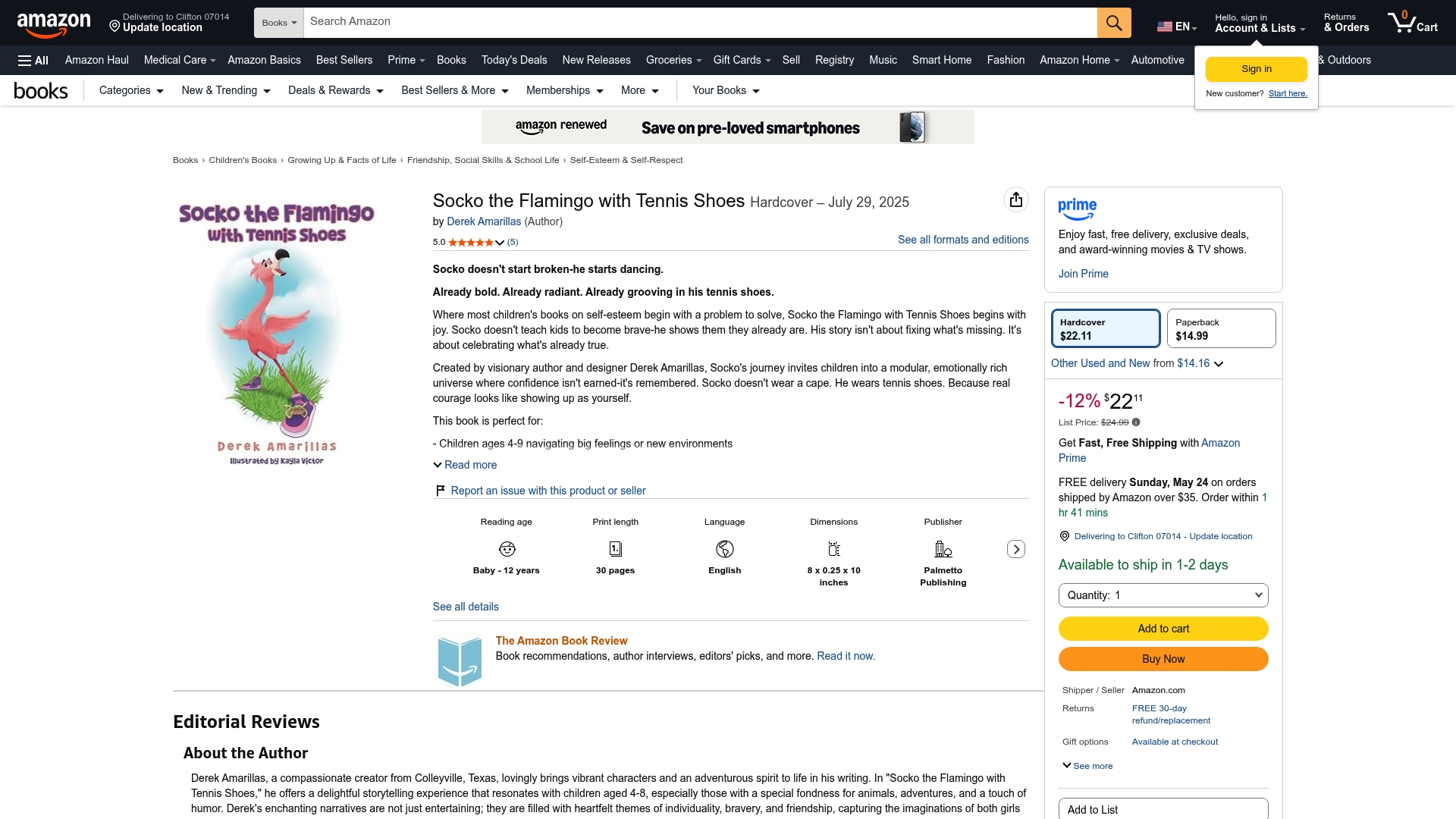
- Duckwave Decks pair well with the observation-and-evidence prompts covered above.
- Socko's Universe materials are built for repeat use across a school year or a home reading routine.
- Both are designed for the same job this article covers: turning a shared look at a page into a real conversation about feelings.
Browse the full Icon Literary catalog to see current kits and downloadable session materials.
FAQ
What are some good picture books about empathy?
Strong choices include Sidewalk Flowers, I Walk With Vanessa, and Wolf in the Snow, each showing a character noticing or responding to another's feelings without any text. Pair any of these with a simple feeling-and-evidence question while reading together.
What is the point of wordless picture books?
Wordless picture books let illustration carry the full narrative, which invites a reader to interpret emotion, sequence, and intention rather than receive them pre-explained. That openness is part of what supports perspective-taking, according to case study research on wordless picturebooks.
Can you give me some examples of wordless picture books?
Beyond the empathy-focused shortlist above, titles like Chalk, Where's the Elephant?, and Migrants are widely used in classrooms and libraries, as highlighted in this collection of curated classroom picks. Each uses different visual techniques, from color to framing, to carry its story without words.
What age level are wordless picture books for?
Most wordless picture books suit children roughly ages 3 to 8, though specific titles vary: Sidewalk Flowers works well from age 3, while Migrants fits better with children age 6 and up given its heavier themes. Choosing a title also depends on how much adult mediation you plan to provide during the reading.
Sources
- Frontiers in Psychology: The effectiveness of social-themed picture book reading in promoting children’s prosocial behavior (intervention study)
- How the type and context of children's storybook reading relate to select empathy skills: A meta-analysis (2025)
- Children’s ethical reasoning and meaning-making through wordless picture books: A multiple case study (2026)