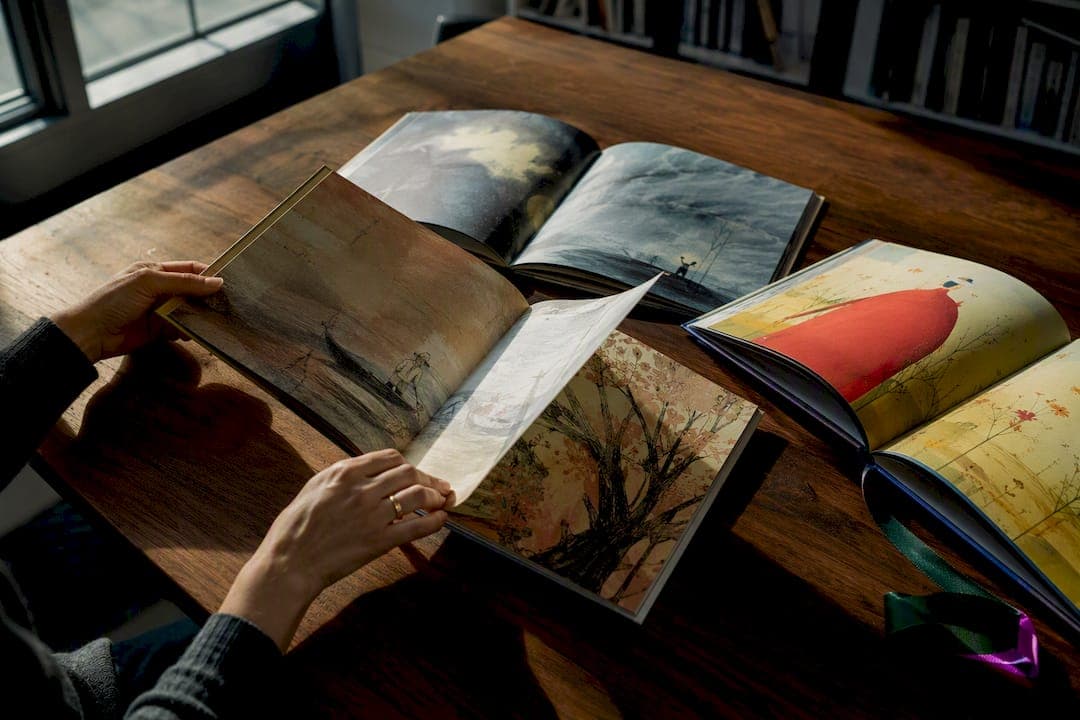
Six picture books earn a permanent spot on any art-loving shelf: Sundust by Zeke Peña for its radiant, award-recognized color work, Watercress by Andrea Wang and Jason Chin for its watercolor detail, Bunny & Tree by Balint Zsako for wordless visual storytelling, plus a Beatrix Potter classic, a modern oversized art book, and a multicultural folktale retelling. Each rewards adults as much as children, doubles as a display piece, and holds up to years of rereading.
TL;DR:
- The most beautiful picture books feature exceptional illustration quality, thoughtful page design, and emotionally compelling stories that elevate the entire reading experience.
- Award recognition such as the Caldecott Medal or starred reviews from major publications reliably indicates books with artistic and narrative depth worth investing in.
- Choosing a book's art style and format to match the recipient’s age and engagement preferences enhances its appeal and lasting value.
- Digital techniques, cultural specificity, and unconventional formats are increasingly shaping current trends in art and illustration in picture books.
- Independent bookstores, curated online sources, and award lists remain the best options for discovering art-forward titles before they become popular.
Table of Contents
- What Makes a Picture Book Beautiful, Not Just Illustrated
- 1. Sundust by Zeke Peña
- 2. Watercress by Andrea Wang and Jason Chin
- 3. Bunny & Tree by Balint Zsako
- 4. The Tale of Peter Rabbit by Beatrix Potter
- 5. The Snowy Day by Ezra Jack Keats
- 6. Where the Wild Things Are by Maurice Sendak
- 7. The Rabbit Listened by Cori Doerrfeld
- 8. Drawn Together by Minh Lê and Dat Pham
- 9. The Wonderful Things You Will Be by Emily Winfield Martin
- 10. Last Stop on Market Street by Matt de la Peña and Christian Robinson
- 11. Du Iz Tak? by Carson Ellis
- 12. All the World by Liz Garton Scott and Marla Frazee
- 13. The Wall in the Middle of the Book by Jon Agee
- 14. A Different Pond by Bao Phi and Thi Bui
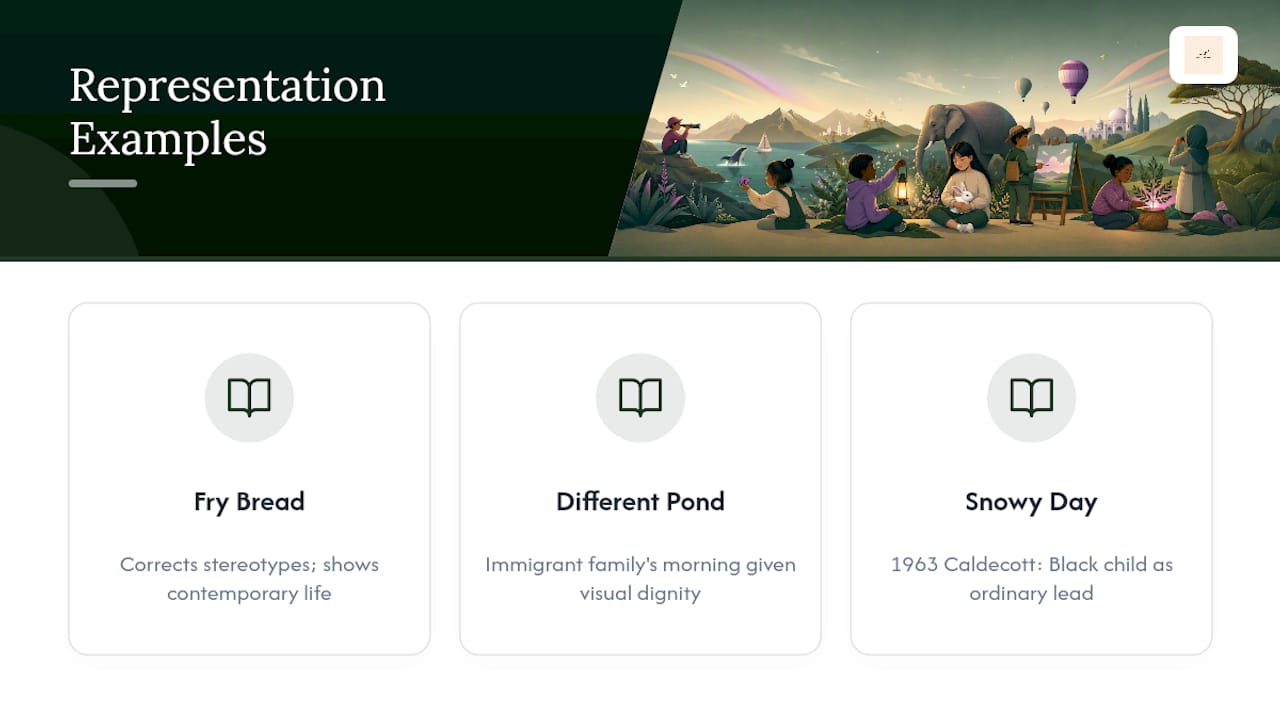
- 15. Fry Bread by Kevin Noble Maillard and Juana Martinez-Neal
- Why Adults and Educators Treat These Books as Art Objects
- How to Choose the Right Beautiful Picture Book
- Where to Find and How to Care for These Books
- The Illustration Styles and Mediums Behind the Art
- How Pictures and Words Work Together on the Page
- How Diversity and Representation Shape What "Beautiful" Means
- What's Changing in Picture Book Illustration Right Now
- Recommended Reading by Theme and Artistic Approach
- Icon Literary's Take on Beauty and Emotional Depth in Picture Books
- Icon Literary Brings That Same Art-Forward Approach to Its Own Books
- Where to Verify Awards and Find More Recommendations
- Sources
What Makes a Picture Book Beautiful, Not Just Illustrated
"Beautiful" gets thrown around loosely in children's publishing, but the books that actually earn it share three traits: technical mastery in the art, a design that treats the page as a canvas rather than a container for text, and a story with enough emotional weight to justify the visual ambition. That's the distinction worth knowing before you start shopping. A well-illustrated book might have competent, appealing drawings. A beautiful one has art that changes how you read the story, the way Jason Chin's watercolors in Watercress turn a quiet family memory into something almost unbearably tender.
Industry curators track this distinction closely. Annual gift guides like Beautifulbooks look at physical design, illustration detail, and narrative beauty together, not any single factor in isolation. That combined lens is why a book can be gorgeously drawn and still miss the mark if the printing is flat or the trim size cramps the art.
Here are the picture books that clear that bar, spanning classic titles families have kept for generations and recent releases already picking up award attention.
1. Sundust by Zeke Peña
Ages 4 to 8. Peña's linework and color saturation give this recent release a glow that publisher materials describe as radiant, and it has already collected multiple honors since its release. The desert palette and the way light falls across each spread make it a standout for readers who want a current title with real critical backing behind the art. It's a strong pick for anyone building a collection of contemporary, award-recognized work rather than only classics.
2. Watercress by Andrea Wang and Jason Chin
Ages 5 to 9. Chin's watercolors show exquisite detail in every spread: the muddy ditch water, the family's careful hands, the quiet shame and pride tangled together in a single wordless glance. This is the book to hand someone who thinks picture books can't carry adult-level nuance. Chin paints memory itself, not just the scene in front of him.
3. Bunny & Tree by Balint Zsako
Ages 3 to 7, though older kids and adults linger over it longest. Nearly wordless, Zsako's surreal, folk-art style asks the reader to build the narrative from color and gesture alone. Wordless books like this one tend to rank especially high for pure visual beauty because nothing on the page competes with the art for attention. It's an unusual gift for someone who already owns the obvious classics and wants something stranger.
4. The Tale of Peter Rabbit by Beatrix Potter
Ages 2 to 6. Potter's original watercolors, painted over a century ago, still hold up as some of the most precise natural illustration in children's publishing. Look for an edition that reproduces her plates at a decent size rather than a cheap mass-market reprint that crops the borders. A clothbound anniversary edition makes a far better gift than the dollar-bin version.
5. The Snowy Day by Ezra Jack Keats
Ages 3 to 6. Keats' collage work, cut paper layered with paint and patterned fabric, was groundbreaking when it won the Caldecott Medal in 1963 for depicting a Black child as the ordinary hero of an ordinary winter day. The textures still feel fresh, and the book remains a touchstone for representation in American picture books.
6. Where the Wild Things Are by Maurice Sendak
Ages 4 to 8. Sendak's crosshatched pen work and the famous wordless double-page spreads, where Max's rumpus takes over the book entirely, still set the standard for how illustration can carry a story's emotional climax without a single caption.
7. The Rabbit Listened by Cori Doerrfeld
Ages 3 to 7. Soft, rounded shapes and a muted, comforting palette make this book about grief and companionship land gently rather than heavily. It's a favorite among educators for its simplicity paired with real emotional weight.
8. Drawn Together by Minh Lê and Dat Pham
Ages 4 to 8. Pham's linework shifts style mid-book: flat, minimal color for the real world, then explodes into detailed fantasy illustration once a grandfather and grandson connect through drawing instead of shared language. The visual shift is the story.
9. The Wonderful Things You Will Be by Emily Winfield Martin
Ages 2 to 6. Martin's dreamy, muted illustrations of animal children in whimsical costumes make this a popular baby-shower and nursery gift, and the oversized format displays well on a shelf even when the child has outgrown the read-aloud stage.
10. Last Stop on Market Street by Matt de la Peña and Christian Robinson
Ages 4 to 8. Robinson's bold, graphic color blocks and a Newbery Medal for the text combine to make this a book adults quote back years after their kids have moved on to novels. It's frequently cited in classroom lists for balancing rich art with an accessible, rhythmic read-aloud text.
11. Du Iz Tak? by Carson Ellis
Ages 4 to 10. Ellis invents a language for a cast of insects narrating the life cycle of a plant, and her intricate, storybook-illustration style rewards close, repeated looking. It's an unconventional but memorable gift for a reader who already owns the mainstream favorites.
12. All the World by Liz Garton Scott and Marla Frazee
Ages 2 to 6. Frazee's warm, detailed community scenes turn a simple, lyrical text into a book that families return to for years. It won a Caldecott Honor for illustration that manages to feel both sprawling and intimate at once.
13. The Wall in the Middle of the Book by Jon Agee
Ages 4 to 8. Agee's clean, comic-style linework carries a clever visual joke across the entire book, using the physical gutter of the page as the actual wall in the story. It's a great pick for a reader who wants humor alongside strong design.
14. A Different Pond by Bao Phi and Thi Bui
Ages 5 to 9. Bui's muted, graphic-novel-influenced illustrations of a father and son fishing before dawn earned this book a Caldecott Honor, and the quiet, immigrant-family story gives the art real emotional stakes.
15. Fry Bread by Kevin Noble Maillard and Juana Martinez-Neal
Ages 3 to 8. Martinez-Neal's warm, textured illustrations celebrate contemporary Native American life and family tradition. It won a Sibert Medal and a Charlotte Zolotow Award, and the endnotes add real cultural context adults will appreciate as much as kids.
Why Adults and Educators Treat These Books as Art Objects
Adults keep picture books on their own shelves, long after the target reader has aged out, because the best ones work on two levels at once. A child follows the plot. An adult notices the layered visual metaphor, the callback in the final spread, the way a color palette shifts to signal an emotional turn. ReadBrightly's editorial commentary on picture books notes this crossover appeal directly: illustration quality is often the primary reason adults buy, keep, and reread a book long after the read-aloud years are over.
That layered structure is what separates a picture book from a picture book someone frames and displays. A few patterns show up again and again in the titles adults hold onto:
- Wordless or near-wordless narratives (Bunny & Tree) that put the entire storytelling burden on the art
- Muted or unusual color palettes that reward slow, repeated viewing rather than a single fast read
- Illustration techniques, like Chin's watercolor realism in Watercress, that could stand alone as gallery work
- Text with enough restraint that the pictures carry equal or greater narrative weight
- Endnotes or author's notes that add adult-level context to a children's story
Awards function as a practical shortcut for spotting these books before you buy. The Caldecott Medal, the New York Times Best Illustrated Children's Books list, and starred reviews from Kirkus, Publishers Weekly, and School Library Journal are the four filters serious collectors and librarians actually check. Library-curated award guides exist precisely because these shortlists compress a year's worth of publishing into a handful of vetted picks.
A useful signal to watch for: a book that appears on both a major award shortlist and an editorial "most beautiful" roundup, since that overlap suggests the art holds up under two different kinds of scrutiny, critical and aesthetic.
Watercress's Caldecott win and Sundust's recent string of honors both illustrate the point: award recognition doesn't guarantee a book will resonate with your specific kid, but it reliably flags art worth a second and third look.
How to Choose the Right Beautiful Picture Book
Matching the art style to the recipient matters more than matching the plot to their interests. A toddler doesn't need a complicated wordless narrative like Bunny & Tree, but a curious eight-year-old who already loves drawing might treasure it more than a simpler board book. Think about how the recipient actually engages with images before you buy.
A few style categories to keep in mind:
- Watercolor and gouache (Chin, Potter) tend to suit quieter, reflective stories and reward slow reading.
- Collage and mixed media (Keats) bring texture and tactile appeal that younger kids respond to immediately.
- Bold graphic color blocks (Robinson, Bui) work well for read-alouds where visual clarity matters at a distance.
- Surreal or folk-art styles (Zsako) suit older kids and adults who enjoy ambiguity and interpretation.
Format tells you almost as much as the art itself. Oversized trim sizes give illustrators room to work at full scale, which is why so many of the most visually striking titles run larger than a standard paperback. Clothbound covers, heavier paper stock, and printing that reproduces color accurately (rather than muddying darker tones) are the production details that separate a collectible edition from a disposable one. Publisher product listings for titles like Sundust often flag these format details directly, alongside award and review information, which makes them worth checking before you buy.
Age-appropriateness still matters even for art-forward books. A book praised for illustration might use pacing or vocabulary too advanced for a two-year-old's attention span, so check the intended reading age against how your specific child listens, not just how old they are.
Pro Tip: If you're buying for a classroom rather than a single child, prioritize books with strong iconography and just enough text to hold a read-aloud, since educators consistently rate that combination higher for group engagement than pure wordless art.
For gifting, presentation is part of the experience. A slipcase, a ribbon-tied wrap that lets the cover show through, or pairing the book with a related themed activity kit turns a single object into a small event. If the recipient is working through identity or belonging themes, matching the book to that need adds another layer of meaning beyond the art.
Where to Find and How to Care for These Books
Independent bookstores remain the best place to discover beautiful picture books in person, since staff picks and hand-curated front tables tend to surface exactly the kind of art-forward titles that get buried in an algorithm-driven online search. Publisher storefronts and library systems are close seconds, particularly for locating award winners the moment they're announced.
A few reliable paths to finding award-recognized and harder-to-find titles:
- Check the Caldecott Medal and Honor lists and the New York Times Best Illustrated roundup each year for freshly vetted picks.
- Ask bookstore staff for their own "most beautiful" shelf, since many indie shops keep an informal one.
- Search publisher sites directly for format details (oversized, clothbound, deluxe editions) before ordering online.
- For out-of-print or older classics, reputable secondhand booksellers often list condition grades for dust jackets and binding.
- Library systems frequently hold reference copies of award winners even before your local branch has copies to check out.
Caring for a collectible picture book is simple but easy to neglect. Keep dust jackets on unless you're displaying the book open, store it upright or flat rather than leaning at an angle that stresses the spine, and keep it out of direct sunlight, which fades cover art faster than most people expect. If you're displaying a favorite spread rather than the whole shelf, a book stand angled at the open pages protects the binding better than laying it flat and open indefinitely.
The Illustration Styles and Mediums Behind the Art
Watercolor remains the medium most associated with picture books that feel painterly and soft, visible in everything from Potter's century-old plates to Chin's contemporary work in Watercress. Gouache produces a similar softness but with more opacity and richer color saturation, which is part of why Sundust's desert palette reads as glowing rather than flat.
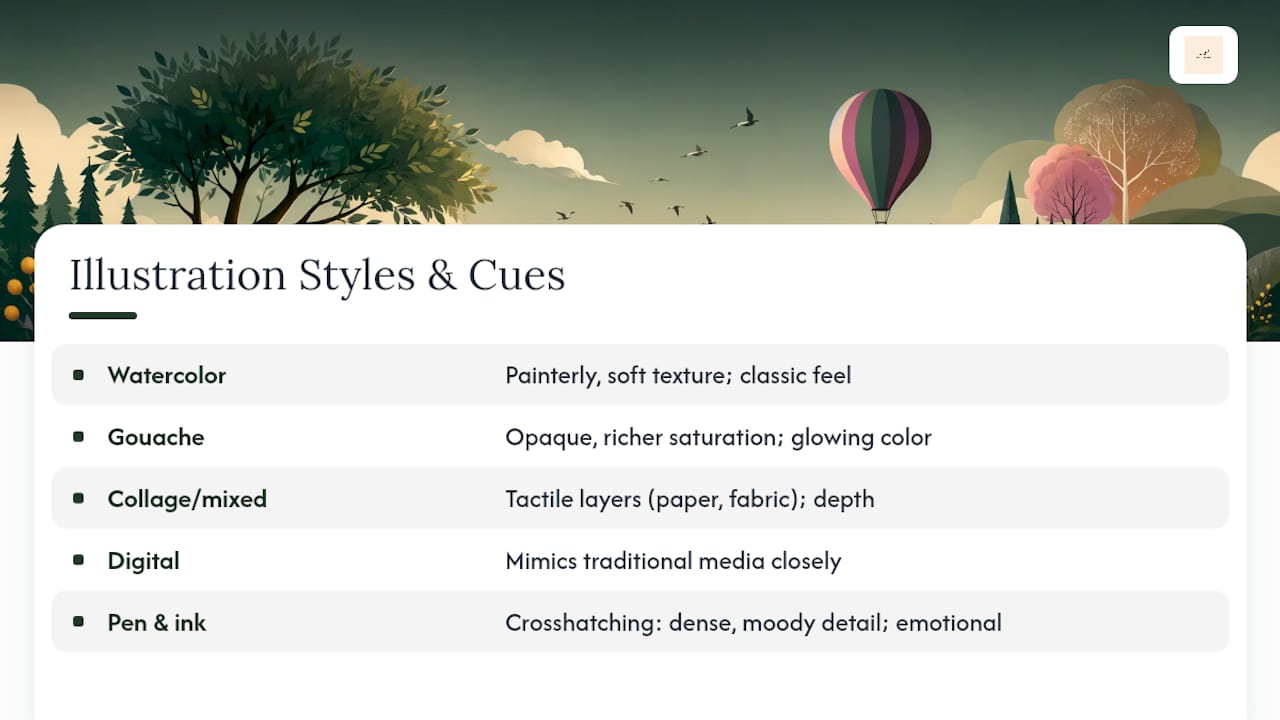
Collage and mixed media, the technique Keats pioneered in The Snowy Day, add tactile texture that photographic realism can't match: cut paper, fabric, and paint layered together give a page physical depth. Digital illustration has become increasingly common in recent releases, and the better examples mimic traditional media closely enough that many readers can't tell without checking the credits.
Pen and ink crosshatching, Sendak's signature technique, produces dense, moody detail suited to fantastical or emotionally intense stories. Flat graphic color blocking, seen in Robinson's and Bui's work, trades texture for clarity and bold visual impact, which explains why it works so well for read-alouds where kids are viewing the art from a few feet away rather than holding the book themselves. Each medium carries its own emotional register, and the strongest illustrators choose theirs deliberately rather than by habit.
How Pictures and Words Work Together on the Page
A picture book succeeds or fails on the relationship between text and image, not either element alone. The strongest examples treat illustration as a second narrator, one that sometimes confirms what the words say and sometimes contradicts them entirely.
Where the Wild Things Are is the classic case: Sendak's wordless double spreads take over completely at the story's emotional peak, letting the art carry weight the text deliberately steps back from. Drawn Together does something similar in reverse, using a shift in illustration style itself, from flat and muted to richly detailed fantasy, as the actual plot device that shows two characters finding common ground.
Wordless books like Bunny & Tree push this interplay to its logical extreme, asking the reader to construct narrative meaning entirely from sequence, color, and gesture. That's a different reading skill than following printed text, and it's part of why educators value wordless books for building visual literacy in early readers who haven't yet cracked the code of written language. The best picture books, wordless or not, never let the pictures simply illustrate the words. They make the two elements argue, echo, or surprise each other across the page.
How Diversity and Representation Shape What "Beautiful" Means
Representation changes what a beautiful picture book can accomplish, not just who it depicts. Fry Bread's warm illustrations of contemporary Native American family life do more than diversify a bookshelf; they correct a visual record that too often flattened Native characters into historical stereotypes. A Different Pond's muted, graphic-novel-style art gives an immigrant family's quiet morning the same visual dignity typically reserved for more conventional picture-book subjects.
The Snowy Day remains the foundational example: Keats' 1963 Caldecott win normalized a Black child as the ordinary protagonist of an ordinary day, at a time when that alone was a genuinely radical publishing choice. Six decades later, the books doing similar work, giving underrepresented communities the same visual richness and narrative dignity long extended to default protagonists, are some of the most artistically ambitious titles being published. Cultural representation in picture books isn't a separate category from artistic quality; the two reinforce each other, since illustrators working from lived cultural knowledge tend to render specific, textured detail that generic imagery can't fake.
For parents and educators building a collection, prioritizing diverse illustrators alongside diverse subject matter tends to produce richer, more specific art, not just broader representation on the shelf.
What's Changing in Picture Book Illustration Right Now
Digital illustration has matured enough that many recent releases blend traditional and digital techniques within the same book, using digital color layered over hand-drawn linework to speed production without losing texture. Oversized and unconventional formats, gatefolds, die-cuts, and trim sizes that break from the standard rectangle, are showing up more frequently as publishers compete for shelf presence in a crowded market.
Illustrators are also increasingly credited and marketed as co-authors rather than hired hands, a shift that reflects how central the art has become to a book's identity and sales. Award bodies have adjusted accordingly, with illustration-specific recognition carrying real commercial weight the way a Caldecott win visibly did for Watercress.
Cultural specificity in art style is another clear trend: illustrators are drawing more confidently from their own cultural visual traditions, whether that's Peña's desert-inflected palette in Sundust or Martinez-Neal's textured warmth in Fry Bread, rather than defaulting to a generalized, market-tested illustration style. The result is a picture book landscape that looks less uniform than it did even a decade ago, with more room for genuinely distinctive visual voices to break through.
Recommended Reading by Theme and Artistic Approach
Readers looking to go deeper than a single title can follow a theme instead of a single book. For emotional literacy and social-emotional learning, start with The Rabbit Listened and expand into books that teach empathy through gentle, uncomplicated art. For visual storytelling without text, Bunny & Tree and Du Iz Tak? both reward readers who want to practice building narrative from image alone.
For representation and identity, pair Fry Bread and A Different Pond with resources on choosing books around identity and belonging to build a more intentional collection rather than a random assortment. Readers drawn to nature and setting-driven art might enjoy exploring illustrated nonfiction and nature-themed visual design in a similar spirit, even outside the picture book category strictly defined.
For families wanting a rotating, curated selection rather than one-off purchases, subscription models like Sol Book Box deliver a steady stream of diverse, well-illustrated titles without requiring the parent to research every new release themselves.
Icon Literary's Take on Beauty and Emotional Depth in Picture Books
Icon Literary builds its picture books around a simple premise: art and emotional honesty aren't competing priorities, they're the same job done well. The studio's storytelling work spans graphic narratives, themed card decks, and immersive story worlds for children ages 3 to 8, and every one of those formats treats illustration as load-bearing, not decorative.
That approach shows up most clearly in how the studio handles social-emotional learning. Rather than bolting a lesson onto pretty pictures, Icon Literary designs characters and visual worlds where the emotional content and the artistic choices come from the same source. A character's expression, a color shift across a spread, a detail hidden in the background, these are storytelling tools, not afterthoughts.
Inclusion works the same way. Diverse and culturally specific narrative themes aren't a checklist item layered onto existing art; they shape which stories get told and how they're drawn from the first sketch. The goal is a picture book that a child recognizes themselves in and an adult finds genuinely worth rereading, the same crossover quality that defines every title on this list.
— Derek Amarillas
Icon Literary Brings That Same Art-Forward Approach to Its Own Books
Everything covered here, layered art, award-caliber illustration, emotional depth that holds up on a second and third read, is the exact standard Icon Literary designs toward with its own picture books, activity kits, and themed card decks.
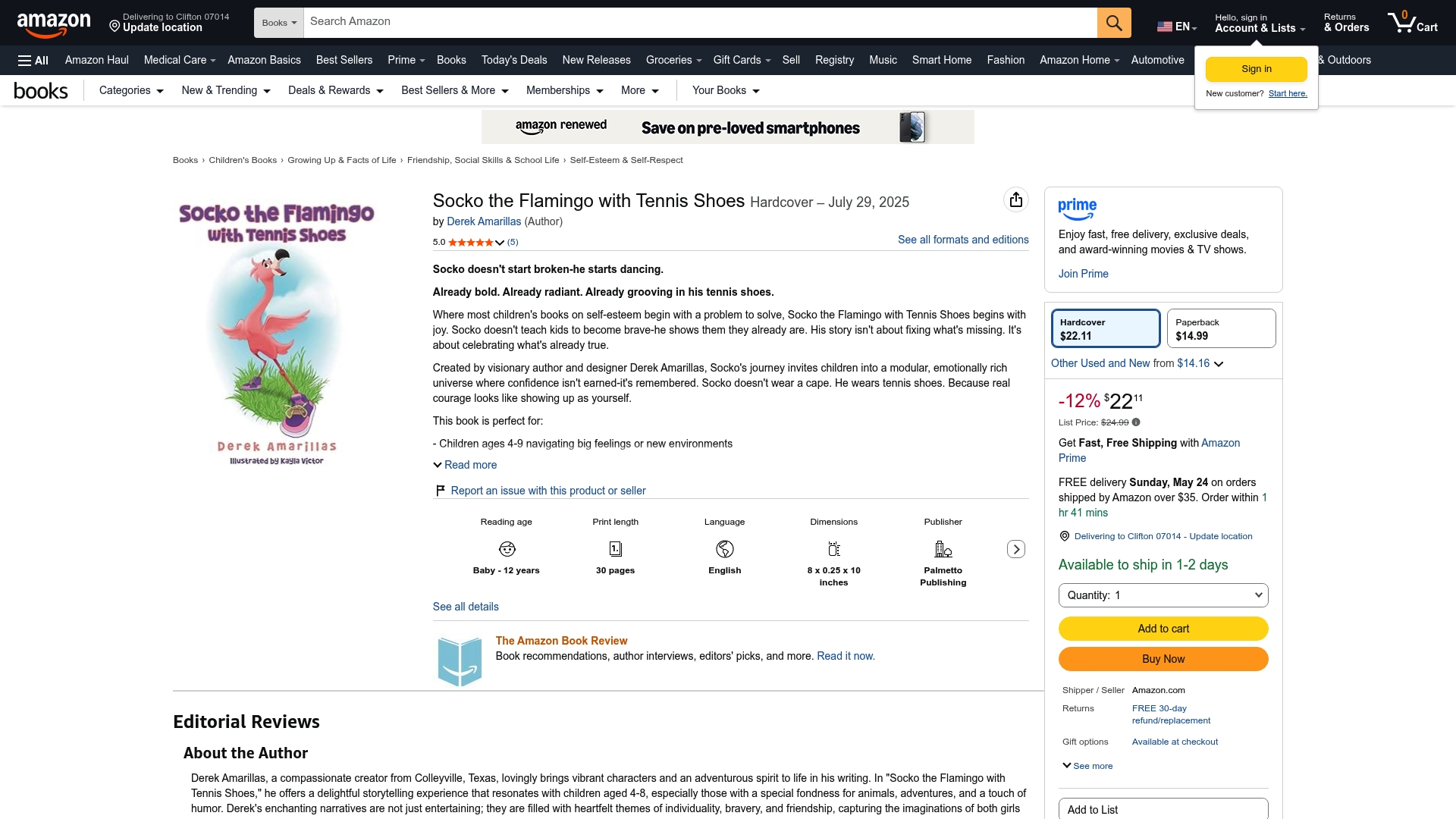
Where a traditional publisher often treats social-emotional themes as an add-on to conventional art, Icon Literary builds both from the same original concept, so the illustration and the emotional content of a story develop together rather than one serving the other. That's the practical difference for a parent or educator browsing this list and wondering what to buy next: a book, kit, or card deck from Icon Literary is built with the same crossover appeal, art that rewards adult attention alongside a story that lands with a child, rather than choosing one priority over the other.
The studio's catalog includes themed collections and related products, which suit anyone assembling a gift set or a classroom shelf rather than one book at a time. Browse the current lineup at the Icon Literary storefront to see which title or kit fits the reader on your list.
Where to Verify Awards and Find More Recommendations
The New York Times Best Illustrated Children's Books list, compiled through library guide summaries, is the fastest way to confirm which recent titles have earned that specific editorial distinction. For Caldecott history and collecting guidance, TeachingBooks' award-focused resources walk through how librarians and educators cross-reference medal winners with starred trade reviews.
For ongoing discovery, Brightly's roundup of stunningly beautiful new picture books updates with fresh releases worth watching, and community-driven lists like Goodreads' collection of picture books with beautiful illustrations reflect which older titles have kept their popular appeal over time. Between award pages, editorial roundups, and reader-curated lists, you have three distinct filters for finding your next favorite.
Sources
- 12 Stunningly Beautiful New Picture Books | Brightly
- Sundust | Penguin Random House Retail
- Most Beautiful Children's Books of 2025 – A Holiday Gift Guide