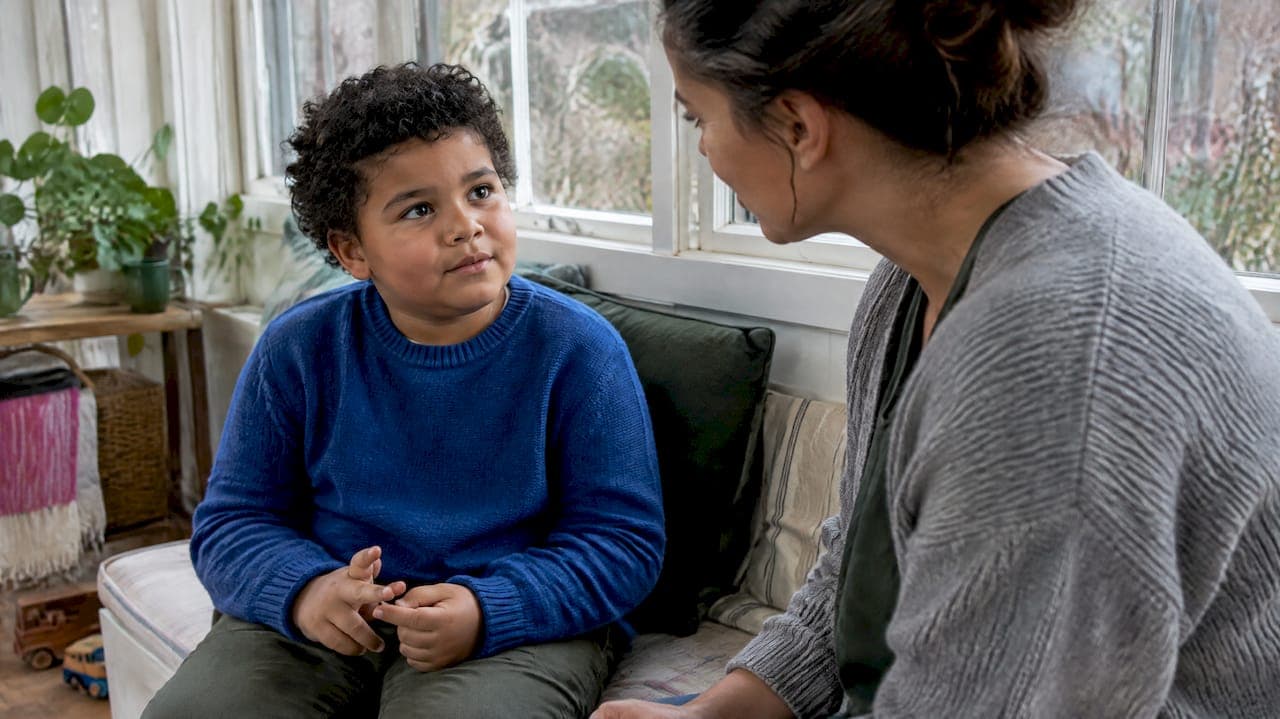
The fastest way to grow empathy at home is through short, consistent practices rather than big lessons. Four habits work best: naming feelings on a 1 to 10 scale, responding quickly in small back and forth moments, talking through stories together, and giving kids small jobs that help someone else. Below, we'll walk through exactly how to use each one.
TL;DR:
- At breakfast or bedtime, ask your child to rate their mood from 1 to 10 and name what influenced it; this takes under a minute.
- When your child shares something, name what you notice, wait five to ten seconds, then add one word or question.
- Toddlers need brief exchanges and basic feeling words; preschoolers can try stuffed animal role play, while children ages 6 to 8 can practice boundary scripts.
- Give children small jobs that help others, such as setting a sibling’s plate, and praise their identity as helpers rather than thanking the act.
- If your child resists talking about feelings, do not press; name your own emotions aloud and keep offering low pressure games or story prompts.
Table of Contents
- 1. Practical empathy games and conversation starters you can try this week
- 2. Adjusting empathy activities for toddlers, preschoolers, and early elementary kids
- 3. The research behind naming feelings, serve-and-return, and story time
- 4. Why we think empathy grows in small, repeated moments
- 5. Ready-made tools that make these activities easier to start
- FAQ
- Sources
1. Practical empathy games and conversation starters you can try this week
These activities take just a few minutes and fit into routines you already have. Pick one or two to start, not all of them at once.
- Daily feelings check-in: Ask your child to rate their mood on a scale at breakfast or bedtime, then ask what influenced their mood. This habit builds emotional vocabulary over time, according to the Child Mind Institute.
- Serve-and-return micro-practice: When your child shows you a drawing or tells you something, pause, name what you notice ("You look proud of that"), wait five to ten seconds, then add one new word or question. This back and forth exchange supports the brain circuits tied to social and emotional skills, according to the Center on the Developing Child at Harvard University.
- Story-based perspective questions: While reading together, ask three questions in a loop: "How do you think she feels?", "What shows you that?", and "What would you do?" This three-question loop helps children practice noticing feelings in characters, a strategy NAEYC recommends for caregivers.
- Feelings charades: Take turns acting out a feeling while the rest of the family guesses. Afterward, ask when they have felt that way to connect the game to real life.
- Puppet role play: Use two puppets to act out a small conflict, like one puppet taking a toy from another, then ask your child how each puppet might feel and what could happen next. This gives kids a low-pressure way to rehearse boundaries before they need them in real moments.
- Helping tasks: Give your child a small job that benefits someone else, like setting a sibling's plate or watering a neighbor's plant, and praise their identity as a helper rather than just thanking them for the act. Framing contribution this way is tied to a stronger sense of mattering and more willingness to help again, according to a Harvard paper on mattering and contribution.
- Mealtime noticing ritual: Once a week, go around the table and have everyone share something they noticed about another person's day, good or hard. This builds the habit of paying attention to others outside of conflict moments.
A few of these pair well with ready-made materials if you'd rather not script everything yourself:
- Picture books with open-ended questions work especially well for perspective-taking, and we cover specific titles in our guide to wordless picture books that build empathy.
- A quick naming script for high-emotion moments is laid out in our name it to tame it routine.
- For classroom or playroom setups, our emotion sorting activities take ten minutes or less to prepare.
Pro Tip: Keep each activity under five minutes at first. A short routine you repeat all week teaches more than a long one you only do once.
2. Adjusting empathy activities for toddlers, preschoolers, and early elementary kids
What works for a six-year-old can overwhelm a toddler, and what calms a toddler might bore an eight-year-old. Matching the activity to the stage keeps it useful instead of frustrating.
- Toddlers (1 to 3 years): Keep serve-and-return exchanges very short, label basic sensations like hungry, tired, or mad, and use gesture games like peek-a-boo to practice back and forth attention.
- Preschoolers (3 to 5 years): Try feeling-faces games and simple role play with stuffed animals, and ask one open-ended question per page during story time instead of several.
- Early elementary (6 to 8 years): Add collaborative chores, deeper questions like "What would you want someone to do for you in that situation?", and short scripts for setting boundaries with siblings or friends.
- Across all ages: Don't force a conversation if your child isn't ready to talk. Model the language yourself, and let small, repeated routines do the work instead of one big discussion.
3. The research behind naming feelings, serve-and-return, and story time
These practices aren't just convenient, they're backed by specific findings from child development researchers. Naming feelings and using a 1 to 10 scale helps children quantify what they're feeling and builds the vocabulary to describe it, a method outlined by the Child Mind Institute. Serve-and-return exchanges, the attentive back and forth between a caregiver and child, are described as foundational for the brain development that supports empathy and other social skills.
Serve-and-return interactions are described as a foundational building block for the brain circuits that support empathy, according to the Center on the Developing Child at Harvard University. The hardest part is often the waiting, since caregivers tend to jump in before a child finishes responding.
- Story circles and consistent group storytelling help children practice listening, turn-taking, and perspective-taking, according to NAEYC.
- Our read-aloud feelings books guide and best books for teaching empathy round out these story-based strategies with age-targeted titles and discussion prompts.
4. Why we think empathy grows in small, repeated moments
We've noticed that empathy rarely shows up in one big teaching moment. It builds the same way a habit does, through small repeated rituals that a child barely notices as lessons. One parent on our team mentioned that a single question during a bedtime story, "Why do you think he looked away?", opened into a ten-minute conversation about a tough day at school that hadn't come up any other way that night. If you try just one thing this week, pick the one that already fits a routine you have, and let it repeat.
— Derek Amarillas
5. Ready-made tools that make these activities easier to start
If scripting your own prompts feels like one more thing on a long list, our Duckwave Decks are built as themed conversation starters you can pull out at dinner or bedtime without prep. Each deck pairs original characters with prompts designed to spark the same kind of perspective-taking questions covered above.
- Our Socko's Universe catalog lists additional decks, activity kits, and books if you want more themed options.
- Browse for ready-made prompts and printable guides you can start using tonight.

FAQ
What is the easiest empathy activity to start with?
Daily feelings check-ins using a 1 to 10 scale are one of the simplest places to start, since they take under a minute and fit into a meal or bedtime routine. The Child Mind Institute notes this scale helps children quantify emotional intensity, which builds vocabulary over time.
How does serve-and-return build empathy in young children?
Serve-and-return is the back and forth exchange where a caregiver notices, responds, and waits for a child to continue, and it supports the brain circuits tied to social and emotional skills. The Center on the Developing Child notes that waiting is often the hardest part for caregivers, since the instinct is to jump in too soon.
Can picture books really teach empathy?
Picture books paired with open-ended questions like "How do you think she feels?" help children practice perspective-taking during a shared activity they already enjoy. NAEYC recommends this question style as a practical caregiver tool during read-aloud time.
Are chores actually connected to empathy?
Yes, small age-appropriate tasks give children a chance to notice someone else's needs and feel valued for contributing. Praising a child's identity as a helper, rather than thanking them for one act, is linked to a stronger sense of mattering and more willingness to help again.
What if my child doesn't want to talk about feelings?
Don't force the conversation. Model the language yourself by naming your own feelings out loud, and keep offering short, low-pressure moments like games or story prompts until your child is ready to join in.
Sources
- Understanding feelings and emotions for kids — Child Mind Institute
- Serve and return: back-and-forth exchanges — Center on the Developing Child, Harvard University
- Using books and story prompts to support empathy — NAEYC