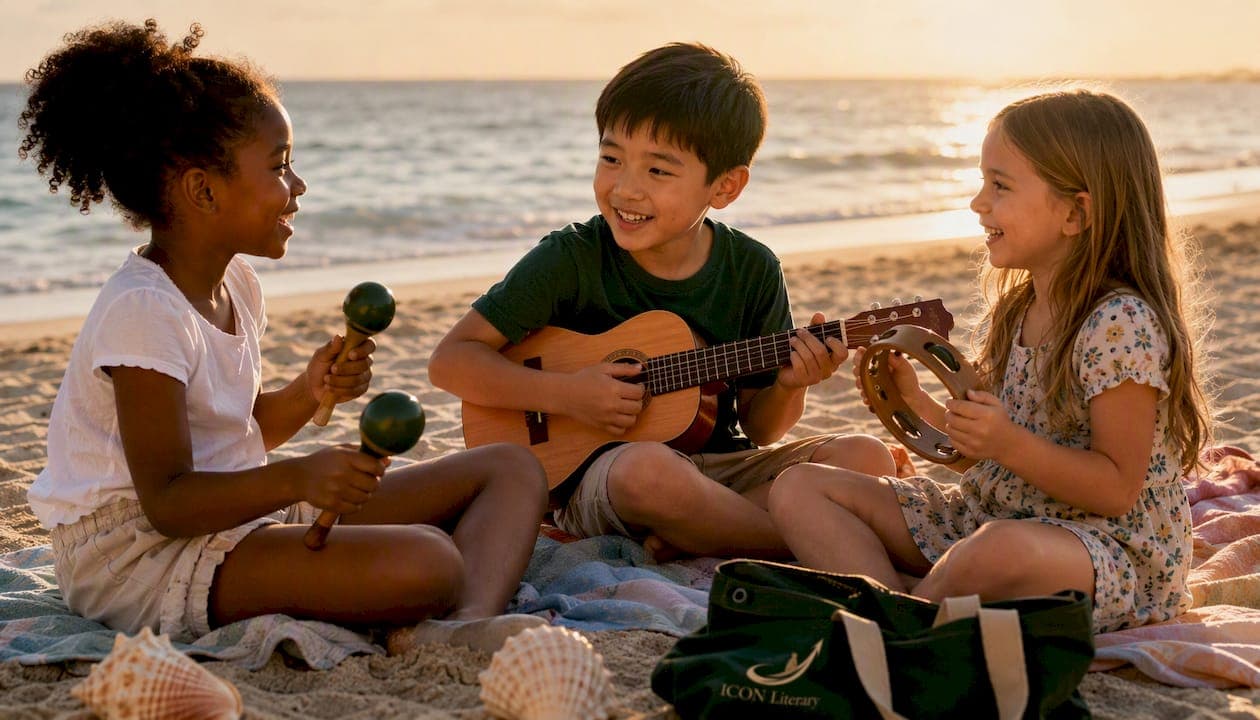
Play this 5-track starter playlist right now to spark confidence, calm, and connection for children ages 3–8:
- "Brave" — Sara Bareilles — Builds verbal courage; great for morning circle when kids need a push to speak up.
- "Three Little Birds" — Bob Marley — Slow, reassuring tempo that settles anxious energy before a transition.
- "Happy" — Pharrell Williams — High-energy beat triggers movement and lifts the whole room's mood fast.
- "You've Got a Friend in Me" — Randy Newman — Reinforces belonging and friendship themes during group time.
- "This Little Light of Mine" — Traditional — Call-and-response structure keeps every child engaged and confident.
The ADAA recommends music as a purposeful tool for emotional regulation, not just background noise. Stream these safely on Spotify Kids, YouTube Kids, or Apple Music — all three filter content for young listeners. In a classroom, use the app's built-in kid-safe mode and keep volume at a conversational level so children can still hear each other sing along.
Table of Contents
- 12 inspiring English songs every parent and educator should know
- How music builds social–emotional learning and helps kids self-regulate
- Pick songs by goal: confidence, kindness, resilience, calm, celebration
- Sample playlists and setlists for home and classroom
- Lyric vetting and U.S. classroom licensing basics
- Turn one song into a mini learning kit in 30 minutes
- Quick checklist: 6 questions before adding a song to your kids' playlist
- Key Takeaways
- Why pairing songs with stories changes everything
- Icon Literary kits pair music with story for deeper learning
- Useful sources and further reading
12 inspiring English songs every parent and educator should know
These uplifting songs in English are annotated for emotional impact, age fit, and where to find them.
-
"Brave" — Sara Bareilles | Ages 5–8 | Teaches kids to use their voice even when scared. Pair with a "brave words" journaling prompt. Spotify Kids, Apple Music
-
"Try Everything" — Shakira | Ages 4–8 | Growth-mindset anthem from Zootopia; normalizes failure as part of trying. YouTube Kids, Spotify Kids
-
"Count on Me" — Bruno Mars | Ages 4–8 | Friendship and reliability; ideal for kindness units. Apple Music, Spotify Kids
-
"You've Got a Friend in Me" — Randy Newman | Ages 3–6 | Warm, slow melody; perfect for settling new students or easing separation worry. Pairs well with books that address separation anxiety. Spotify Kids
-
"This Little Light of Mine" — Traditional | Ages 3–5 | Repetitive chorus and call-and-response make it a natural confidence builder for the youngest learners. YouTube Kids
-
"What a Wonderful World" — Louis Armstrong | Ages 4–8 | Gratitude and wonder; use during a nature walk or art activity. Apple Music, Spotify Kids
-
"Three Little Birds" — Bob Marley | Ages 3–6 | Calming reggae rhythm; curated lists from the ADAA community consistently name it as a mood-soother. Spotify Kids
-
"Happy" — Pharrell Williams | Ages 4–8 | Driving beat makes it the go-to track for a movement break or celebration moment. YouTube Kids, Apple Music
-
"Let It Go" — Disney / Frozen | Ages 4–8 | Resilience and self-acceptance; best for reflection after a frustrating moment. Spotify Kids, Apple Music
-
"Walking on Sunshine" — Katrina & The Waves | Ages 5–8 | Pure celebratory energy; use at the end of a hard week or as a Friday send-off. Spotify Kids
-
"True Colors" — Cyndi Lauper | Ages 5–8 | Inclusivity and identity; pairs naturally with books that help shy kids feel seen. Apple Music
-
"Roar" — Katy Perry | Ages 5–8 | Bold confidence anthem; use before a performance, presentation, or any moment kids need a courage boost. Spotify Kids, YouTube Kids
How music builds social–emotional learning and helps kids self-regulate
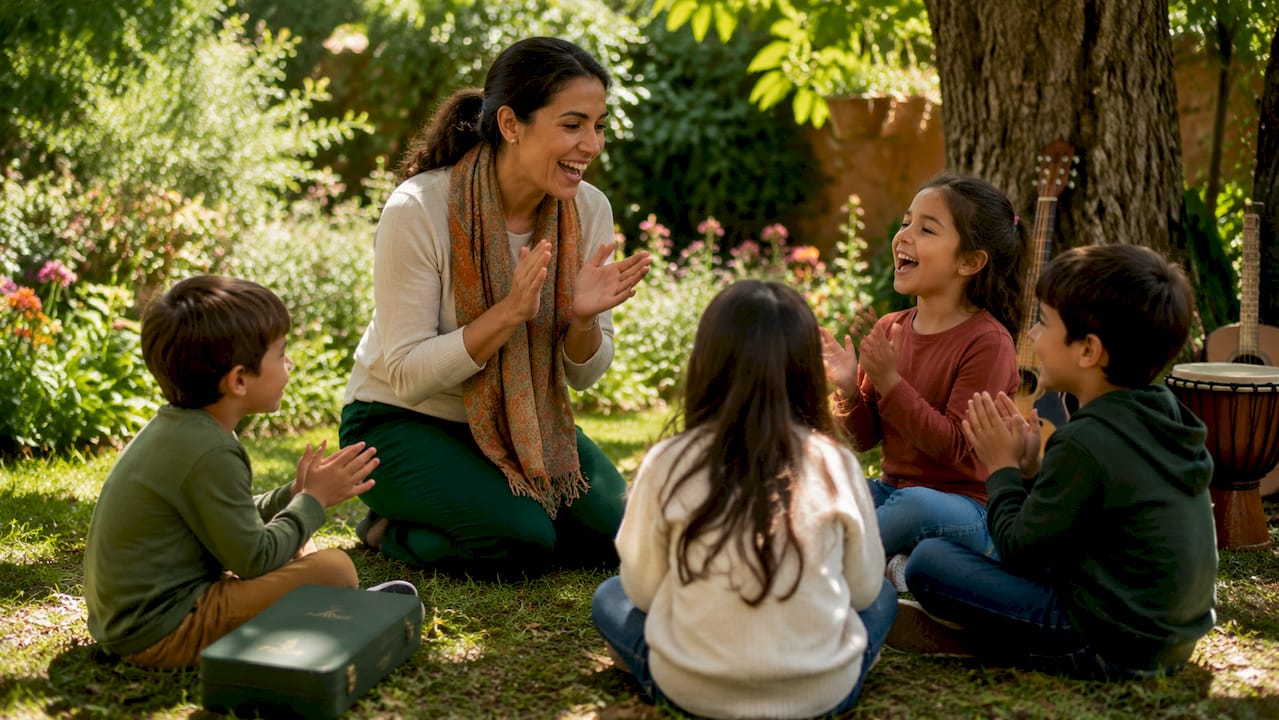
Music shifts room energy in under 90 seconds — which makes it one of the fastest co-regulation tools available to any teacher or parent. The ADAA frames purposeful music listening as a self-soothing resource, distinct from passive background sound. Used intentionally, a single song can move a group from dysregulated to ready-to-learn before a lesson even starts.
Four routines that work:
- Morning circle (confidence boost): Play "Brave" or "This Little Light of Mine" as children arrive. Before pressing play, say: "This song is about using your voice. What's one thing you want to say today?"
- Transition (energy shift): Queue "Happy" for 60–90 seconds between activities. Cue kids: "When the music stops, we're in our new spot."
- Calm-down corner: Use "Three Little Birds" or "What a Wonderful World." Prompt: "Close your eyes. What picture does this song put in your head?"
- Confidence booster before a challenge: Play "Try Everything" before a hard task. Ask: "What are you going to try today, even if it feels hard?"
Pro Tip: Match tempo to the moment. High-tempo tracks drive movement and wake up attention; slower anthems suit story-time reflection. Never play an upbeat song when you need children to settle.
Research note: The ADAA's community-sourced list of songs that inspire and soothe shows that both classic and modern tracks serve emotional regulation — meaning you don't need to choose between what kids love now and what actually works.
Pick songs by goal: confidence, kindness, resilience, calm, celebration
Choose by goal first, then match tempo and lyrics.
| Theme | Recommended songs | Best activity / time of day |
|---|---|---|
| Confidence | "Brave," "Roar," "This Little Light of Mine" | Morning circle, before presentations |
| Kindness | "Count on Me," "You've Got a Friend in Me" | Partner work, friendship lessons |
| Resilience | "Try Everything," "Let It Go" | After a setback, growth-mindset lessons |
| Calm | "Three Little Birds," "What a Wonderful World" | Transitions, pre-nap, calm-down corner |
| Celebration | "Happy," "Walking on Sunshine" | End of week, achievement moments |
For confidence songs, add a movement element: arms wide, voices loud. For calm themes, dim lights and invite slow breathing. Resilience songs land harder when you pause after the chorus and ask, "Has that ever happened to you?" — a simple lyric-reflection technique that motivational lyrics research links to growth-mindset internalization in young learners.
Sample playlists and setlists for home and classroom
Morning arrival — 10 minutes
- "Walking on Sunshine" (3:41) — high energy, signals the day has started
- "Happy" (3:53) — movement break, shake out the wiggles
- "This Little Light of Mine" (2:30) — call-and-response to settle into circle
Transition playlist — 5 minutes
- "Try Everything" (3:15) — bridges one activity to the next
- "Count on Me" (3:17) — quiets energy as kids move to partner work
Calm-down routine — 8 minutes
- "Three Little Birds" (3:00) — slow breathing, eyes closed optional
- "What a Wonderful World" (2:19) — gratitude reflection, quiet voices
Celebration setlist — 6 minutes
- "Roar" (3:43) — big voices, big moves
- "You've Got a Friend in Me" (2:00) — close with warmth and connection
Keep volume at a conversational level during calm routines. For movement sets, a moderate volume that lets kids hear the lyrics clearly works better than loud — children disengage when they can't make out the words.
Lyric vetting and U.S. classroom licensing basics
Vet lyrics first, then check your license. ASCAP and BMI are the two main U.S. performing rights organizations; most schools hold a blanket license through one or both, which covers public performance of recorded music in classrooms and school events.
6-item lyric checklist:
- No explicit language or adult themes
- No ambiguous references that require adult explanation
- Length under 4 minutes (attention span limit for ages 3–8)
- Strong, singable chorus with repetition
- Culturally inclusive — no stereotypes or exclusionary imagery
- Call-and-response or movement potential for kinesthetic learners
| License type | When you need it | Practical next step |
|---|---|---|
| ASCAP blanket (school) | Public performance of recorded music at school events | Confirm your school holds an active ASCAP license at ascap.com |
| BMI blanket (school) | Same as above, BMI-licensed catalog | Check bmi.com for school licensing info |
| Classroom exemption | Instructional use in a face-to-face classroom setting | U.S. copyright law Section 110(1) covers most classroom playback — no extra license needed |
| Streaming (personal use) | Home listening via Spotify Kids, YouTube Kids, Apple Music | Covered by the platform's own license — no action needed |
Pro Tip: Use the instrumental or karaoke version of a song for classroom sing-alongs. It sidesteps most lyric-content concerns and lets children's voices carry the words — which deepens engagement and memory retention.
Turn one song into a mini learning kit in 30 minutes
Songs that address universal themes — dreaming, overcoming obstacles, believing in yourself — pair naturally with short story prompts to create a complete learning moment.
- Select and vet the song using the 6-item checklist above.
- Pair with a picture book that shares the same theme. "Brave" pairs with any story about speaking up; "Count on Me" pairs with a friendship narrative.
- Create a one-page printable activity — a fill-in sentence ("I am brave when ___"), a drawing prompt, or a simple word search using lyrics.
- Add a movement or breath exercise tied to the song's tempo (jumping for "Happy"; slow belly breaths for "Three Little Birds").
- Reflection prompt after the song ends: "What did that song make you feel? Draw it or tell a partner."
- Display or share — a class "brave words" wall, a friendship chain, or a take-home card for parents.
Icon Literary's story kits are built on exactly this structure: one original story, one printable activity, and a card-deck prompt that extends the emotional theme beyond the page. Gift-givers can add a printed song lyric card and a set of stickers to create a complete music-and-story kit for under $20.
Quick checklist: 6 questions before adding a song to your kids' playlist
- Lyrics clean? No adult themes, explicit content, or confusing references for ages 3–8.
- Tempo right for the moment? High-energy for movement; slow for calm or reflection.
- Repetition present? A strong, repeated chorus helps young children follow along and feel successful.
- Easy to sing? Simple melodic range; kids should be able to join in within one listen.
- Culturally sensitive? No stereotypes; imagery and language feel inclusive for your group.
- Licensed for your setting? Classroom use covered by Section 110(1); public performance needs ASCAP/BMI.
Key Takeaways
Purposeful music selection, paired with a vetted lyric checklist and a simple activity template, is the fastest way to build SEL routines that stick for ages 3–8.
| Point | Details |
|---|---|
| Start with a 5-track playlist | "Brave," "Three Little Birds," "Happy," "You've Got a Friend in Me," and "This Little Light of Mine" cover confidence, calm, and connection. |
| Music shifts mood in under 90 seconds | Use a 60–90 second clip to test whether a track reliably changes attention before adding it to a routine. |
| Match tempo to the moment | High-tempo tracks drive movement; slower anthems suit story-time reflection and calm-down corners. |
| Check licensing for public performance | U.S. classroom playback is covered by Section 110(1); school events need an active ASCAP or BMI blanket license. |
| Icon Literary kits extend the learning | Pair any song on this list with an Icon Literary storybook and printable activity for a complete SEL kit. |
Why pairing songs with stories changes everything
Music playlists and picture books solve the same problem from different angles: they give children a safe container for big feelings. What I've seen, working at the intersection of storytelling and emotional design, is that neither works as well alone. A song opens the emotional door in seconds; a story walks the child through it. Together, they create a ritual — and rituals are how belonging gets built, one repeated moment at a time. That's the premise behind every Icon Literary kit: small, repeatable experiences that accumulate into something a child carries forward.
Icon Literary kits pair music with story for deeper learning
Every song on this list works harder when it's paired with a story and a hands-on activity. Icon Literary's SEL-focused kits are built for exactly that combination.
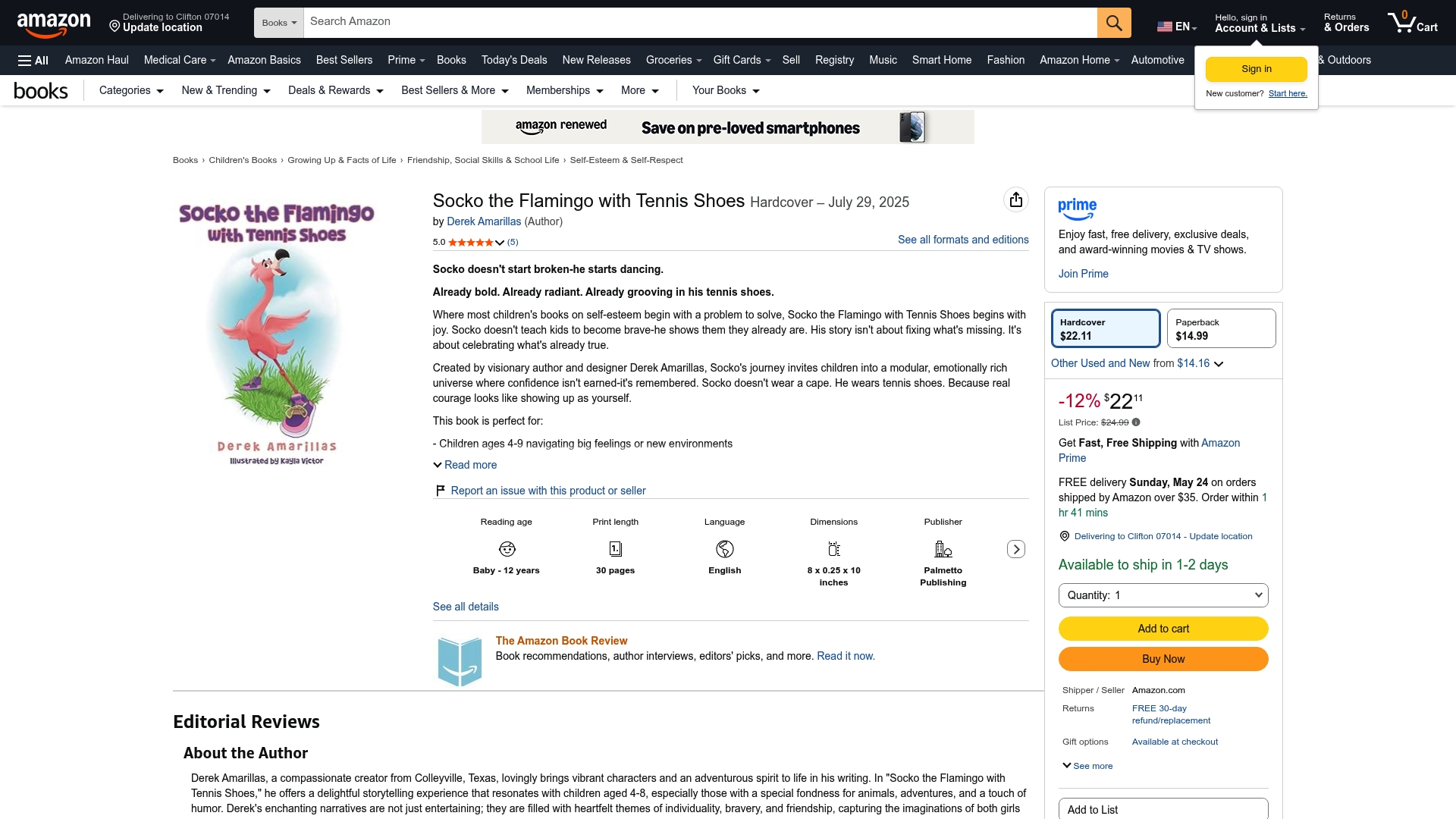
- Story-first design: Each kit centers on an original picture book with characters and themes that mirror the emotional goals of the songs above — confidence, kindness, resilience.
- Printable activity pages and card-deck prompts: Ready-to-use pages that extend the song's theme into drawing, writing, and conversation, with no prep time required.
- Gift-ready or digital: Choose a physical kit shipped to your door or an instant digital download — both work as standalone gifts or classroom add-ons.
Browse the full collection and find the right pairing for your child or classroom at iconliterary.com. If you're buying for a gift, the gifts supporting child emotional growth guide is a practical starting point.
Useful sources and further reading
- ADAA: Songs That Inspire and Soothe — Community-curated list of songs recommended for mood regulation and anxiety relief; the research foundation for using music as a co-regulation tool.
- The Thought Bulb: 10 Motivational English Songs — Practitioner guidance on tempo, room-energy shifts, and sequencing playlists for group settings.
- Personal Excellence: 56 Most Inspirational Songs — Deep editorial analysis of theme-driven longevity; useful for understanding why certain songs endure across age groups.
- Carved Culture: Best Songs About Motivation and Success — Explores how motivational lyrics support growth mindset; relevant for lyric-selection criteria.
- Timeout: 37 Best Inspirational Songs — Editorial roundup mixing classic and modern tracks; good reference for era-spanning playlist building.
- Icon Literary — Studio site describing storybooks, activity kits, and downloadable SEL products that pair with the songs in this article.