
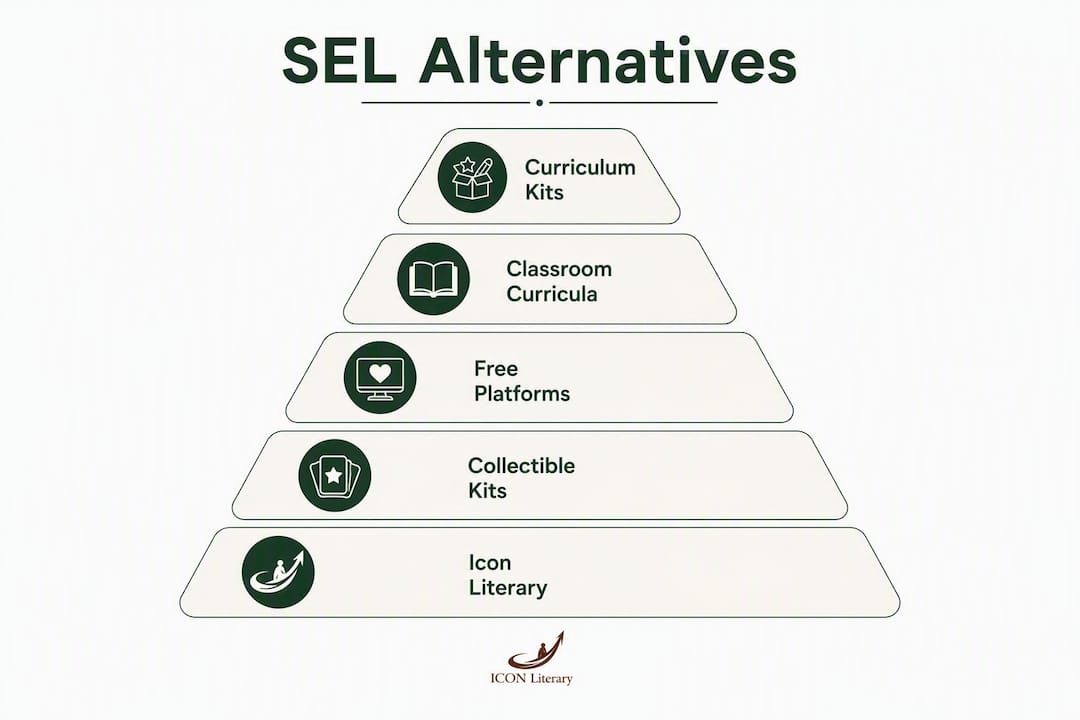
The strongest replacements for mvpkids.com fall into three categories: curriculum-first physical kits, classroom-aligned SEL programs, and free public-broadcaster platforms. For parents and educators who want tactile materials plus a connected story world, Icon Literary's character-led collectible kits are the recommended starting point.
Quick category breakdown:
- Curriculum-first kits (like Icon Literary): physical books, card decks, and activity kits with built-in lesson supports. Best for home use, gifts, and Head Start settings.
- Classroom-aligned SEL curricula (CharacterStrong, Second Step): structured programs with teacher guides and scope-and-sequence. Best for K–2 classrooms with a dedicated SEL block.
- Public-broadcaster / free platforms (PBS Kids, HeyKiddo, Mascot App): zero-cost digital access with broad topic coverage. Best for supplemental screen time when budget is tight.
Table of Contents
- What are the best mvpkids.com alternatives?
- How do you choose the right alternative for your setting?
- What does each alternative category actually offer?
- Why do recurring characters and narrative structure matter for early SEL?
- Which alternative is right for your situation?
- Key Takeaways
- What actually drives good SEL choices
- Icon Literary's character-led SEL kits for ages 3–8
- Useful sources and further reading
What are the best mvpkids.com alternatives?
The table below maps each category against the dimensions that matter most for early childhood SEL. MVP Kids serves as the baseline; the rows below it show where alternatives diverge.
| Category | Best for | Formats | Age range | Price / availability | Classroom vs. home | Evidence basis |
|---|---|---|---|---|---|---|
| MVP Kids (baseline) | Character-led home SEL | Books, puppets, curriculum | 2–10 | Paid kits; some free samples | Both; stronger at home | Proprietary character framework |
| Curriculum-first kits | Home use, Head Start, gifts | Books, card decks, activity kits, printables | 3–8 | One-time purchase; free samples available | Strong at home; adaptable for classroom | Aligned to CASEL competencies |
| Classroom-aligned SEL curricula | K–2 school adoption | Lesson plans, teacher guides, videos | 5–10 | Subscription or district license | Classroom-first | CharacterStrong, Second Step; research-backed |
| Public-broadcaster / free platforms | Supplemental screen time | Apps, videos, games | 3–8 | Free; some premium tiers | Home-first; limited classroom structure | PBS Kids, HeyKiddo, Mascot App |
| Character-led collectible kits (Icon Literary) | Home, gift, therapy support | Physical books, themed card decks, activity kits, digital printables | 3–8 | One-time purchase; free samples | Both; designed for caregiver-led use | CASEL-aligned; narrative SEL framework |
Sourced callout: CB Insights identifies MVP Kids alongside multiple specialist children's SEL studios, confirming the category is populated with viable alternatives rather than a single dominant provider.
Pro Tip: Sticker price rarely tells the full story. A free app subscription can cost more in staff time than a $30 kit if it arrives without lesson guides. Factor in teacher prep hours when comparing options.
How do you choose the right alternative for your setting?
Start with three filters: curriculum alignment, multi-modal engagement (tactile plus narrative), and educator supports. A program that clears all three is worth a trial; one that misses two is a mismatch regardless of price.
Vetting checklist:
- Does the program align to CASEL's five core competencies (self-awareness, self-management, social awareness, relationship skills, responsible decision-making)?
- Are physical or tactile materials included, or is it digital-only?
- Is there a caregiver or teacher guide with discussion prompts, not just a book?
- Does the age-range match your child or class (confirm 3–5 vs. 5–8 specifically)?
- Can you request a free sample or trial lesson before committing?
- Is pricing transparent, with no hidden per-seat or renewal fees?
- Does the program use recurring characters across multiple titles, or is each book standalone?
Red flags to watch for:
- No educator guide or discussion prompts included
- Digital-only with no tactile option for ages 3–6
- Vague age-range claims ("all ages" or "K–5" with no differentiation)
- Opaque pricing that requires a sales call for a basic kit
- Screen time without adult scaffolding, which research links to weaker learning outcomes when apps lack explicit learning objectives
Week-one trial plan: Order or download a single unit. Read it aloud on Day 1 using the included prompts. On Day 3, revisit the same character with a follow-up activity (card deck, drawing prompt, or role-play). By Day 7, note whether the child initiates the character's name or references the story unprompted. That recall is your engagement signal.
Pro Tip: Use Icon Literary's emotional themes cataloging system to map any kit's content to specific SEL skill targets before you buy. It takes five minutes and prevents mismatches.
What does each alternative category actually offer?
Curriculum-first kits
What's included: Physical picture books, activity cards, caregiver prompt sheets, and sometimes puppets or tokens. Designed for read-aloud sessions with structured follow-up.

Age range: 3–8, with most kits differentiated for pre-K (3–5) and early elementary (5–8).
Pricing: One-time purchase, typically $15–$40 per kit. Free sample chapters or printables are common.
Implementation timeline: Unboxing to first lesson in under 30 minutes. Stable weekly use by week two.
Pros: Tactile, no screen required, easy to gift, works at home or in a small group. Cons: Requires an adult to facilitate; not self-directed for children.
Best for: Head Start classrooms, home libraries, and gift-givers who want something lasting.
Classroom-aligned SEL curricula
What's included: Scope-and-sequence lesson plans, teacher guides, student workbooks, and video components. Programs like CharacterStrong and Second Step (Committee for Children) are built for school-year adoption.
Age range: Typically K–5, with some pre-K extensions.
Pricing: Annual subscription or district license. Per-classroom costs vary; free pilot units are sometimes available.
Implementation timeline: Onboarding takes one to two weeks for teachers. Full program fidelity by week four.
Pros: Research-backed, scalable across a school, consistent language school-wide. Cons: Expensive for individual families; requires institutional buy-in.
Best for: K–2 public school classrooms with a dedicated SEL period.
Public-broadcaster / free platforms
What's included: Apps, streaming videos, and browser-based games. PBS Kids, HeyKiddo, and Mascot App offer character-driven content with emotional themes.

Age range: 3–8, though depth varies by platform.
Pricing: Free, with optional premium tiers on some platforms.
Implementation timeline: Immediate access. No setup required.
Pros: Zero cost, broad topic coverage, familiar characters. Cons: Typically lack classroom-ready, research-based curricula; engagement depends heavily on adult co-viewing.
Best for: Supplemental screen time, low-budget settings, or a first exposure before committing to a paid program.
Character-led collectible kits (Icon Literary)
Icon Literary produces physical picture books, themed card decks, activity kits, and digital printables built around original characters in the Duckwave Universe. The materials are designed for ages 3–8 and structured for caregiver-led read-alouds, making them equally at home on a classroom shelf or a living-room coffee table.
Age range: 3–8.
Pricing: One-time purchase via iconliterary.com or Amazon. Digital printables available as standalone downloads.
Implementation timeline: First read-aloud session in under 20 minutes. Card decks and activity kits extend the same characters across multiple sessions without additional prep.
Pros: Tactile and collectible, works as a gift, no subscription required, diverse and inclusive characters, doubles as art-quality décor. Cons: Smaller catalog than established curriculum publishers; not a full school-year scope-and-sequence.
Best for: Parents who want a story-led kit that doubles as a gift; therapists and caregivers looking for a low-pressure conversation starter.
Pro Tip: Reading emotional books aloud with a recurring character across three or more sessions produces noticeably stronger vocabulary retention than a single read-through. Plan for repetition, not novelty.
Why do recurring characters and narrative structure matter for early SEL?
Evidence and practitioner experience both point in the same direction: narrative-driven programs with recurring characters and structured lesson supports produce stronger SEL outcomes for ages 3–8 than standalone books or unstructured games.
The reason is partly cognitive and partly practical. Children in this age band are still building the mental models that let them recognize and name emotions. A character they already know, like a familiar friend, gives them a ready-made reference point. "That's how Ducky felt when…" is a faster emotional bridge than introducing a new character every session.
What makes an SEL book curriculum-ready is not just the topic it covers but the scaffolding around it: discussion prompts, caregiver language guides, and a stair-step framework that builds one skill on top of another across sessions. CASEL's five-competency framework is the most widely adopted standard for this scaffolding in the United States, and Head Start programs use it as a baseline for curriculum selection.
Tactile materials, such as puppets, tokens, and card decks, act as physical anchors for emotional vocabulary. Practitioners report deeper engagement when children can hold or trade a character object during a discussion, because the object externalizes the emotion and makes it easier to talk about.
Consistency of language between home and classroom is another underrated factor. When a caregiver uses the same character name and the same prompt phrasing as the teacher, children transfer learning across contexts faster. Low-demand, routine-based approaches support this by reducing the cognitive load of switching between settings.
Pro Tip: In a mixed-age group (say, a 4-year-old and a 6-year-old together), let the older child "teach" the character's name or feeling to the younger one after the read-aloud. Peer explanation deepens retention for both.
Which alternative is right for your situation?
Match your scenario to the category that fits, then move to a specific product.
- Head Start classroom: Curriculum-first kits with CASEL alignment and a caregiver take-home component. Icon Literary kits work well here because the physical materials travel between school and home without a screen requirement.
- K–2 public school with a dedicated SEL block: Classroom-aligned curricula like CharacterStrong or Second Step. These are built for school-year fidelity and teacher-led delivery.
- Homeschool family: Icon Literary collectible kits or curriculum-first kits. The benefits for homeschool settings include flexible pacing and no institutional buy-in required.
- Gift for a preschooler: Icon Literary's physical books and themed card decks. They read as premium gifts and function as SEL tools, so the purchase serves two purposes.
- Therapy or counseling support: Character-led collectible kits with tactile components. Card decks in particular give therapists a low-pressure prop for emotion-naming conversations.
- Tight budget, supplemental use: PBS Kids, HeyKiddo, or Mascot App. Free and immediately accessible, though best paired with adult co-viewing rather than used independently.
For parents who want a character-led, collectible alternative they can start using this week, Icon Literary is the clearest next step. Browse the current catalog and download a free sample at iconliterary.com.
Key Takeaways
The most effective mvpkids.com alternatives pair tactile, character-driven materials with structured caregiver supports, and Icon Literary's collectible kits meet that standard for home and Head Start use.
| Point | Details |
|---|---|
| Match format to setting | Classroom programs need scope-and-sequence; home use benefits from tactile, one-time-purchase kits. |
| Recurring characters matter | Children ages 3–8 build emotional vocabulary faster when the same character appears across multiple sessions. |
| Factor in total cost | Free platforms can cost more in teacher prep time than a $30 kit with ready-made lesson guides. |
| Use CASEL as your filter | Any program worth adopting should map to at least two of CASEL's five core competencies. |
| Icon Literary for home and gifts | Physical books, card decks, and activity kits designed for ages 3–8, available as one-time purchases with no subscription. |
What actually drives good SEL choices
Most parents and educators approach this search the way they'd shop for a toy: they look at the cover, check the age label, and read a few reviews. That's not wrong, but it misses the variable that matters most, which is whether the program gives adults something to do with the material after the first read.
A book that sits on a shelf after one reading is decoration. A kit that comes with a card deck, a prompt sheet, and a character the child already recognizes from a previous session is a conversation that keeps opening. That's the gap between content and curriculum, and it's why I'd push any parent or educator to ask one question before buying anything: "What does the adult do on day two?"
Icon Literary is the publisher of this article and a recommended option in the comparison above. That relationship is disclosed because it's relevant. The recommendation stands on its own: the format (physical books plus card decks plus printables) is the closest match to what most families actually need, and the one-time purchase model removes the subscription friction that makes school-year programs hard to sustain at home. Where a full classroom curriculum is the right call, CharacterStrong or Second Step will serve better. But for the parent who wants something beautiful, tactile, and genuinely useful, the collectible-kit category is the right place to start.
Icon Literary's character-led SEL kits for ages 3–8
Parents and educators who've worked through this comparison often land on the same question: where do I find a kit that works as a gift and as a real SEL tool? Icon Literary builds exactly that. Physical picture books, themed card decks, activity kits, and downloadable printables, all built around original characters designed for ages 3–8 and structured for caregiver-led read-alouds.
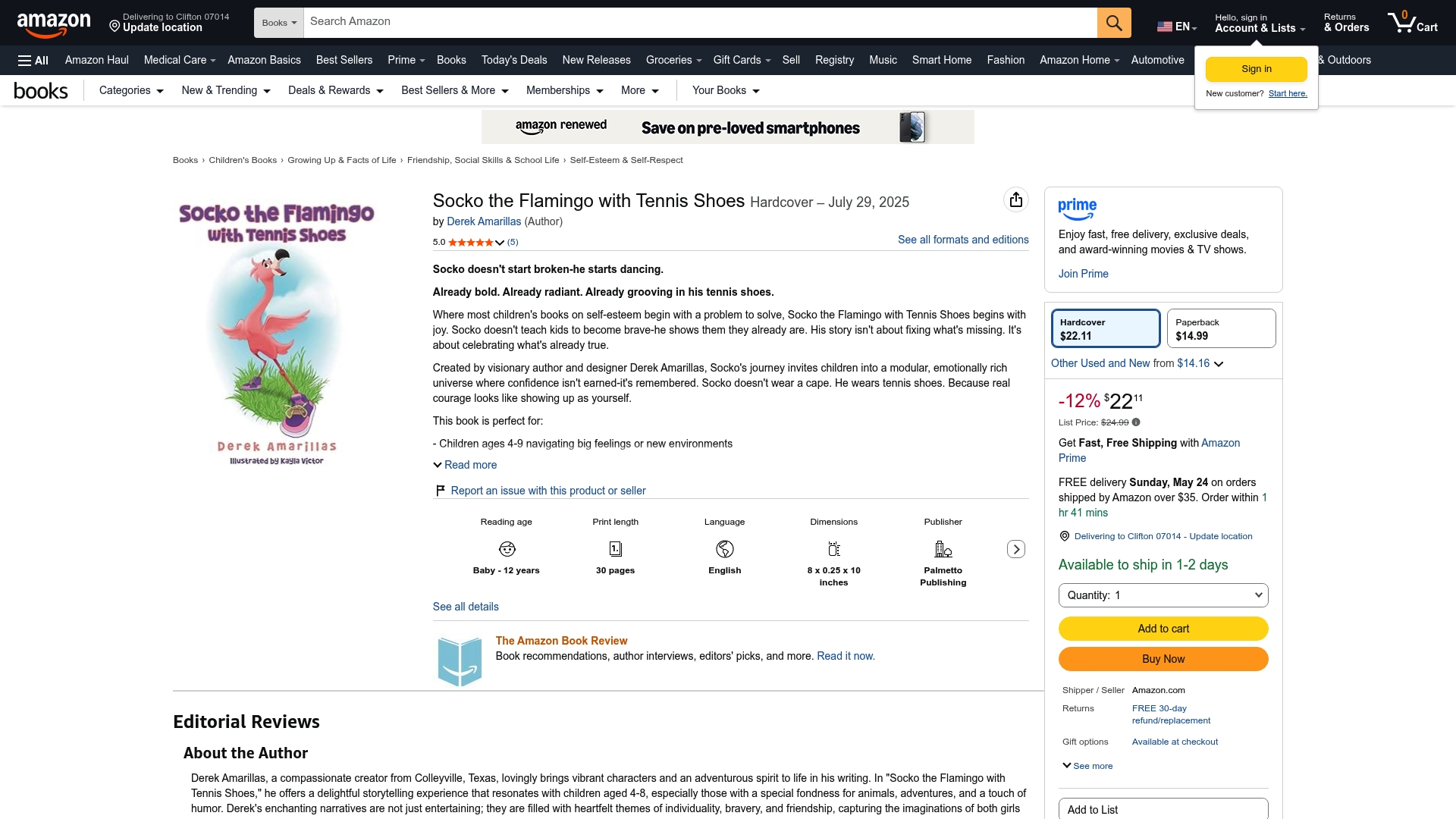
No subscription. No annual renewal. Each product is a one-time purchase available through iconliterary.com or Amazon. The card decks and activity kits extend the same story world across multiple sessions without additional prep, so the first purchase keeps paying off. If you want a character-led, collectible alternative to MVP Kids that works at home, in a Head Start classroom, or wrapped as a birthday gift, start with the current catalog at Icon Literary.
Useful sources and further reading
These resources support the selection criteria, pedagogy arguments, and product profiles covered above.
- Top 5 Emotional Literacy Book Alternatives 2026 — Curated SEL book picks with classroom suitability notes for ages 3–8.
- What Makes an SEL Book Effective for Kids — Framework for evaluating curriculum-readiness, discussion prompts, and recurring-character design.
- Emotional Themes Cataloging System for Educators — Simple taxonomy for mapping materials to CASEL skill targets before purchase.
- Read Aloud Feelings Books Together: Ages 3–8 Guide — Step-by-step caregiver prompts and implementation timeline for first lessons.
- Why Libraries Prioritize Emotional Literacy Books — Explains library programming, free-sample strategies, and what makes a book shelf-worthy.
- Best Books for Teaching Kids Empathy: 2026 Guide — Practical picks aligned to specific empathy skills, useful for gift selection and therapy settings.
- Low Demand Learning: A Parent's Practical Guide — Practical techniques for sustaining SEL routines at home without pressure or resistance.
- Icon Literary — books, kits, and card decks — Where to browse and purchase Icon Literary's full catalog of character-led SEL materials.