
Humor in children's books is not decoration. Used deliberately, it is one of the most clinically grounded tools available for emotional regulation, anxiety reduction, and building the kind of trust that makes therapeutic work possible. The role of humor in therapeutic children's books operates through three overlapping mechanisms: co-regulation (shared laughter lowers arousal and keeps kids within a manageable emotional window), reframing (absurdist or incongruent storylines let children approach difficult feelings from a safer angle), and therapeutic alliance (laughing together with an adult builds the rapport that makes a child willing to open up). Clinical research confirms that humor is a sophisticated counseling tool, not a distraction from emotional work.
One immediate way to put this to work: during a shared read-aloud, pause after a funny moment and name what just happened emotionally. "That made us both laugh. Why do you think that duck did something so silly?" That single move turns a picture book into a co-regulation ritual.
Key benefits at a glance:
- Emotional regulation: Shared laughter lowers physiological arousal and re-engages the prefrontal cortex.
- Therapeutic alliance: Humor builds rapport faster than direct questioning, especially with children who resist talking.
- Reframing: Absurd or playful story scenarios let children rehearse new responses to scary or confusing situations.
- Engagement: Funny books motivate reluctant readers and sustain attention through difficult topics.
- Developmental growth: Vocabulary, narrative comprehension, and perspective-taking all improve with regular humorous read-alouds.
Table of Contents
- How humor in children's books supports emotional and developmental growth
- How humor actually works in the brain and in the therapy room
- What types of humor work at each age and why
- Practical techniques for using humorous books therapeutically
- How to choose a therapeutic, humorous children's book
- What the research says about humor as a formal therapeutic tool
- Key Takeaways
- A publisher's perspective on crafting humor that heals
- Icon Literary's books and kits put these techniques into practice
- Selected sources and further reading
How humor in children's books supports emotional and developmental growth
The benefits of humor in therapy and in everyday reading are not theoretical. Research on humorous picture books links structured use of funny stories to measurable gains in preschool creativity and engagement. Anxiety drops when a child can laugh at a character facing the same fear they carry. Social skills sharpen when a story asks them to consider why a joke landed differently for two characters. Literacy grows because children return willingly to books that made them laugh.
Coding of picture books found that 63% of humor instances fell into Stage 3 (conceptual incongruity), which is most accessible to children ages 3–7. This 63% figure supports focusing book selection on conceptual incongruity for early childhood therapeutic use.
For emotional benefits, the mechanism is straightforward: laughter activates the parasympathetic nervous system, which counteracts the stress response. A child who laughs during a read-aloud is, physiologically, less anxious than they were a minute before. That window is when reflection and processing become possible.
Pro Tip: Use a humorous book as an emotional reset after a hard conversation, not as a way to skip it. Read two or three funny pages, let the laughter land, then gently return: "That story was silly. What do you think the character was actually feeling underneath all that?"
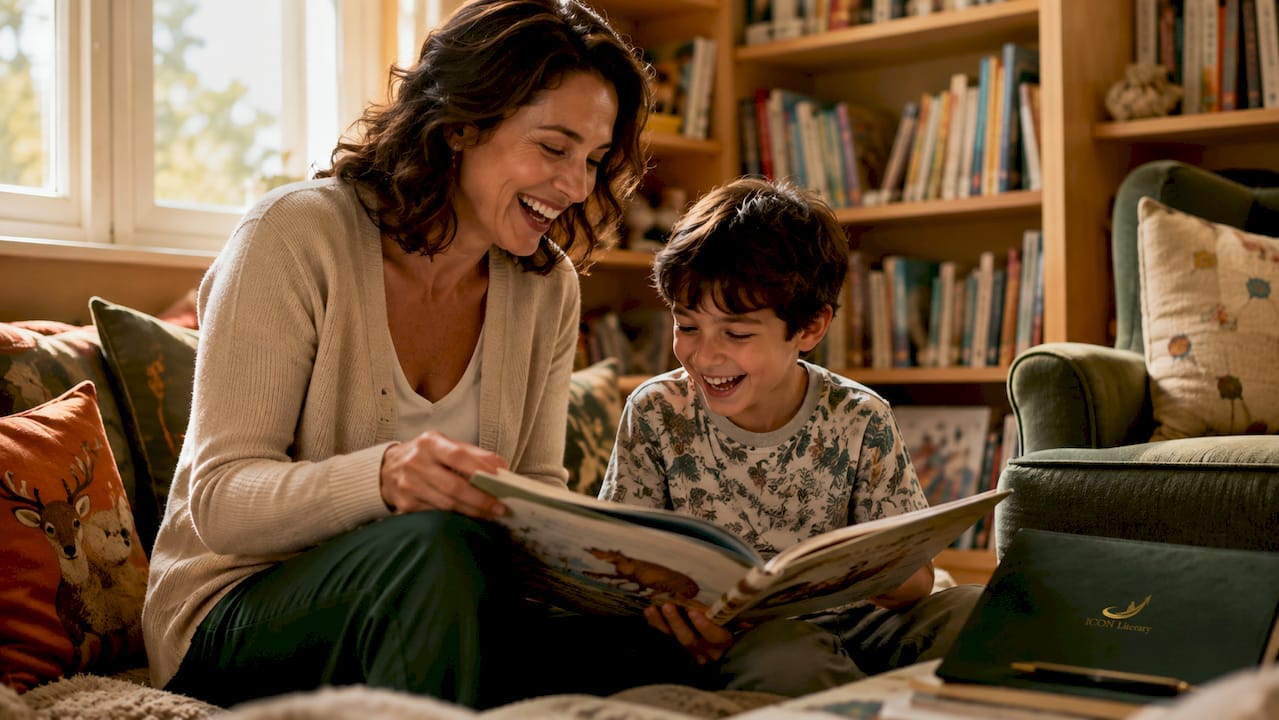
The emotional literacy benefits of reading extend well beyond therapy sessions. When caregivers build a regular ritual around funny books, children develop a vocabulary for feelings and a tolerance for emotional complexity that carries into school and friendships.
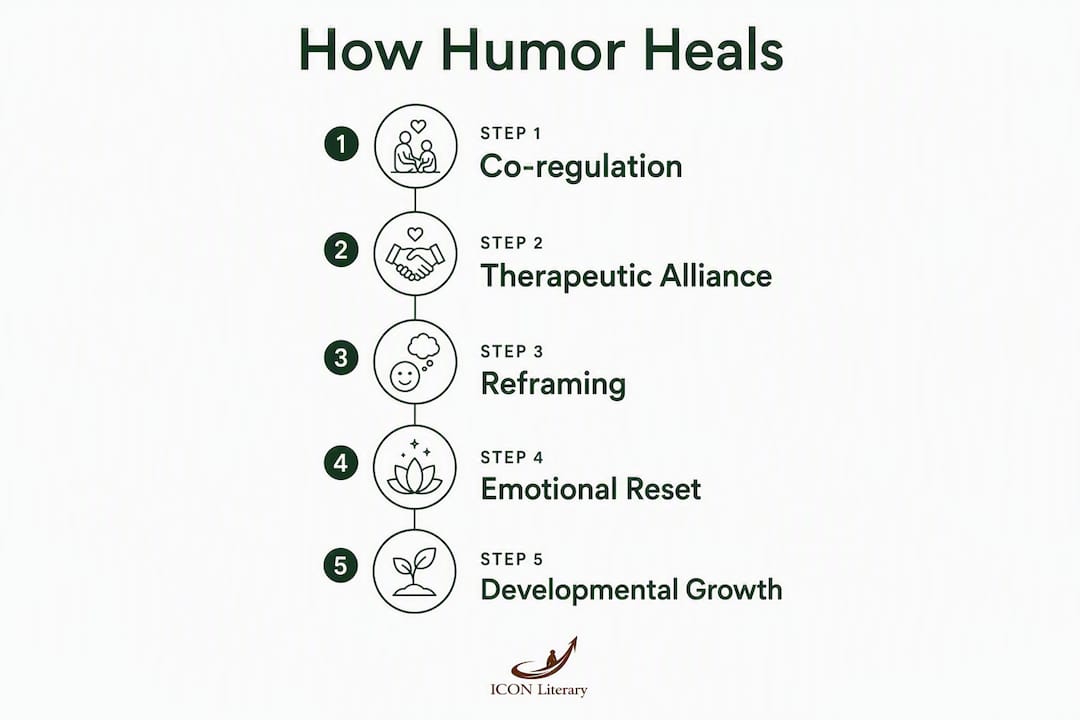
How humor actually works in the brain and in the therapy room
Three clinical mechanisms explain why humor belongs in any serious therapeutic toolkit for children.
Co-regulation is the most immediate. When a therapist or caregiver laughs with a child, not at them, the adult's regulated nervous system signals safety. Play- and humor-infused exposure therapy research shows that therapists adjust humor intensity moment-to-moment to keep children within a tolerable arousal window during exposure work. A well-timed silly voice or an absurd plot twist can pull a child back from the edge of overwhelm without abandoning the therapeutic goal.
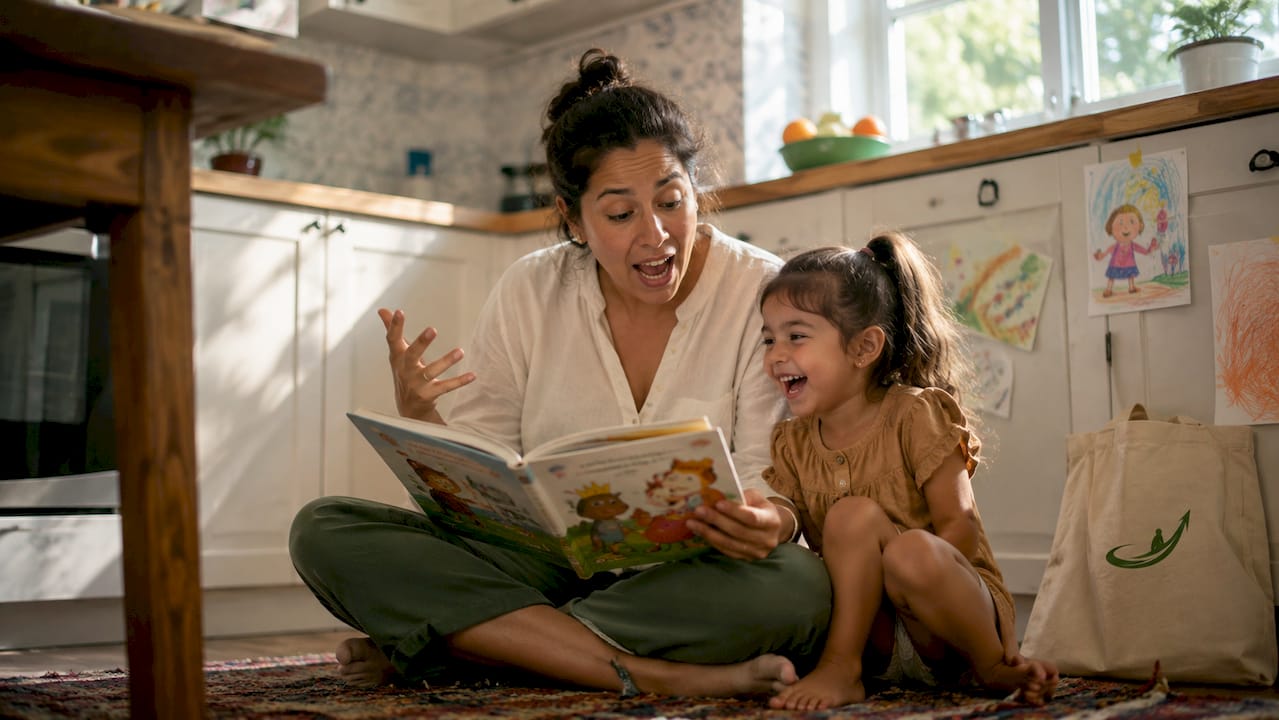
Therapeutic alliance is the second mechanism. Children do not open up to adults they do not trust. Shared laughter is one of the fastest routes to that trust. Clinical social work literature documents humor as a tool for building rapport and providing coping mechanisms in work with children, precisely because it signals that the adult is safe, present, and not threatening.
Systematic desensitization through reframing is the third. When a story treats a feared situation as absurd or manageable, it functions as a form of graded exposure. The child rehearses a new emotional response to the trigger, but inside the safety of fiction.
One important caveat: humor is contraindicated during acute trauma activation. If a child is flooded, a funny book will read as dismissive or confusing. Match affect first. When a child is dysregulated, co-regulate through calm presence before introducing playfulness.
- Watch for flat affect or withdrawal as signals that humor is not landing therapeutically.
- Sarcasm and irony require advanced perspective-taking; avoid them with children under 8 in therapeutic contexts.
- Humor should always feel like an invitation, never a pressure to perform happiness.
What types of humor work at each age and why
Children's humor development follows cognitive stages, and choosing the wrong type of humor for a child's stage creates confusion rather than connection. The table below maps age ranges to humor types, therapeutic goals, and quick read-aloud tips.
| Age range | Humor type | Therapeutic goal | Read-aloud tip |
|---|---|---|---|
| 3–5 (preschool) | Visual incongruity, absurdist images, slapstick | Anxiety reduction, engagement, co-regulation | Pause on funny illustrations; name the absurdity together |
| 5–7 (early elementary) | Conceptual incongruity, silly wordplay, unexpected plot twists | Reframing fears, building narrative comprehension | Ask "Why is that funny?" to scaffold perspective-taking |
| 7–10 (middle elementary) | Wordplay, situational irony, character-based humor | Social skills, empathy, emotional flexibility | Role-play the character's reaction; discuss alternative choices |
| 10+ (older children) | Irony, self-deprecating humor, satire | Identity, resilience, cognitive reframing | Discuss what the humor reveals about the character's inner world |
Research coding picture-book humor found that Stage 3 conceptual incongruity made up the majority of humor instances across picture books, confirming that the genre naturally skews toward what preschool and early elementary children find genuinely funny. Visual humor, supported by strong illustration, is especially effective at this stage because it does not require reading fluency to land. How illustrations shape literacy matters as much as the text itself for young readers.
Practical techniques for using humorous books therapeutically
A structured approach turns a funny read-aloud from a pleasant activity into a repeatable therapeutic intervention.
- Prepare the space. Choose a calm, low-distraction setting. Have the book visible but not yet open. Let the child know this is a special reading time, not a test.
- Cue playfulness. Before opening the book, use a brief ritual: a silly voice, a funny face, or a shared phrase that signals "we're entering story mode." This primes the child's nervous system for play.
- Read with attunement. Match your energy to the story's humor. Lean into funny voices and exaggerated expressions. Your regulated playfulness is the co-regulation.
- Pause at peak moments. After a funny scene, stop. Let the laughter happen. Do not rush past it to the next page.
- Scaffold reflection. Ask one open question: "What do you think that character was feeling?" or "Has anything like that ever happened to you?" Keep it light; this is not an interrogation.
- Watch for disengagement. If a child goes quiet, looks away, or becomes silly in a way that feels avoidant rather than playful, slow down. That is a signal to reduce intensity, not push through.
Pro Tip: Invite a sibling or parent into the read-aloud at least once a week. The shared laughter between family members builds attachment and creates a positive association with emotional conversations that extends far beyond the book.
Books that spark family conversations are most effective when adults treat the funny moments as entry points, not endpoints.
How to choose a therapeutic, humorous children's book
Not every funny book is therapeutic. Here is what to look for and what to avoid.
Criteria that matter:
- Developmentally appropriate humor (matched to the child's cognitive stage, per the table above)
- Emotion-validating themes: the character's feelings are acknowledged, not just resolved
- A clear character arc that models coping, not just comedy
- Opportunities for co-reading: repeated beats, call-and-response moments, or shared rituals built into the text
- Inclusive representation: humor that does not rely on stereotypes or cultural shortcuts
Red flags:
- Humor that mocks the child's own experience or identity
- Sarcasm aimed at younger audiences who cannot yet decode it
- Jokes that require cultural knowledge the child does not share
- Stories where the "funny" resolution dismisses real emotional pain
Cultural sensitivity deserves specific attention. Humor is deeply contextual. A joke that lands in one family may alienate another. When selecting books for diverse groups, look for humor rooted in universal experiences: surprise, absurdity, and the gap between expectation and reality. These translate across cultures far better than humor built on specific social references. Inclusive books benefit all children and this principle applies directly to how humor is constructed within a story.
What the research says about humor as a formal therapeutic tool
The clinical case for therapeutic humor in children's work is well-established. Humor in counseling literature identifies it as a tool for forming therapeutic bonds, making assessments, and reframing maladaptive thinking, despite longstanding concerns among practitioners about appearing insensitive. Those concerns are real but manageable: the distinction is between humor that is relational and attuned versus humor that deflects or minimizes.
Play- and humor-infused exposure therapy has shown particular promise with children who have developmental differences, including those with Williams syndrome, where flexible adjustment of humor intensity helped children tolerate feared stimuli. The sample sizes are small and generalizability is limited, but the directional evidence is consistent.
Dr. Louis R. Franzini describes humor as central to relationship resilience and a vehicle for broader well-being, a framing that maps directly onto what caregivers and therapists observe when they use funny books consistently over time.
Derek Amarillas and the editorial team at Icon Literary approach this body of research as a design brief. The books and activity kits in the Icon Literary catalog are built around the mechanisms described here: shared rituals, emotionally resonant characters, and humor calibrated to the developmental stages where it does the most therapeutic work.
Key Takeaways
Humor in therapeutic children's books works through co-regulation, therapeutic alliance, and reframing, and its effectiveness depends on matching humor type to the child's developmental stage.
| Point | Details |
|---|---|
| Match humor to developmental stage | Conceptual incongruity (63% of coded picture book humor) works best for ages 3–7; irony and satire suit children 10 and older. |
| Use laughter as a co-regulation tool | Shared laughter lowers arousal and opens a window for emotional reflection and processing. |
| Watch for red flags in book selection | Avoid humor that mocks the child's experience, relies on sarcasm, or requires cultural knowledge the child lacks. |
| Build a repeatable read-aloud ritual | A consistent pre-reading cue and post-reading reflection question turns any funny book into a therapeutic routine. |
| Icon Literary as a starting point | Icon Literary's picture books and activity kits are designed around SEL goals and age-appropriate humor for children ages 3–8. |
A publisher's perspective on crafting humor that heals
There is a version of "therapeutic children's book" that is earnest to the point of being unreadable. The character feels sad. The character talks about feeling sad. The character learns a lesson about feelings. Children see through that structure immediately, and they disengage.
What actually works is harder to design. The humor has to be genuine, not a sugar coating on a lesson. The funny moment has to earn its place in the story, and it has to create a space where the emotional truth can land without being announced. That is the design challenge Derek Amarillas brings to Icon Literary's catalog: building books where the laughter and the emotional weight are not in competition, but are doing the same work from different angles.
The shared ritual is the mechanism that makes this repeatable at home or in a therapy room. When a child knows that a certain character is about to do something absurd, and they are already leaning forward in anticipation, that anticipation is itself a form of emotional regulation. The book has trained them to expect safety and delight. That expectation is transferable.
Icon Literary's books and kits put these techniques into practice
The techniques in this guide require the right materials to work consistently. Icon Literary's children's emotional-literacy picture books are built for ages 3–8, with original characters, immersive story worlds, and humor calibrated to the developmental stages where it does the most therapeutic work. The Icon Literary catalog includes activity kits and themed card decks designed as SEL tools, giving caregivers and therapists repeatable, structured ways to practice the read-aloud rituals described here.
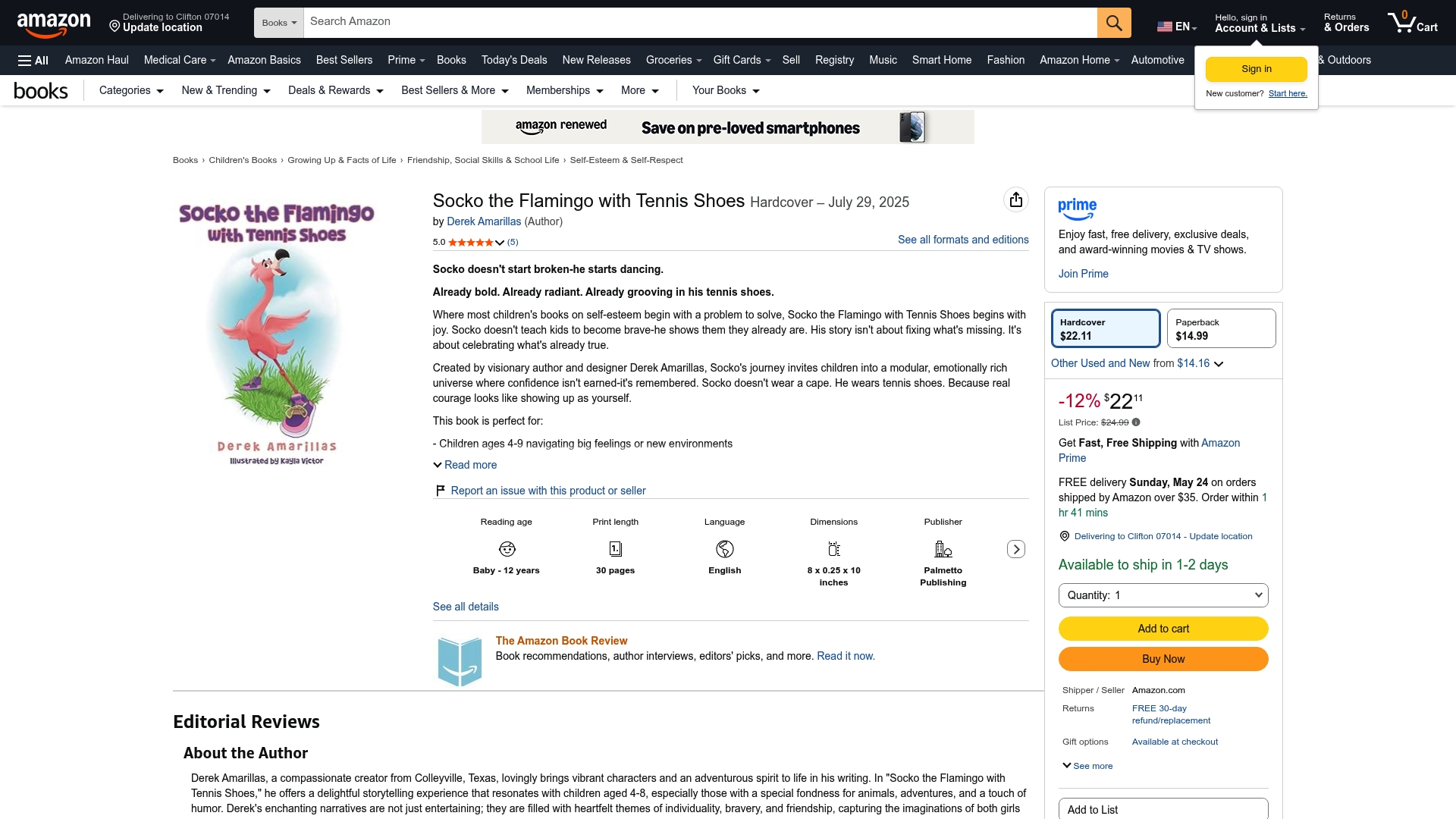
Physical books, digital downloads, and printable kits are available directly through Icon Literary. Browse the catalog to find a book matched to a specific therapeutic goal, whether that is anxiety, social skills, or emotional vocabulary, and start with one read-aloud ritual this week.
Selected sources and further reading
- Humor: A Therapeutic Intervention for Child Counseling — Journal of Creativity in Mental Health. Rachelle G. Berg's foundational argument for deliberate humor as a reframing and alliance-building tool in child counseling.
- Addressing Fears with Play- and Humor-Infused Exposure Therapy — Frontiers in Psychology. Clinical study showing how therapists adjust humor intensity during exposure work to maintain co-regulation.
- Humor in Children's Picture Books — University research coding humor types across picture books; source for the 63% Stage 3 statistic cited in the age guidance section.
- Humor in Counseling — Clinical Social Work — Documents humor as a formal tool for rapport, assessment, and coping in social work with children.
- Literature Review: Using Humor with Children — UNI ScholarWorks synthesis of clinical and developmental literature on humor use with children; useful for practitioners building a broader reading list.