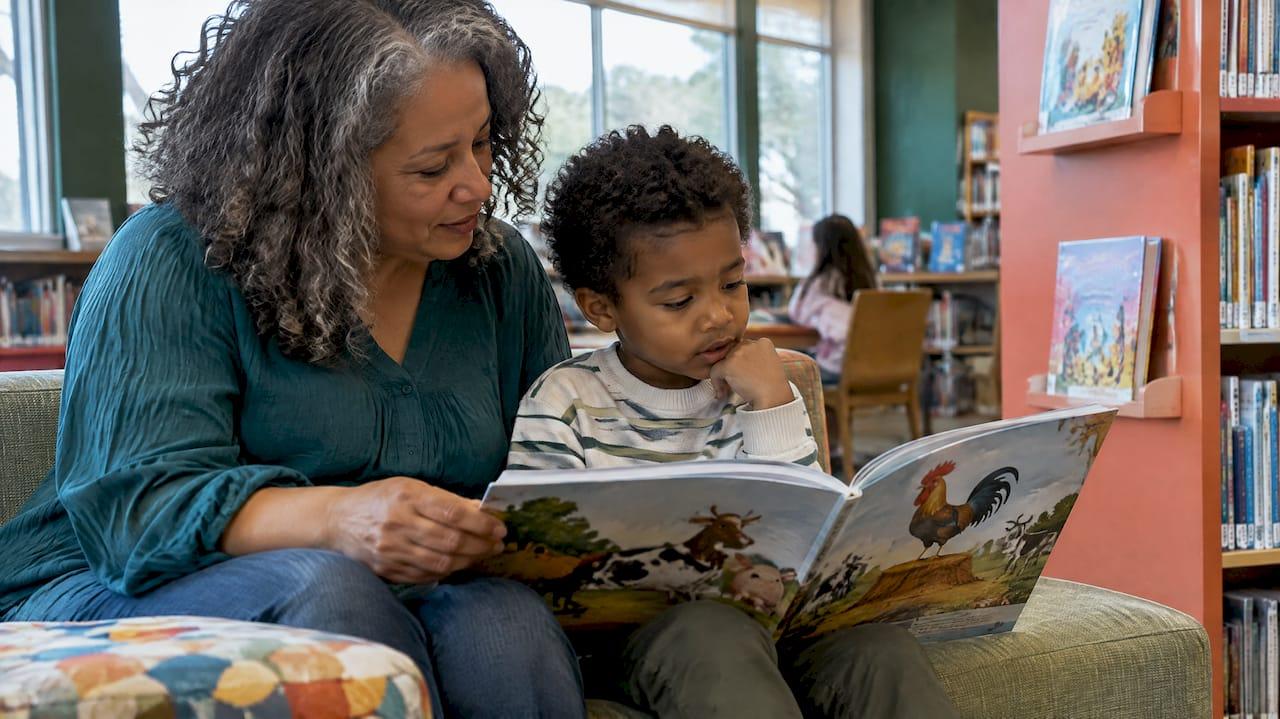
Satire in a children's book is a story that pokes fun at something, such as a fairy tale, a bossy grown-up or a bad habit, so that a child can see it more clearly. For ages 3 to 8 it works best when the joke is visible in the pictures, the target is something kids already know, and the feeling underneath is warm. Done well, it teaches kids to notice who is telling the story and why. Below you will find what separates satire from plain silliness, books that do it well, and how to read them with a child.
TL;DR
- Satire has a target and a point. Silliness only entertains. Many picture books mix both, and young kids enjoy them either way.
- Children 3 to 8 get satire through exaggeration, pictures and a narrator who gets things wrong, not through irony or sarcasm they have to decode.
- Good starting points: The Stinky Cheese Man, Click, Clack, Moo, Penguin Problems and I'm Bored.
- Pause before the twist, ask one question afterward, and let the laugh come first. Repeated readings build understanding.
- For sensitive or shy kids, pick gentle targets (stories, habits, grumpiness) over people, and watch how your child reacts to being laughed at.
Table of Contents
- What counts as satire in a picture book
- Why young kids can enjoy it
- Picture books that do it well
- How to read a satirical book with a child
- Choosing satire for sensitive or shy children
- Satire on the shelf: ideas for librarians and teachers
- Our perspective on satire for young readers
- Bring the humor home
- FAQ
- Sources
What counts as satire in a picture book
Satire uses wit, exaggeration and irony to expose a flaw so it can be seen and, ideally, improved. One kids' reference describes it as a genre that ridicules bad behavior in order to change or improve it, and notes it should not be confused with comedy, whose purpose is to entertain. Another kid-friendly glossary puts it simply: satire makes fun of something in a smart way to show what is wrong with it, often by blowing a problem up to an absurd size.
A quick way to tell the two apart: ask what the joke is about. A book where a dog wears a hat is silly. A book where cows type a formal complaint and go on strike for electric blankets is making a point about how people bargain and how the powerful respond. Both get laughs. Only one has a target.
For ages 3 to 8 the target is almost never politics in the adult sense. It is usually one of these:
- Stories themselves. Fairy tales, bedtime books and the rules of reading get twisted so kids can spot what is "supposed" to happen.
- Everyday behavior. Complaining, bragging, boredom, bossiness, refusing to read.
- Authority. A narrator, a farmer or a candidate who is a little too sure of himself.
Why young kids can enjoy it
Young children do not need to decode sarcasm to enjoy satire. An ERIC-indexed study of humor in picture books finds that slapstick, the "banana-skin" gag, is the basic ingredient of much humorous children's literature, and that the pictures themselves often trigger the laugh by showing the joke. It also notes that characters have to be presented so we laugh at them rather than sympathize with them.
That is why picture books are such a good home for satire. The words can say one thing while the illustration shows another, and a four-year-old gets to be the one who notices. Writing in The New Yorker, Elise Broach describes recent books with unreliable narrators that give young children the thrill of being in on the joke, because the listener knows more than the narrator does.
There is a real skill underneath the fun. The same essay says these books help children recognize another person's viewpoint and notice when someone's version of events tilts in their favor. For parents and teachers working on emotional literacy, that is perspective-taking in disguise. If you want activities that build the same skill, see our perspective-taking activities for kids ages 3 to 8.

Satire is not sarcasm
These are related but different. Sarcasm is a spoken remark that means the opposite of what it says, and it is hard for young children. Researchers have studied how children learn to tell sarcasm and verbal irony apart, and the ability develops gradually through the early school years. Picture-book satire sidesteps the problem by showing the absurdity instead of relying on tone of voice. If your child is asking about sarcasm specifically, our guide to explaining sarcasm to kids covers ages, examples and steps.

Picture books that do it well
The titles below are widely available, age-labeled by their publishers, and each has a clear target. Ages and prices are as published by each publisher at the time of the cited listing.
| Book | Ages | What it pokes fun at | How the joke works |
|---|---|---|---|
| The Stinky Cheese Man and Other Fairly Stupid Tales | 3 to 7 | Classic fairy tales | Retellings like "Cinderummpelstiltskin," a narrator who loses control |
| Click, Clack, Moo: Cows That Type | 3 to 7 | Barnyard bargaining, labor disputes | Polite, formal complaints from cows |
| Penguin Problems | 3 to 7 | Chronic complaining | A grumpy penguin and a walrus with perspective |
| I'm Bored | 3 to 8 | Adults declaring kids boring | A potato who is proven wrong |
| Vote For Me! | 3 to 7 | Name-calling and mud-slinging | Two candidates trade insults, a third wins |
| I Don't Want to Read This Book | 4 to 8 | Reading as a chore | A character lists everything he would rather do |
Fairy tales turned upside down
Jon Scieszka and Lane Smith's The Stinky Cheese Man and Other Fairly Stupid Tales came out in 1992, is a Caldecott Honor Book for ages 3 to 7, and pokes fun at classic tales with fourth-wall-breaking text and offbeat illustrations. It only works if the child knows the originals, so read the real Gingerbread Man or Jack and the Beanstalk first.
Underdogs with a point
Publishers Weekly's review of Click, Clack, Moo: Cows That Type describes cows who discover a typewriter, air grievances in a formal letter and strike when denied electric blankets. Kids cheer for the clever animals, and the satire of workplace negotiation rides along without a lecture.
Ben Clanton's Vote For Me! (2020, ages 3 to 7) has a donkey and an elephant bragging, flattering and name-calling before a third candidate wins. It is a ready-made conversation about why mean words do not win people over.
Gentle satire about feelings
These suit emotional-literacy shelves best. In Penguin Problems by Jory John and Lane Smith (2016), a penguin complains about everything until a walrus helps him see things in perspective. It is funny, and it gives a child words for the grumbles they know well. Michael Ian Black's I'm Bored (2012, ages 3 to 8) flips the usual script: a bored girl meets a potato who says children are boring, and she sets out to prove otherwise. Max Greenfield's I Don't Want to Read This Book (2021, ages 4 to 8) is a send-up of reading as a chore, handy for reluctant readers.
If honesty and fibbing are themes you want to explore through humor, our list of picture books about honesty is a good next stop.
How to read a satirical book with a child
The goal is for the laugh to come first and the understanding to follow. Four habits help.
- Set the stage in one sentence. The Horn Book's guide suggests describing satire to children as a story that makes fun of other stories or something that happens in real life. If the child enjoys it, that is enough, even if they cannot explain why.
- Pause before the twist. Stop one page early and ask what might happen next. Predictions make the payoff land harder.
- Ask one question afterward. NAEYC's family guide notes that young children must understand why a situation is absurd before they find it funny, and suggests asking what makes a book funny, or whether it would still be funny if the characters' requests were more sensible.
- Reread. One early-childhood educator writes that the more repeated exposure children have with satire, the more they get it, as with any genre. Follow-up conversations can deepen things when the child shows interest.
A reminder for the read-aloud itself: voices, timing and a pause on the illustration do much of the work. The habits in why reading aloud matters carry over to older kids too.
A follow-up that many classrooms and homes enjoy is writing and drawing your own silly tale. Our guide to making a comic with kids walks through a simple plan.
Choosing satire for sensitive or shy children
Some children laugh at a pompous narrator. Others worry about him. Both reactions are normal, and the choice of book can respect either.
- Choose the target carefully. Satire of stories, grumpiness or boredom is easy to enjoy. Satire of a character who is humiliated can feel sharp to a child who fears being laughed at. Check that the book laughs at the behavior, not at the person.
- Look for warmth underneath. Books where the grumpy character is helped, or the underdog wins, leave a child feeling safe while still getting the joke.
- Preview, then read together. A first read in a lap, not in front of a group, lets a shy child react without an audience.
- Know the originals. A parody lands only if the child knows what is being parodied.
- Let them opt out. If a child goes quiet, switch to a book about the same feeling with a softer tone and try the satire again in a few months.
Books with diverse and inclusive characters can carry humor without making a character the butt of the joke. Our criteria for inclusive children's book selection is a practical checklist for educators and librarians. For therapists and counselors, how humor in therapeutic children's books helps kids explains the emotional side.
Satire on the shelf: ideas for librarians and teachers
A small, labeled display works well. Group titles by target rather than by the word "satire," which most children will not recognize: "Stories turned upside down," "Characters who complain," "Animals who stand up for themselves." Pair each satirical title with the original it spoofs where one exists, and add a card with one pause-and-predict question. Librarians building a wider collection can use our SEL playbook for public library picture books.
Our perspective on satire for young readers
At Icon Literary we think the best satire for small children is playful, not preachy. Our stories, decks and activities are designed to blend luxury design with playful chaos, so emotional ideas arrive through characters and pictures rather than through a lecture.
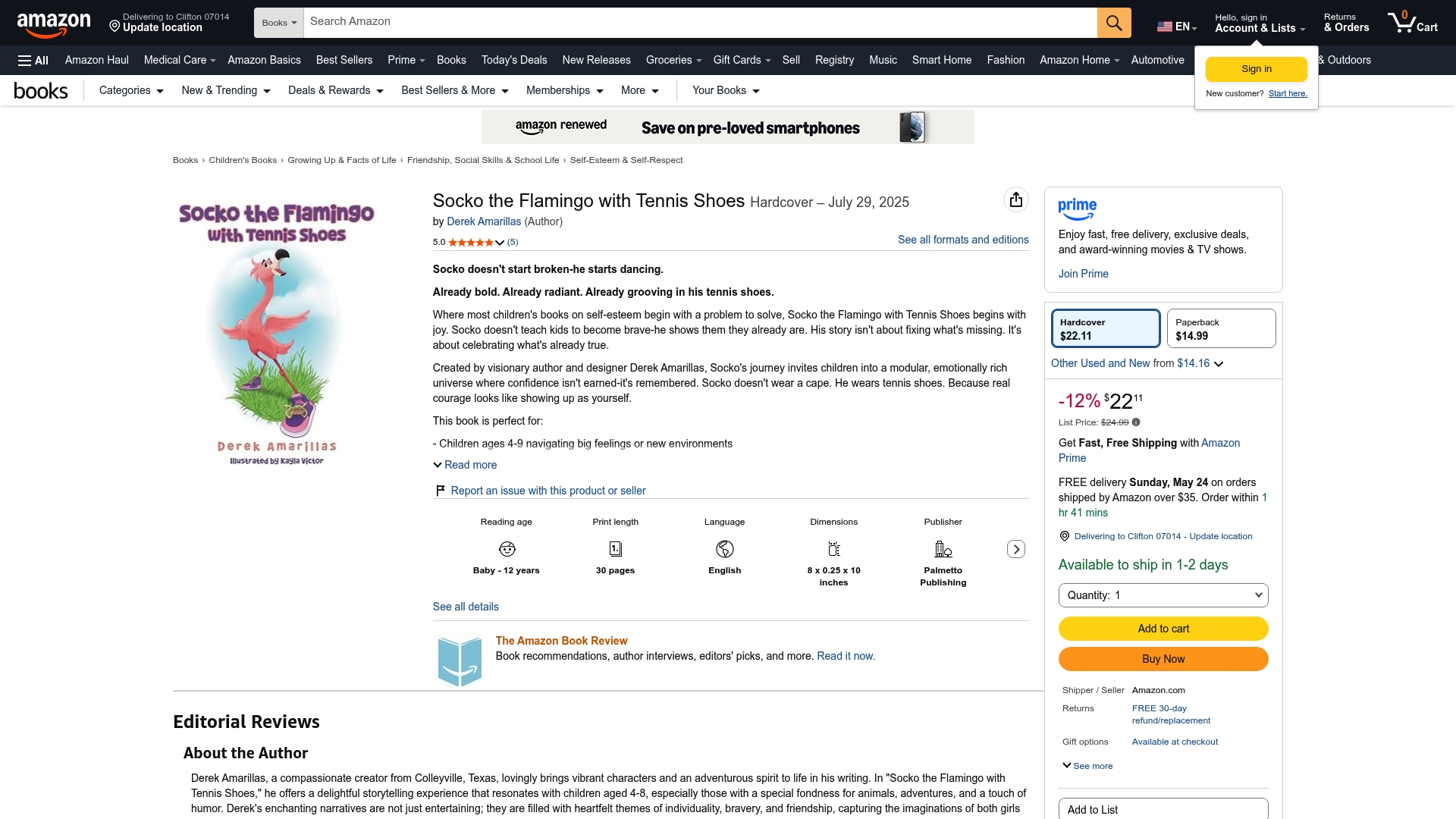
That is the approach behind the Duckwave Universe and Socko's Universe: original, character-driven worlds where feelings show up sideways, through humor and a little mischief. We build for ages 3 to 8 with developmentally attuned themes, because a child who laughs first is a child who is ready to talk.
We also believe humor should celebrate individuality. A joke that makes a child feel seen invites them in. A joke that corners them does not.
Derek Amarillas
Bring the humor home
If your child enjoys characters with attitude, our Duckwave Decks are a $7 one-off purchase from the Duckwave Universe, a themed card deck built around original characters and playful storytelling. You can find them at Duckwave Decks. For longer stories, the Socko's Universe books are in our catalog.
Gift-givers may also like our piece on why funny books make the best children's gifts.
FAQ
At what age can children understand satire?
Children as young as 3 enjoy the exaggeration and silliness that satirical picture books use, even if they miss the point. Grasping the target of the joke tends to arrive gradually through the early school years. Repeated readings and conversation help it along.
Is satire the same as humor?
Not quite. Humor aims to entertain, while satire has a target and a message, usually delivered through exaggeration. Many picture books do both at once, so a child can enjoy the laugh while an adult notices the point.
What is a good first satirical picture book?
The Stinky Cheese Man and Other Fairly Stupid Tales is a classic starting point for ages 3 to 7, as long as your child knows the fairy tales it twists. Penguin Problems and I'm Bored are gentler options built around feelings kids recognize.
Should I explain the joke?
Only lightly. Describe the book as a story that makes fun of other stories or real life, then ask one question after the laugh. If your child enjoys it, that is enough.
Sources
- Satire Examples, Definition and Worksheets | KidsKonnect
- What Is Satire? Definition and Examples | Learning Hub
- ERIC ED362905: humor in picture books
- The Thrill of Picture Books That Let Kids in on the Joke | The New Yorker
- Development of children's ability to distinguish sarcasm and verbal irony
- The Stinky Cheese Man and Other Fairly Stupid Tales | Penguin Random House
- Click, Clack, Moo: Cows That Type | Publishers Weekly
- Vote For Me! | Penguin Random House
- Penguin Problems | Penguin Random House
- I'm Bored | Simon & Schuster
- I Don't Want to Read This Book | Penguin Random House
- Using picture books to teach satire | The Horn Book
- Books for Laughing Together | NAEYC
- Using Picture Books To Teach Satire | Ideas and Innovations