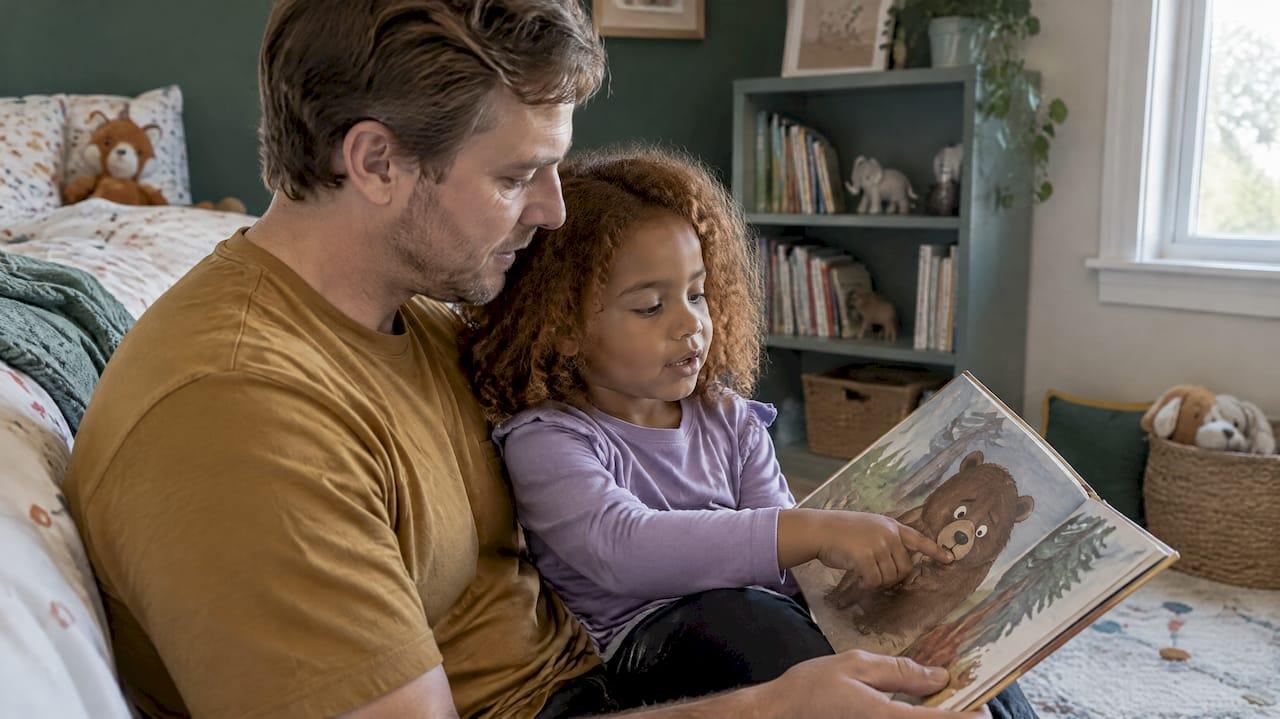
Bibliotherapy means using books to help a child work through feelings, and you can do it at home with a picture book, a calm moment and a few open questions. The best results come from choosing a story that matches what your child is going through, reading it together, and letting the conversation follow the child. At Icon Literary we write emotional-literacy stories and card decks for ages 3 to 8, so this guide is built around that age group.
TL;DR
- Bibliotherapy is supportive, not clinical care. It uses stories to open up conversations and help children feel less alone.
- Read the book yourself first. Pick one that fits your child's current issue, offers coping ideas and has a character your child can relate to.
- Talk about feelings when your child is calm, not in the middle of a meltdown.
- Use open-ended prompts such as how a character might feel, and skip questions that sound like a quiz.
- If worry, sadness or withdrawal persists, talk to your child's pediatrician.
Table of Contents
- What bibliotherapy means for a parent
- Why stories work for young children
- How to choose the right book
- How to read the story together
- Questions that do not feel forced
- Themes for shy, sensitive and anxious kids
- For teachers, librarians and counselors
- Where Icon Literary fits
- When reading together is not enough
- FAQ
- Sources
What bibliotherapy means for a parent
The word sounds clinical. In practice, it is using reading materials to help with personal problems. A story gives comfort, makes hard conversations easier to start and shows a child that other people have felt the same way. The Los Angeles Public Library is clear that it supports a child and does not replace professional help.
For a child aged 3 to 8, this usually looks very ordinary. You read a picture book about a character who feels nervous on the first day of school. Your child points at the character's face. You say, "That looks like a big worry." Nothing more is required.
The approach works because a character is a safe distance away. A five-year-old who cannot explain why drop-off feels scary can often tell you how the bear in the story feels about it.
Why stories work for young children
Head Start, the federal early childhood program, says books with social-emotional themes can help families support young children's healthy development. That includes managing strong emotions, handling grief and building social skills. Head Start frames story reading as a practical route to school readiness, because children practice naming and communicating difficult feelings.
The American Academy of Pediatrics, through its HealthyChildren.org reading list, says that reading about feelings helps children recognize their own emotions and build empathy. The same source recommends talking about feelings when children are calm, so they have words ready for the moments they feel stressed or overwhelmed.
That last point is the key for parents. A story is not a fix for a hard moment. It is practice for the next one.
The habit starts early. If you have a younger child at home too, this overview of why reading aloud matters from day one shows how the routine begins long before a child can talk about feelings.

How to choose the right book
The University of Connecticut's Renzulli Center offers a parent guide to bibliotherapy. It says a useful book should relate to your child's current issue, offer coping strategies and include a protagonist your child can relate to. Here is how to apply that.
1. Start with what you have observed
NAEYC, the National Association for the Education of Young Children, recommends choosing books in response to what a child is experiencing. Its example is a story about separation when a child is upset at drop-off. Write down one thing you have noticed this week: a refusal to go to a birthday party, tears at bedtime, hitting when frustrated. That is your search term.
2. Read it yourself first
This is the step parents skip most often. A book about a new sibling can contain a scene you did not expect, and you want to know how it ends before your child does. Check three things: does the character face a problem like your child's, does the story show a way to cope, and does the ending feel honest rather than preachy?
3. Check the age fit, then adjust
The HealthyChildren.org list groups books by age band. It notes that books can be used across ages and that some concepts can be simplified for younger children. A three-year-old may only follow the pictures and one feeling word. A seven-year-old can follow a character's choices and what changed afterward. The list also includes editions in Spanish and other languages for some titles, which helps bilingual households.
4. Look for your child in the story
NAEYC's approach puts a child's lived experience and identity at the center. Books can connect with familiar family and community worlds while opening up different perspectives. If you want inclusive books, look for characters whose families, skin tones, abilities and routines resemble your child's, and also for some that do not. Both matter.
How to read the story together
Once you have the book, the routine is simple. The UConn guide describes it as reading together and then having a follow-up discussion that clarifies the story's connection and encourages open expression, with time and space for the child to explore the issue.
- Pick a calm time. Bedtime, a quiet afternoon or a snack. HealthyChildren.org suggests bedtime stories as a starting point for discussing a character's anger or frustration, as well as your own and your child's feelings.
- Read it the first time just as a story. Let your child enjoy it. Do not stop on every page to teach.
- Watch, do not interrogate. Psychology Today advises parents to notice which character a child identifies with and to watch facial and bodily responses as they read. A child who goes quiet at one page is telling you something.
- Ask one or two questions, then stop. More on that below.
- Come back to it. Children ask for the same book again and again. That is the process working, not a sign the book is not doing its job.
If you want more read-aloud ideas for this age range, our guide to reading feelings books together goes through them step by step, and our bedtime feelings books with bedside prompts is built for the end-of-day slot.
Questions that do not feel forced
Children can tell when a question has a right answer. Psychology Today recommends open-ended prompts about how a character might feel or how the story might change after a different choice, rather than judgmental questioning. Head Start's book guides also include suggested questions to spark discussion, along with family tips and follow-up activities.
Try these:
- "How do you think the character felt right here?"
- "What do you think happens next if they try something different?"
- "Has anything like that ever happened to you, or to someone you know?"
- "What did the character's body feel like?"
Avoid these:
- "Why did the character do the wrong thing?"
- "Do you feel like that when you hit your sister?"
- Any question that links the story directly to something your child did this week.
If your child says "I don't know," that is a fine answer. Say something about the character yourself, such as "I think I would feel nervous too," and keep turning pages. Naming your own feelings gives your child a model without any pressure.
NAEYC also suggests pairing a book with a short guide of open-ended questions and a related activity. Drawing the character's feeling, acting it out with a toy or making a calm-down corner all count. Our list of screen-free SEL activities for ages 3 to 8 has more.

Themes for shy, sensitive and anxious kids
The HealthyChildren.org list covers worry, sadness, big feelings, the physical sensations of emotions and calming down. It also includes books about adjusting to new situations. Those are the themes most parents of shy or sensitive children want.
Match the theme to the moment:
- A new school, class or activity coming up. Choose a story about a character starting something new. Read it several days ahead.
- Frequent worry. Choose a story where a worry is named, given a shape and handled.
- Strong anger or frustration. Choose a story where the character feels the anger in their body and finds a way to settle.
- Sadness or loss. Choose a gentle story that says sad feelings are allowed to stay for a while.
For a specific upcoming situation, Head Start recommends social stories. These describe what may happen, how people may feel and what helpful behavior looks like, which can reduce anxiety. Head Start advises tailoring the story to your child's point of view, reading it before the situation and practicing its ideas with role-play or puppets. A dentist visit or a first sleepover are good examples.
For teachers, librarians and counselors
The same principles apply on a larger scale. Pair each book with a short discussion guide and one activity, as NAEYC suggests for books that go home with families. Build booklists around feelings themes rather than only by age, so a parent can walk up and ask for a book about worry. Our guides to how booklists support childhood mental wellness and storytelling for emotional learning cover this for classrooms and libraries. If you run group sessions, see how to host a storytime that builds emotional literacy.
Homeschool families can use the same routine as a daily rhythm: one story, two questions, one small activity.
Where Icon Literary fits
We create emotional-literacy picture books, graphic narratives, activity kits and card decks for children ages 3 to 8. Our stories feature original characters and story worlds, and they are designed to carry emotional themes indirectly, through play and imagery rather than lectures. That is the quality we think a bibliotherapy book needs: a child enjoys it first and recognizes themselves in it second.
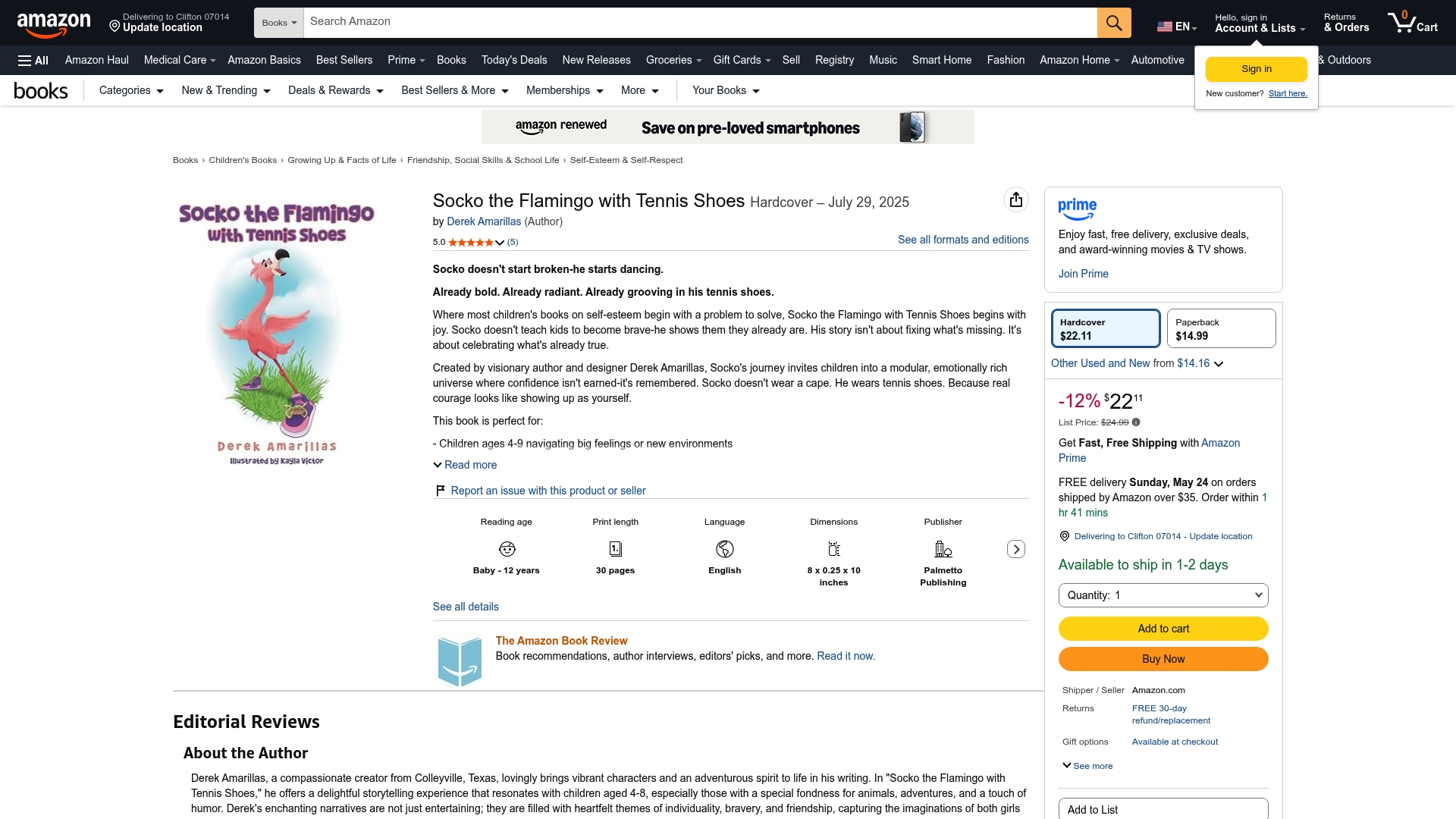
If you want a low-cost way to start, the Duckwave Decks are $7, a one-time purchase, and they are a good conversation starter at the table or at bedtime. You can find them on our home page. The Socko's Universe books are in our catalog.
If you are choosing for a classroom or a gift, our guide to the benefits of reading emotional books to kids explains what to look for.
When reading together is not enough
Books support a child. They do not diagnose or treat. HealthyChildren.org advises parents to contact the child's pediatrician when concerns arise, and says persistent symptoms that interfere with normal functioning may signal a need for more support.
Talk to your pediatrician if you see:
- persistent worry
- avoiding things out of fear
- changes in sleep or eating
- withdrawal
- ongoing sadness or irritability
- difficulty at school
- any talk about death or suicide
If your child attends a Head Start program, families can ask program staff about an infant and early childhood mental health consultant. Consultants can offer practical strategies to try at home and coordinate with teachers. If your child ever talks about wanting to die or hurt themselves, contact your pediatrician right away or call or text 988, the Suicide and Crisis Lifeline.
Reading together can continue alongside professional support. Many therapists welcome a favorite book as a shared language.
Our view on stories and feelings
Children do not learn emotional skills from being told what to feel. They learn from characters they love, in worlds that are fun to be in. That is why we build Icon Literary around original characters, playful visuals and subtle emotional themes, so a story can be a story first.
We design our books, decks and activities for ages 3 to 8, and for the adults who read with them: parents, teachers, librarians and counselors. A good bibliotherapy habit is small and repeatable. One story, one or two gentle questions, one shared moment. Our printables and memberships are meant to keep fresh material coming so that routine stays interesting.
We think a child who sees their quirks, worries and big feelings in a character is a child who feels less alone. That is what we try to make.
Derek Amarillas
FAQ
Is bibliotherapy only for children with serious problems?
No. It works for everyday feelings such as nerves before a new school, frustration, or sadness after a friend moves away. Head Start notes that social-emotional books help families support healthy development in general. It is a supportive habit, not a treatment.
How often should I do it?
Short and regular beats long and rare. Many families fold it into bedtime a few nights a week. Reread favorites as often as your child asks. Repetition helps children absorb the ideas at their own pace.
What if my child does not want to talk about the book?
Let it go. Read for enjoyment, and say one thing about how a character might feel. Try again another day, ideally when your child is calm. Watching which page your child lingers on can tell you more than any question.
Can I use a book about a topic my child has not experienced yet?
Yes. Head Start recommends reading a social story before the situation it describes, such as a first day at school, so the child knows what to expect. Preparing in advance is one of the best uses of a story.
Sources
- Bibliotherapeutic Library Resources for Kids, Los Angeles Public Library
- Tell Me a Story Series, HeadStart.gov
- Recommended Reading: Books to Teach Kids About Feelings and Resilience, HealthyChildren.org
- A Parent's Guide to Helping Children: Using Bibliotherapy, UConn Renzulli Center
- Rocking and Rolling: Reading Aloud with Infants and Toddlers, NAEYC
- Partnering with Families to Support Social-Emotional Learning, NAEYC
- 4 Play Activities to Help Children Manage Emotions, HealthyChildren.org
- Bibliotherapy for Kids, Psychology Today
- Social Stories, HeadStart.gov
- How to Talk About Mental Health With Your Child and Their Pediatrician, HealthyChildren.org
- Infant and Early Childhood Mental Health Consultation: Information for Families, HeadStart.gov