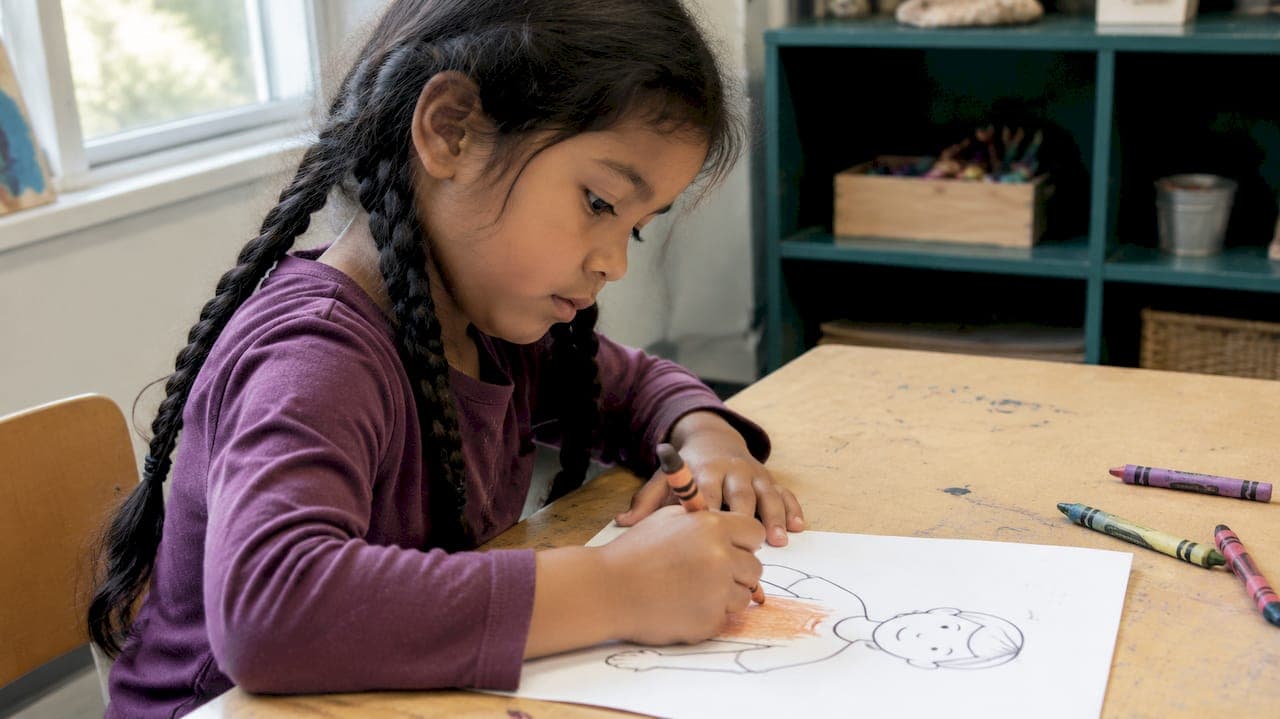
Screen-free SEL activities are everyday games, art projects, stories and calming routines that teach children to name feelings, understand others and work through big emotions, with no tablet or TV involved. For ages 3 to 8, most of them need paper, a few household items and 10 to 15 minutes. This guide gives you the activities, the materials, the steps, and ways to adapt them for shy, sensitive or younger children.
TL;DR
- Play is how young children learn, so the best SEL practice looks like games, drawing, pretend play and stories.
- Start with naming feelings: feeling-face guessing, charades, songs and puppets all work with items you already own.
- Keep a calm space and a short routine so children can practice the same skills again and again.
- Adults do the most important part: stay close, use a calm voice and label feelings out loud.
- Shy or sensitive children often do better with puppets, drawing and small groups than with performing in front of others.
Table of Contents
- Why screen-free practice works for young children
- Activities that help children name feelings
- Art and sensory play for strong feelings
- Pretend play that builds empathy
- Screen-free family activities for cooperation and communication
- Materials and steps at a glance
- Calm-down tools and cozy spaces
- Adapting for age, shyness and different abilities
- Fitting SEL into daily routines
- Keeping activities emotionally safe
- Our perspective: feelings land better when they are not announced
- Bring the activities to life with Duckwave Decks
- FAQ
- Sources
Why screen-free practice works for young children
Social-emotional learning (SEL) is the skill set children use to understand feelings, manage them and get along with others. Young children build those skills through relationships and play, not worksheets.
ChildCare.gov states that play is the main way young children learn. It also says both structured and unstructured play help children develop communication, cooperation, problem-solving, emotional management, confidence and resilience.
That is good news for busy adults. You do not need a curriculum. You need a few reliable activities, a regular time to do them and a calm adult who joins in.
Below, the activities are grouped by the skill they build. Pick one from each group and rotate through them over a few weeks.
Activities that help children name feelings
Children cannot manage a feeling they cannot name. These games build that vocabulary without a lecture.
Feeling-face guessing
One person makes a face. Everyone guesses the feeling and says when they have felt it too. Head Start recommends labeling feelings and acting out emotions as everyday practice. Add songs with emotional expressions, puppets, drawings, and story questions about how a character feels and what they might do next.
Try this at bedtime or in a car line: "How do you think the bear felt when his friend left? What might he do next?"
Emotion charades
Charades turns feelings into a body-and-face puzzle. ZERO TO THREE lists emotion charades among its activities for young children, alongside freeze dance, Red Light/Green Light, Simon Says and sorting games.
For a no-prep version with scripts, see our guide to feelings charades. It runs 10 to 20 minutes and works for a family or a classroom.
Dancing the feeling
Play music and ask children to move like a sad cloud, a proud lion or a nervous mouse. BBC Tiny Happy People explains that dancing emotions helps children connect movement with emotion words, notice how feelings look or feel, and grow more confident expressing themselves.
Where does the feeling live in the body?
Give each child an outline of a body, drawn on paper. Ask them to color where they feel worried, excited or angry. Raising Children Network suggests this for ages 3 to 5, along with messy play, puppets, dress-up, drawing and painting, and emotionally relevant stories. It gives children a way to say "my tummy feels tight" before they have the words for nervous.
If you want a word list that grows with the child, our emotion vocabulary guide breaks it into three age bands with scripts.
Sorting feelings
Draw or print simple faces and have children sort them into groups: calm, wiggly, upset. Our list of low-prep emotion sorting activities can be set up in about 10 minutes.
Art and sensory play for strong feelings
Some children cannot talk about a feeling yet, but they can squeeze it, draw it or build it.
Playdough
NAEYC says playdough supports sharing, turn-taking, language, competence and pride. It also gives children a healthy sensory outlet for stress or anger. Adults can add household props and join in through comments, questions, modeling and cooperation.
Try a "squish the grumpy" round: roll a ball of dough, name the feeling, squeeze it, then reshape it into something calm. For a structured version, see how to use feelings playdough mats well.
Why hands-on play helps
Touch-based activities give children something to do with their hands while they work through emotion. If you want background on how this kind of play supports development, this parent's guide to sensory play and child development is a good place to start.
The color-zones chart
The American Academy of Pediatrics' HealthyChildren.org describes a color-zones art chart. Blue is for sad or bored, green for calm and focused, yellow for anxious, silly or agitated, and red for angry, scared or out of control.
Let the child decorate each zone. Then ask, "Which color are you in right now?" Children often answer more honestly with a color than with a feeling word.
Pretend play that builds empathy
Empathy grows when children step into someone else's shoes. Pretend play lets them do that safely.
PBS KIDS says dramatic play supports social-emotional development, problem-solving, positive connections and empathy. Families can act out emotions and role-play how to settle a disagreement.
Simple setups that work:
- Puppet conflict. Two puppets want the same toy. Ask the child to help them solve it.
- Care play. A stuffed animal has a scraped knee. How do we help it feel better?
- Role swap. The child plays the adult for five minutes while you play the child who is upset.
Storytelling does similar work. Our guide to CASEL-aligned storytelling shows how to build emotional learning into story time.
Screen-free family activities for cooperation and communication
The whole family can practice SEL without calling it that. UNICEF's screen-free ideas include animal charades, nature walks, scavenger hunts, I Spy, collaborative storytelling and hide-and-seek. Its age groupings cover toddlers and preschoolers ages 1 to 4 and young children ages 5 to 8.
Most of these build a social skill if you add one question afterward:
- Scavenger hunt: "How did we decide who looked where?"
- Collaborative story: "What did the character feel when that happened?"
- Hide-and-seek: "How did it feel to wait to be found?"
Materials and steps at a glance
Use this table to choose quickly.
| Activity | Materials | Steps | Skill practiced |
|---|---|---|---|
| Animal charades | Paper, pen, container | Write or draw familiar animals on paper, fold the slips, put them in a container. Take turns drawing a slip and acting it out. | Cooperation, body language |
| Scavenger hunt | Familiar, child-safe objects | Hide the objects and give clues. Work in pairs. | Communication, teamwork |
| Feeling-face guessing | Nothing | One person makes a face, others guess and share a time they felt it. | Emotion recognition |
| Color-zones chart | Paper, crayons or markers | Draw four zones, color them, and point to one each day. | Self-awareness |
| Playdough feelings | Playdough | Name a feeling, shape it, squeeze it, reshape it. | Self-management |
| Puppet conflict | Two puppets or stuffed animals | Act out a shared-toy problem and ask the child to help. | Empathy, problem-solving |
The animal charades and scavenger hunt setups come from UNICEF's screen-free list.
Calm-down tools and cozy spaces
Naming feelings is half of the work. The other half is what to do when a feeling is too big.
HealthyChildren.org suggests a screen-free "back to green" toolkit built from breathing, a quiet tent or cozy space, movement, books, music, drawing, dress-up, dolls, stuffed animals, modeling clay and simple instruments. Let the child choose what goes in.

NAEYC recommends a peace corner or table and peace puppets, with adults modeling labeled feelings and deep breathing so children can work through conflicts.
Two guides from us can help you build this:
- Design a feelings corner that kids actually use.
- A ten-minute rehearsal that makes calm-down boxes work in classrooms.
The key is to practice when everyone is calm. A tool a child has never tried will not help in the middle of a meltdown.
Adapting for age, shyness and different abilities
Ages 3 to 4. Keep it short and physical. Use puppets, songs, dough and simple faces. Raising Children Network's toddler advice stresses letting the child lead while an adult helps with frustration.
Ages 5 to 6. Add story questions, feeling charts and cooperative games with simple rules.
Ages 7 to 8. Let children invent the scenarios, write short scripts, or teach a game to a younger sibling.

Shy or sensitive children. Offer a puppet to speak through. Let them draw before they talk. Let them watch a round before joining. Skip "on the spot" performances. Smaller groups also help: ChildCare.gov notes that smaller groups and lower child-to-adult ratios make it easier to give one-on-one attention and help children feel safe rather than overwhelmed.
Different abilities. Offer more than one way to take part: point, draw, act, speak or build. ChildCare.gov's checklist for quality care settings points to books, dramatic play, art, music, cozy spaces and accessible materials, mixed with active and quiet activities. That is a good model for any home or classroom.
If you teach at home, our homeschool SEL activities guide has 12 more ideas, and our social emotional games are mapped to six SEL skills for classroom and therapy use.
Fitting SEL into daily routines
You do not need a new hour in the day. Attach one activity to something that already happens.
- Morning: point to a zone on the color chart.
- Car or walk: play feeling-face guessing or I Spy.
- After school: two minutes of playdough while you talk about the day.
- Bedtime: one story, one feelings question.
ChildCare.gov says predictable schedules and routines give comfort and security, reduce stress around transitions, and create repeated chances for relationships and learning. Repetition is the point. A child who plays the same feelings game for three weeks learns more than one who sees ten different games once.
If you want a longer structure, our 6 to 8 week plan to teach emotions lays it out week by week.
Keeping activities emotionally safe
The activity matters less than how the adult responds. A few habits make the difference.
Stay close and stay calm. ZERO TO THREE recommends co-regulation: stay near the child, use a calm voice, breathe slowly together, label the feeling and offer comfort before correction.
Read behavior as information. ChildCare.gov explains that young children's behavior communicates wants, needs and feelings. Treat a hard moment as a clue, not just a disruption.
Model it yourself. NAEYC emphasizes that children need adults to show peacemaking and to say out loud when they feel frustrated or overwhelmed, and what they do to calm down. "I'm feeling frustrated. I'm going to take three slow breaths" teaches more than any worksheet.
Never force a turn. If a child says no to an activity, offer a smaller step: watch, hold the puppet, or draw instead.
If a child's distress is intense, lasts, or gets in the way of daily life, talk with your pediatrician, a school counselor or a child therapist. Activities support children. They do not replace professional help.
Our perspective: feelings land better when they are not announced
We make stories, card decks and activities for children ages 3 to 8, and one belief shapes all of them. Children learn about feelings best when the lesson is not shouted. A character who is nervous at a party, a funny creature who gets everything wrong, a card that asks a silly question: these open a door without pushing a child through it.
That is why we favor design that is playful and visually rich, with original characters and subtle emotional themes. A child who is delighted will stay with an activity long enough to feel something real.
It is also why we like the screen-free approach. The activities above work because an adult and a child share attention. Whatever tools you use, books, cards, dough or a hand puppet, the tool is there to start the conversation. The conversation is the learning.
— Derek Amarillas
Bring the activities to life with Duckwave Decks
If you want ready-made prompts for these games, our Duckwave Decks are collectible card decks from the Duckwave Universe, available for $7. They are printable, so you can use them for charades, feelings check-ins or story starters at home or in a classroom. You can also explore the wider Socko's Universe catalog for books and activity kits.
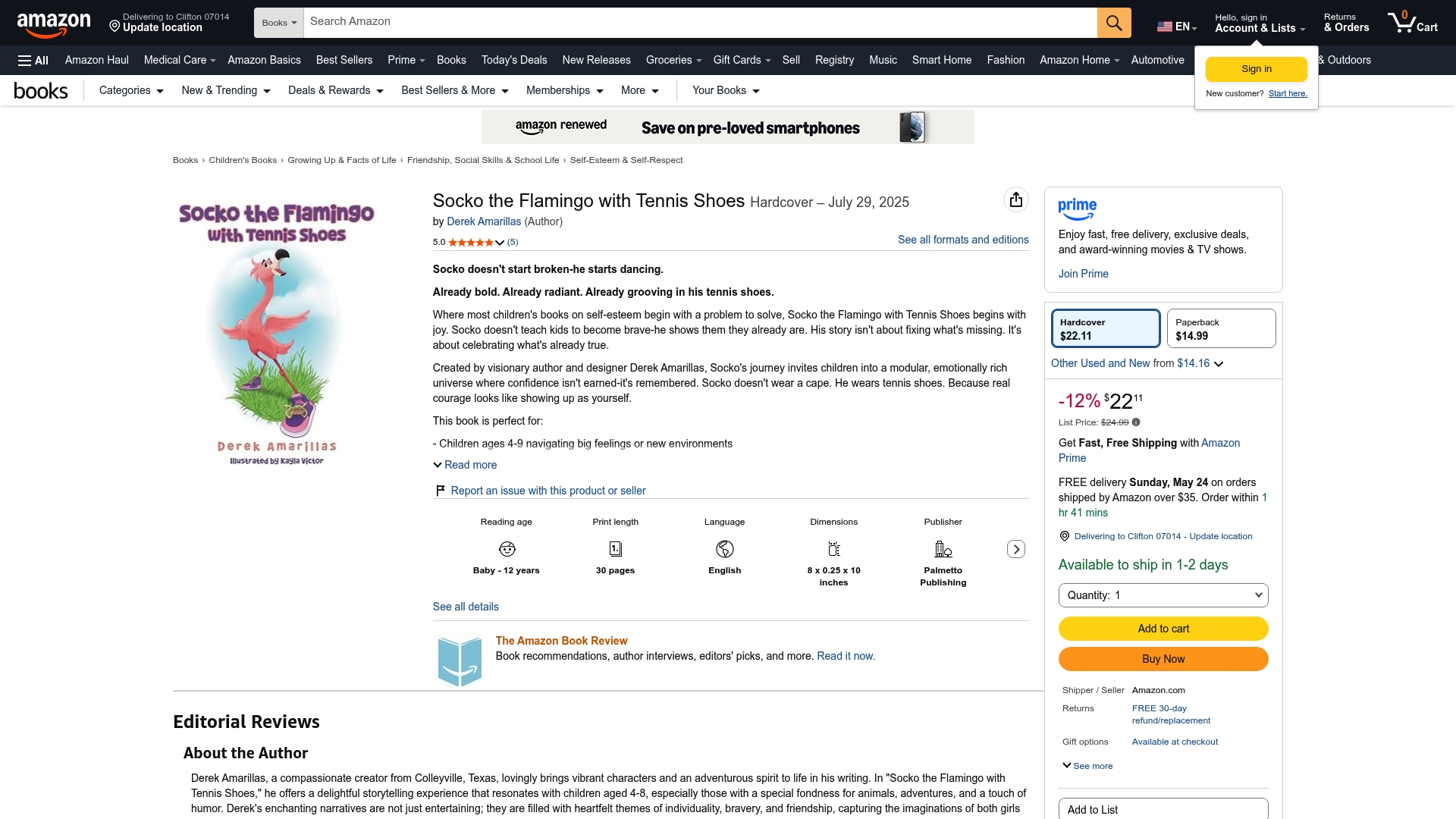
Browse the full range from our home page.
FAQ
What are screen-free SEL activities?
They are hands-on ways to practice social-emotional skills without a screen: games, art, pretend play, stories, songs and calming routines. They help children name feelings, show empathy, cooperate and calm down. Most need only paper, crayons, dough or a stuffed animal.
How long should each activity take?
For ages 3 to 4, five to ten minutes is plenty. For ages 5 to 8, 10 to 20 minutes works for most games. Stop while the child is still enjoying it, and bring it back the next day.
What if my child is shy and refuses to join in?
Offer a lower-pressure way in. A puppet can speak for the child, drawing can replace talking, and watching counts as taking part. Keep the group small and invite them again without comment.
Can teachers and librarians use these in groups?
Yes. Charades, sorting games, puppets and story questions all scale to small groups. Smaller groups give each child more attention, so split a large group when you can.
How often should we practice?
Short and regular beats long and rare. Pick one activity and tie it to a daily routine, such as the walk home or bedtime. Repeating the same game for a few weeks builds the skill.
Sources
- Supporting Children's Learning Through Play, ChildCare.gov
- Everyday Ideas for Increasing Children's Opportunities to Practice Social Skills and Emotional Competencies, Head Start
- Your Calm Is Their Calm: Co-Regulation Strategies, ZERO TO THREE
- Exploring feelings through play, BBC Tiny Happy People
- Play activities to support preschooler emotions, Raising Children Network
- Play activities to support toddler emotional development, Raising Children Network
- Playdough Power, NAEYC
- Sensory Play and Child Development: A Parent's Guide
- 4 Play Activities to Help Children Manage Emotions, HealthyChildren.org
- Act It Out: Dramatic Play for Kids, PBS KIDS for Parents
- Screen-free activities for children, UNICEF Parenting
- Pillars of Peace: Tips for Peacemaking in the Early Years, NAEYC
- Supervision: Ratios and Group Sizes, ChildCare.gov
- Look, Listen, and Ask: Tips for Choosing a Quality Child Care Center, ChildCare.gov
- Supporting Children's Well-Being, ChildCare.gov
- Understanding and Responding to Challenging Behaviors, ChildCare.gov