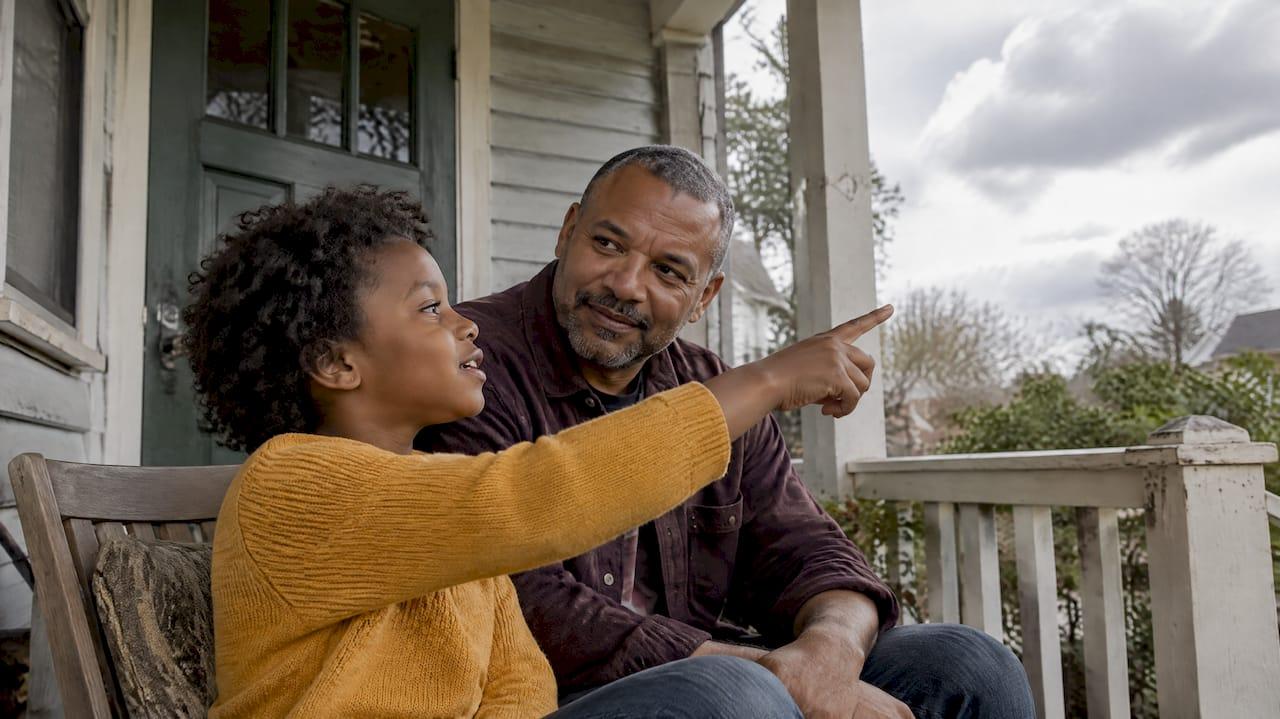
Myth making means helping a child invent a new story that explains something in the world: why the moon follows us home, why the fox has a white-tipped tail. For ages 3 to 8, the method that works is simple. Pick one wondering question, add a character and a problem, give the story a beginning, middle, and end, let the child tell it aloud while you write it down, and then draw it or act it out. Done this way, it also becomes a gentle way to talk about feelings. Our own picture books and card decks are built for this age group and this kind of play, and we show where they fit below.
TL;DR
- A myth is an original story that explains how something came to be. Children can invent one by answering a "why" question about nature, an animal, or a feeling.
- Use five parts: a setting, a character, a natural event, a problem, and a solution.
- Young children tell, adults write. Dictation lets a 3-year-old make a full story without needing to spell.
- Feelings make strong story fuel. Ask permission before anyone shares personal problems, and never force a shy child to perform.
- Finish with a drawing, a mask, or a short play, so each child can share in the way that feels safe.
Table of Contents
- What a myth is, and what making one means
- Step 1: Find the wondering question
- Step 2: Build the characters, the setting, and the problem
- Step 3: Give the story a beginning, middle, and end
- Step 4: Let children tell it while you write it
- Step 5: Use myth making for emotional literacy
- Step 6: Illustrate, revise, and share
- Include many voices
- A one-week plan for home, class, or library
- Our view on myth making
- Start with a deck
- FAQ
- Sources
What a myth is, and what making one means
A myth is a story told aloud and passed down for generations. Long ago, people used these stories to make sense of the natural world. Thunder, seasons, and the shape of a mountain all got a story.
Retelling a myth means learning a story that already exists, such as one from Greece or Egypt. Making a myth means inventing a never-told story of your own. Both are worth doing. Retelling builds a child's sense of what a myth sounds like. Making one gives the child the author's chair.
For ages 3 to 8, you do not need gods or heroes. You need a question, a character, and a bit of wonder. A myth for a five-year-old can be about a duck who stirs the clouds with a spoon, or a small star who was too shy to shine until someone asked it a kind question.

It also helps to know the word pourquoi. A pourquoi tale (pronounced "poor-KWAH") is a story that explains how something in nature came to be. It is the easiest myth to start with, and one common classroom activity has children write one and then make a mask of the main character.
Step 1: Find the wondering question
Every myth starts with a question. Children already ask them all day. Your job is to catch one and say, "Let's make up a story about that."
The Kennedy Center's creation-myth lesson suggests brainstorming natural or human-made subjects, such as mountains, monuments, trees, animal features, and weather. A Utah education lesson says a myth can explain a natural phenomenon, a human characteristic, or an animal characteristic.
That gives you three easy doors:
- A natural thing. Why is the sky orange at sunset? Why do puddles come after rain?
- An animal trait. Why do giraffes have long necks? Why do owls come out at night?
- A human trait. Why do we hiccup? Why do we get butterflies in our tummies when we are nervous?
The third door is where emotional literacy lives. A question like "Why do we cry when we are happy?" leads straight to a story about feelings, and it is a good one for sensitive kids.
How to help a child who says "I don't know"
Not every child has an idea ready. The same Utah lesson says children can brainstorm by drawing, using speech-to-text, telling ideas aloud, or working with a partner. Try one of these:
- Go outside for five minutes and collect three things you notice. Pick one.
- Draw three quick doodles of animals or weather. Ask which one has a secret.
- Offer two silly questions and let the child choose. "Why does the moon change shape?" or "Why do ducks quack?"
- Pair a shy child with one friendly partner, not a whole group.
If you want a ready list, our storytelling prompts for kids are sorted by age.
Step 2: Build the characters, the setting, and the problem
The Kennedy Center asks children to include a setting or origin, characters, a natural event, a problem, and a solution in an original creation myth. That checklist works for younger children if you turn each part into a question you ask out loud:
| Story part | Question to ask a 3 to 5-year-old | Question to add for ages 6 to 8 |
|---|---|---|
| Setting | Where does it happen? | What does it look, smell, and sound like there? |
| Character | Who is in the story? | What does this character want, and what are they afraid of? |
| Natural event | What happens in the sky, the sea, or the forest? | How does it change the world? |
| Problem | What goes wrong? | Why can't the character fix it right away? |
| Solution | How does it get better? | What does the character learn? |
Make ordinary things feel new
The Kennedy Center recommends unusual adjectives so that ordinary things become newly imaginable. A "grumpy" cloud is more interesting than a "gray" one. A "sleepy-eyed" mountain tells you more than a "big" one. Ask, "What word would nobody else use for that?" Children love this game.
For older children, Brain-Targeted Teaching suggests asking them to imagine their minds as art galleries and to describe the mythic setting with all five senses. What does the cloud kingdom smell like? What does the ground feel like under bare feet? A seven-year-old can answer this well, and the answers often become the best lines in the story.
For character ideas that go beyond "a brave boy" or "a kind princess," see how a story world can be built around a quirky original character in our guide to mythic picture books for ages 3 to 8.
Step 3: Give the story a beginning, middle, and end
A myth feels complete when it has a shape. The Smithsonian's education lesson on myths teaches that plot has a beginning, middle, and end: characters are introduced, conflict develops, and the ending shows the results or a change. In plain words:
- Beginning: Meet the characters at one moment in their lives.
- Middle: Something goes wrong. Show the conflict.
- End: Show what happened because of it, and whether anyone changed.
Georgia Public Broadcasting's writing worksheets use the same frame. They have children brainstorm characters, setting, plot, climax or resolution, and the beginning-middle-end structure before they write.
A worked example
Here is a story a six-year-old might tell with light prompting. The question was "Why do owls stay awake at night?"
- Beginning. "Long ago, Owl was the sleepiest bird in the forest. She slept all day and all night."
- Middle. "One night the moon got lost behind a big black cloud, and all the animals were scared of the dark. Nobody could find the path home."
- End. "Owl woke up and looked very hard. Her big eyes found the path. Since then she stays awake all night to watch over the forest."
Notice what happened. The child explained a fact about nature, created a problem, and solved it with a character's strength. There is also a feeling inside it: being scared, then being brave. That is the opening for a conversation about feelings, which we cover below.
If you want more practice on structure, our guide to teaching story structure by grade with dictation and acting goes deeper.
Step 4: Let children tell it while you write it
Children under about six usually cannot write fast enough to keep up with their ideas. Spelling slows them down, and the story shrinks. The fix is dictation.
The National Association for the Education of Young Children (NAEYC) describes a model where adults write down children's stories as they dictate them. It also recommends asking about main characters, setting, beginning, problem, and solution, and writing down the child's exact words. Do not fix the grammar. "The moon runned away" stays "The moon runned away." It is their voice.
Here is a simple routine:
- Sit beside the child with a pencil and one sheet of paper.
- Ask, "What is your story about?" and write the answer.
- Read the words back after each sentence. Children love hearing their story in an adult voice.
- Ask one question at a time: "Who is in it? Where are they? What goes wrong?"
- Keep it to a single page. NAEYC suggests limiting a dictated story to one page and asking, "How will your story end?" when the child reaches the bottom.
One page is plenty. A short finished story beats a long one that trails off.
For classroom or library groups, you can run this as a rotating station. Our classroom storytelling centers article lays out three routines you can try in a week.
Step 5: Use myth making for emotional literacy
Emotional literacy means being able to name a feeling and talk about it. Myths are a natural fit, because a story lets a child explore a big feeling at a safe distance. The feeling belongs to the owl or the cloud, not to the child.
The Imagine Project's K-2 guide uses feelings such as worry, trust, frustration, peace, pride, disappointment, and joy as prompts for drawing or writing stories. You can borrow that idea. Offer a feeling card and ask, "What if a mountain felt this way? What would it do?"
Some prompt pairs that work well:
- Worry: Why does the wind whisper at night?
- Pride: How did the first rooster learn to crow?
- Disappointment: Why does the rainbow only come after the rain?
- Joy: Why do stars twinkle?
- Frustration: Why do waves keep crashing on the shore?
NAEYC also supports acting out children's stories and discussing facial expressions and body language for emotions such as happiness, sadness, surprise, anger, and wonder. After the story, ask the child to show the character's face when the problem began. Then ask for the face at the end.
If you are a counselor or therapist and want to go further, see our pieces on narrative therapy activities for kids and teaching empathy with stories.
Keep it comfortable for sensitive and shy children
Stories about feelings can touch real ones. A few habits keep the activity safe:
- Ask permission first. The Imagine Project recommends asking permission before discussing or role-playing personal problems as a class. Make it a habit in any group. Say, "You can keep your story pretend. You do not have to tell us if it is about you."
- Set kind norms. The Brain-Targeted Teaching mythmaking guide recommends safe norms for positive critique, patience, kindness, simple drawing, and predictable routines. It also suggests beginning and ending sessions with social-emotional activities. A short breathing game or a feelings check-in at the start and end works well.
- Let the character carry the feeling. A shy child can say, "Owl was scared," without saying, "I am scared."
- Offer choices. Telling, drawing, and acting are all valid ways to take part.
If a child's story keeps returning to a frightening event that seems real, that is a moment to talk with the child's school counselor, pediatrician, or a licensed child therapist. A story activity is not a substitute for that kind of care.
Step 6: Illustrate, revise, and share
A finished myth is more fun with pictures. Georgia Public Broadcasting's illustration activity connects images to words, places, events, and feelings. Ask the child to draw the moment the problem begins and the moment it is solved. Two pictures are enough for a young child.
Revision for this age group should be light. The GPB revision worksheet asks children whether the story holds interest and whether changes are needed. Try two questions: "What is your favorite part?" and "Is there a part you want to change or add?"
Choose a way to share
No child should be forced to read aloud. The Utah lesson gives children several presentation choices: a graphic novel, a written story, or an acted play. Add a few more for little ones:
- A paper-plate mask of the main character, like the mask activity in the pourquoi-tale lesson.
- A shoebox scene with paper figures.
- A puppet show using socks or paper bags.
- A family story night, where each person shares one myth.
We lay out how to host one in Family Story Night: How to Plan One at Home or School, and our storytelling art projects give you ideas for the drawing and craft stage.
Include many voices
Myths come from every culture. Before children invent their own, it helps to read a few from different places and ask who told them and why. Learning about oral traditions and cultural influences is part of the job, and it connects to a wider view of cultural diversity in early childhood. Then invite children to bring in a story from their own family, if they want to.
For homeschool families and librarians, a simple rule helps: when you read a myth from a culture, name the culture, and look for versions written or retold by people from it. Then the child's own myth sits in a shelf of many.
A one-week plan for home, class, or library
| Day | What to do | Time |
|---|---|---|
| 1 | Read a short myth or pourquoi tale. Ask "What did it explain?" | 15 min |
| 2 | Pick a wondering question. Brainstorm by drawing or talking. | 15 min |
| 3 | Choose character, setting, and problem. Play the adjective game. | 15 min |
| 4 | Dictate the story on one page. Read it back. | 15 to 20 min |
| 5 | Draw two pictures. Make a mask or puppet. | 20 min |
| 6 | Share by telling, acting, or showing the pictures. | 15 min |
Adjust freely. A 3-year-old may finish in two sessions. An 8-year-old may want to write their own draft on day 4 and expand it.
Our view on myth making
We make picture books, card decks, and activity kits for children ages 3 to 8, and we keep returning to the same belief: children learn about feelings best when nobody is lecturing them.
A myth is a perfect container for that. A child can explore worry, pride, or disappointment through a duck, a cloud, or a small star, and the feeling stays safe because it lives in the character. Our stories, decks, and activities are designed to build emotional literacy without being preachy, and to celebrate individuality and creative expression.
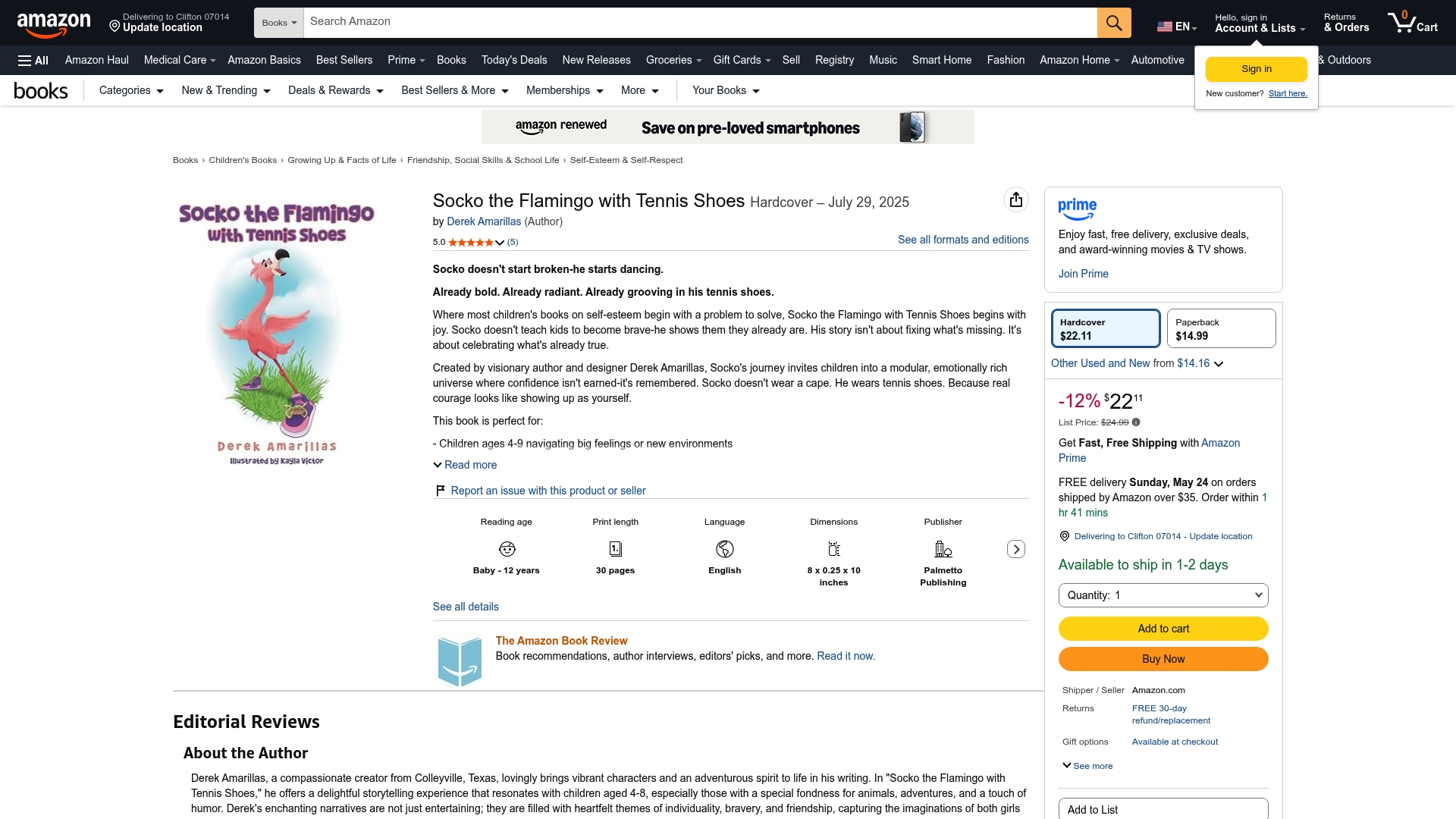
That is why we build original, character-driven worlds. A child who has spent time in a story world, such as our Duckwave Universe, has characters to borrow, remix, and argue with. Those characters often become the first cast for a child's own myth.
Our advice to any adult is simple. Start small, write down what the child says, keep it playful, and let the child decide how much to share.
Derek Amarillas
Start with a deck
If you would like characters and prompts on the table before you begin, Duckwave Decks are $7 one-off. They are themed card decks from our expanding Duckwave Universe, and they give children original characters to play with, mix up, and build stories around. You can find them on our Duckwave Decks page. For longer story worlds, browse Socko's Universe in our catalog.
If you are a teacher, librarian, or counselor building a collection, our member site is the place to see what we have for ongoing use.
FAQ
What is a myth for kids, in simple words?
A myth is a very old kind of story that explains how something came to be, such as the sun, a storm, or an animal's long tail. Children can make their own by asking "why" about something they notice. The story does not have to be true. It only has to feel like a good explanation.
How do you begin a myth?
Start with a wondering question, such as "Why does the moon change shape?" Then add a character, a place, and a problem. A good first line introduces who and where: "Long ago, in a forest made of clouds, there lived a very sleepy owl."
What age can children start making myths?
Children as young as 3 can take part if an adult writes down what they say. They may only offer a character and one event, and that is enough. By ages 6 to 8, many children can plan a beginning, middle, and end, and write some or all of it themselves.
How long should a child's myth be?
For ages 3 to 5, one page or a few sentences is plenty. NAEYC suggests limiting a dictated story to one page. For ages 6 to 8, a page or two with two pictures works well. Short and finished is better than long and unfinished.
What if a child does not want to share their story?
That is fine. Offer another way: a drawing, a mask, or a puppet. You can also read the story aloud yourself without naming the author. Sharing should always be a choice.
Sources
- We Are Storytellers: Exploring Multicultural Folktales, Fairy Tales, and Myths, Start with a Book
- Writing Creation Myths, Kennedy Center
- Brainstorm a Myth, eMedia
- Brain-Targeted Teaching mythmaking guide
- Myths in Words and Pictures, Smithsonian Education
- Listening to Children's Stories, NAEYC
- Activity 1: Get Ready to Write!, Georgia Public Broadcasting
- Imagine Second Step K-2, The Imagine Project