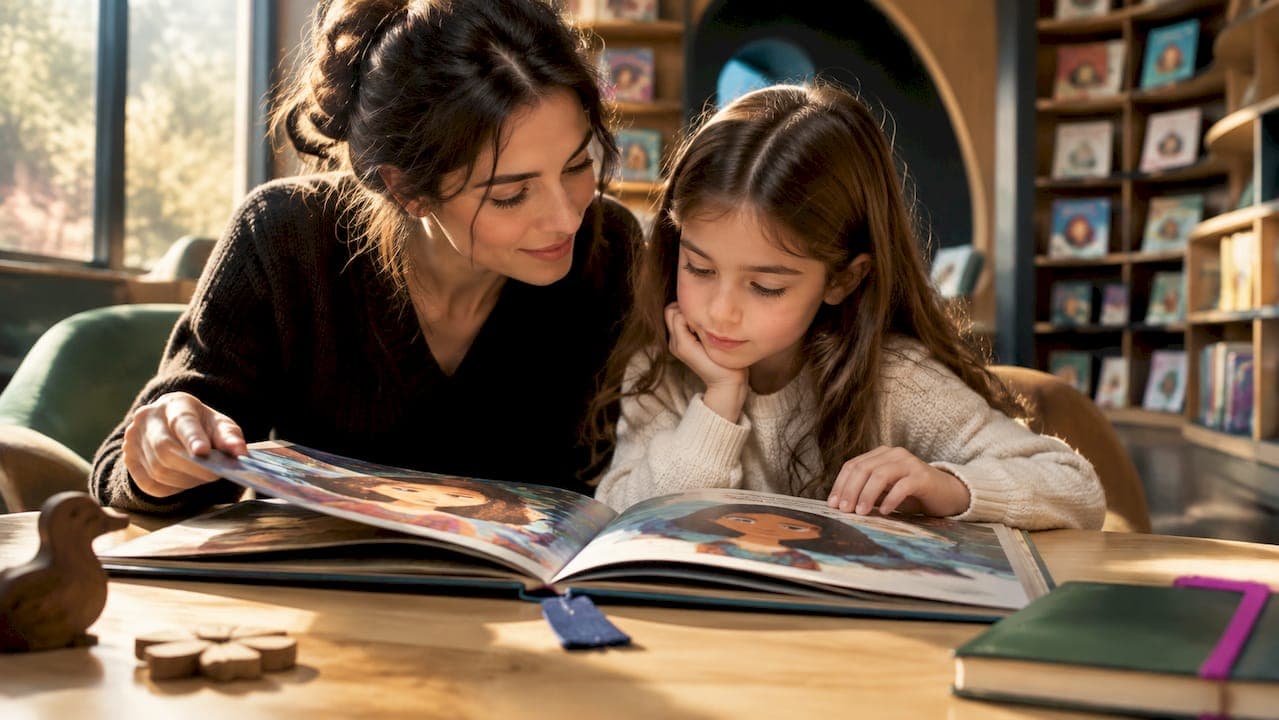
This roundup gives you a vetted shortlist of picture books with strong female lead characters, each paired with an age range and a one-line reason it works for young readers. Every title below includes a read-aloud prompt you can use right away, plus social-emotional learning (SEL) activity guides for building the conversation further.
TL;DR:
- Most of these books feature a specific problem or conflict that the female protagonist actively works to resolve, making them genuinely empowering.
- Titles emphasize agency, emotional complexity, and age-appropriate pacing, ensuring their relevance and relatability for children.
- Follow-up conversations and activities during and after reading are crucial for building social-emotional skills, with recommended prompts tailored to different age groups.
- Curated lists and resources focus on inclusive storytelling that integrates representation into the plot, not just the illustrations.
- Pairing books with structured discussion guides and activity kits increases engagement and reinforces emotional literacy in young readers.
Table of Contents
- Picture Books With Strong Female Lead Characters, Grouped by Theme
- How To Turn Any Girl Power Picture Book Into an SEL Conversation
- What Makes a Girl Protagonist Actually Strong (A Selection Checklist)
- Why Icon Literary Curates This Way
- Why These Stories Stick With Kids Longer Than a Lecture Would
- Ready-Made SEL Story Resources From Icon Literary
- Sources
Picture Books With Strong Female Lead Characters, Grouped by Theme
Not every "girl power" book actually gives its protagonist something to solve. The titles below do. Each one hands a young female character a real problem, a real choice, and a believable way through it, which is what separates an empowering story from a book that just tells kids to "believe in themselves" and calls it a day.
STEM and curiosity
- Ada Twist, Scientist (ages 4–8) by Andrea Beaty. Ada asks endless questions and treats failed experiments as data, not defeat. The ABRAMS hardcover edition is widely stocked and holds up to repeat read-alouds because the rhyming text keeps momentum without rushing the science.
- Iggy Peck, Architect (ages 4–8) by Andrea Beaty. Companion series to Ada Twist, useful if a child gravitates toward building and design rather than lab experiments.
- Rosie Revere, Engineer (ages 4–8) by Andrea Beaty. Rosie's inventions fail publicly and repeatedly. The book's real lesson is that failure is data, not a verdict.
Resilience and self-worth
- Amoya Blackwood Is Brave (ages 3–7) by Chantaie Allick. Amoya learns to take up space instead of shrinking, and the story leans on an intergenerational relationship for support rather than a solo pep talk. It earned a spot on the New York Public Library's Vibrant Voices list, one of the more reliable signals that a title balances representation with genuine SEL value.
- Ambitious Girl (ages 4–8) by Meena Harris. The book takes words often used to shrink girls down and reframes them as strengths, which makes it a sharp discussion starter for kids who've already heard "bossy" used against them.
- Sulwe (ages 4–8) by Lupita Nyong'o. Sulwe's journey toward self-acceptance around skin color gives adults an entry point into conversations about colorism that a lot of picture books avoid entirely.
- The Girl Who Never Made Mistakes (ages 5–8) by Mark Pett and Gary Rubinstein. A useful counterweight for perfectionist kids, since the protagonist has to unlearn the idea that mistakes ruin her.
Creative nonconformity
- Prunella (ages 4–8) by Beth Ferry. Prunella prefers dirt, bugs, and gardening to anything "pretty," and the back matter includes a real plant list that doubles as a ready-made activity guide, according to Simon & Schuster's product page.
- Her Muddy Majesty of Muck (ages 4–8). A regal, unapologetically messy protagonist who treats mud as a kingdom worth ruling. Pair it with Prunella for a two-book unit on kids who reject tidy expectations.
- Not Quite Snow White (ages 4–8) by Ashley Franklin. A theater-loving girl pushes past doubters who think she doesn't "look the part," which opens the door to talking about who gets included in stories.
- Julián Is a Mermaid (ages 4–8) by Jessica Love. Not a female lead in the traditional sense, but essential for any shelf built around characters who define their own identity against outside pressure.
Leadership and voice
- Grace for President (ages 5–8) by Kelly DiPucchio. Grace notices no girl has ever been president and decides to run for school president herself, which makes the abstract idea of representation concrete for early elementary kids.
- The Water Princess (ages 5–8) by Susan Verde. Based on model Georgie Badiel's childhood, this one shows leadership as endurance and community responsibility, not stage presence.
- Malala's Magic Pencil (ages 5–8) by Malala Yousafzai. A gentler entry point into Malala's story, framed around imagination before activism.
Availability runs the gamut. Most of these sell in hardcover and paperback through major retailers, and several, including Ada Twist and Prunella, also show up on curated storefronts like Bookshop, which routes a share of each sale to independent bookstores. If you're building a themed collection rather than shopping one title at a time, Icon Literary's gift guide for ages 4 to 7 groups similar picks by age band.
How To Turn Any Girl Power Picture Book Into an SEL Conversation
Reading the book is step one. What you do during and after the page turns is where the emotional literacy actually builds. Practitioners who work with books like Sulwe consistently point to the same technique: pause and ask real questions instead of reading straight through to the last page.
For preschool (ages 3–5):
- Pause after a key decision and ask, "What do you think she'll do next?" With Amoya Blackwood, that might land right before she decides to speak up.
- Point at the illustrations and ask, "How does her face look right now?" This builds emotional vocabulary before kids can articulate complex feelings in full sentences.
- After finishing, try a short role-play: hand your child a toy and ask them to "be brave like Amoya" for thirty seconds.
For early elementary (ages 5–8):
- Ask, "Why did she choose that, and not something else?" With Ada Twist, this usually leads kids to notice that her questions come before her answers, not after.
- Connect the story to their own life: "When have you felt like Rosie Revere, when something didn't work the first time?"
- Offer a drawing extension: have them sketch their own invention or "muddy kingdom," then explain one rule of how it works.
Pro Tip: Adjust your vocabulary, not your questions. A four-year-old and a seven-year-old can both answer "What would you do?" You just simplify the follow-up, not the core prompt.
What Makes a Girl Protagonist Actually Strong (A Selection Checklist)
A protagonist isn't strong just because the marketing copy says so. Use this checklist when you're evaluating a title that didn't make this list:
- Agency: does she make a decision that changes the plot, or does the story just happen around her? At preschool level, agency can be as small as choosing to ask a question. By early elementary, look for a character solving a problem across multiple steps.
- A clear goal or problem: vague "being yourself" arcs are weaker than a specific conflict, like Grace running for president or Rosie's engine failing on stage.
- Emotional complexity: does she get frustrated, scared, or embarrassed and work through it, rather than staying relentlessly upbeat?
- Representation that isn't decorative: a character's identity should shape the plot, not just the illustrations.
- Age-appropriate pacing: preschool books need short cause-and-effect sequences; early elementary can sustain longer arcs and subtler stakes.
Watch for red flags too: protagonists who are conveniently perfect from page one, endings that stop the story to deliver a moral out loud, and diversity that shows up in the art but never affects the plot. Titles that land on curated lists like NYPL's Vibrant Voices or carry starred trade reviews have usually cleared these bars already, which is why they're a faster starting point than a random search.
Why Icon Literary Curates This Way
Original story worlds for kids ages 3 to 8 are built with emotional literacy and inclusive representation as design requirements, not afterthoughts. That editorial lens, artful storytelling paired with real SEL structure, shapes how titles get selected for lists like this one.
- Read how to find genuinely inclusive picture books for a deeper walkthrough of the selection criteria above.
- See why picture book diversity matters for communities for the reasoning behind representation as a plot driver, not decoration.
- Browse growth mindset picture books tagged by age for classroom-ready prompts that pair well with the resilience titles above.
- Explore 10 picture books about everyday courage as a companion list for kids who need a gentler entry point into bravery themes.
Why These Stories Stick With Kids Longer Than a Lecture Would
A kid who hears "be brave" a hundred times shrugs. A kid who watches Amoya Blackwood decide to speak up, in real time, with a face full of doubt, remembers it. That's the difference storytelling has over direct instruction: it lets a child rehearse a hard decision from a safe distance before they ever have to make one themselves.
Share the titles that worked in your own house or classroom, and don't be afraid to rewrite the prompts above in your own words. The version you invent on the spot, tied to your specific kid's week, will land harder than any script.
— Derek Amarillas
Ready-Made SEL Story Resources From Icon Literary
If you want the read-aloud prompts and the activity built into the book itself instead of assembling them separately, that's exactly what The picture books, activity kits, and printable discussion guides are built around emotional-literacy goals, original characters facing real problems, paired with structured conversation starters for ages 3 to 8.
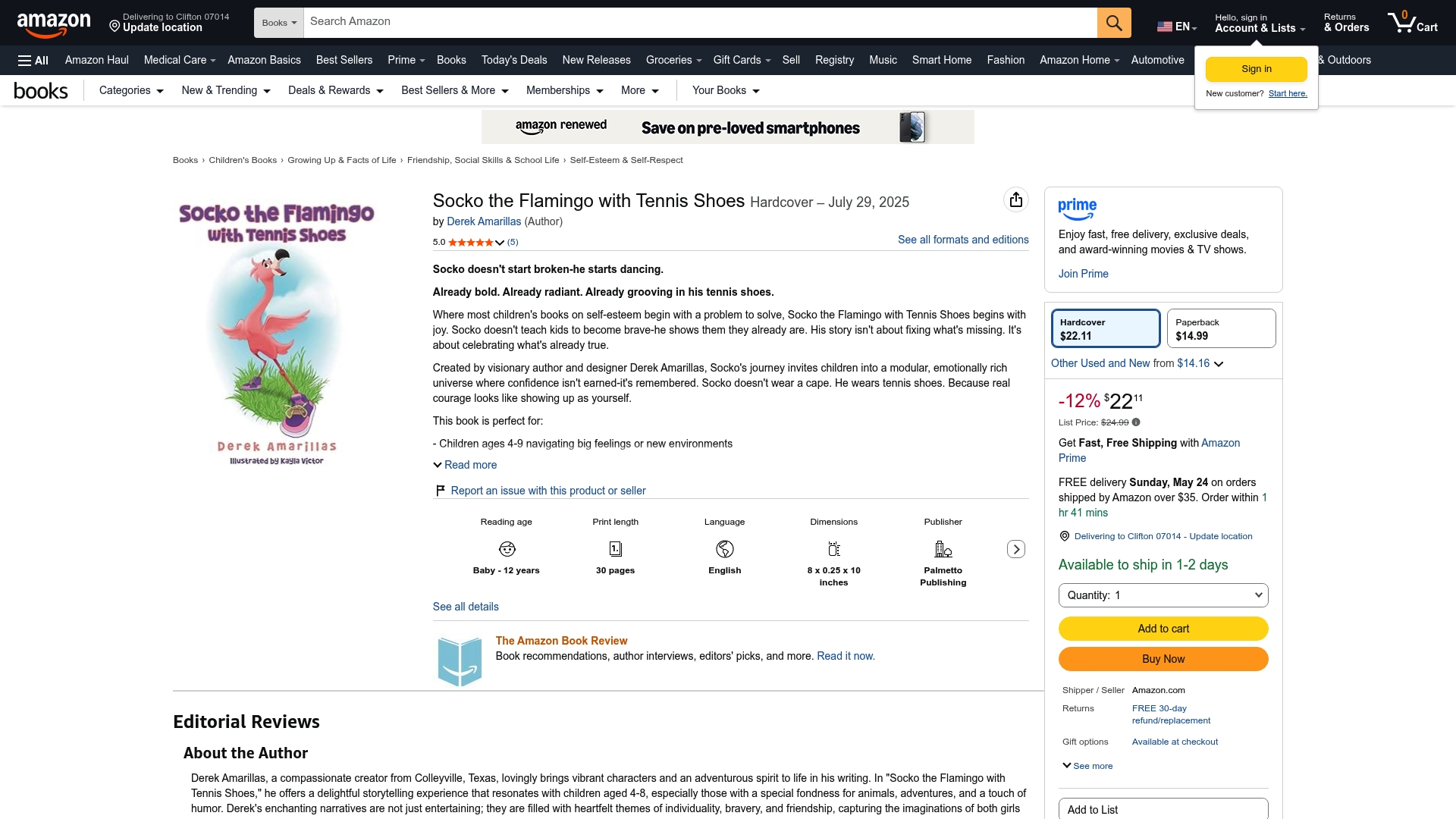
These resources work as a complement to the titles above, not a replacement: pick a book from this list for the story, then use an Icon Literary activity kit or printable prompt set to extend the conversation without having to write your own questions from scratch. Themed lists that pair recommendations with built-in discussion prompts and activities tend to get used more consistently than a book left to sit on a shelf, which is the entire reason the printables exist. Browse the current picture books, card decks, and activity kits at Icon Literary's storefront and pick one that matches a title your child already loves.
Sources
The age ranges, award selections, and edition details above were checked against the following:
- NYPL Vibrant Voices 2025-2026 resources for educators
- Prunella | Simon & Schuster
- Let's Go, Girls! 12 Picture Books That Celebrate Girl Power | ReadBrightly