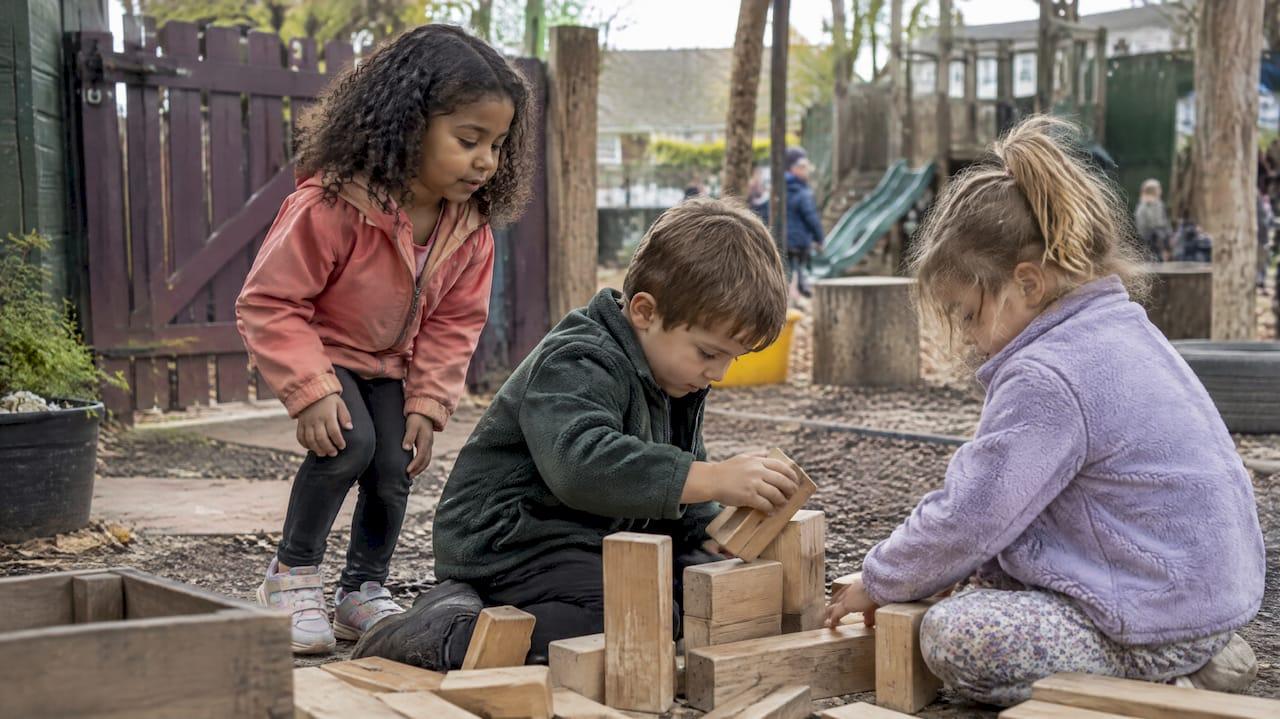
A shy child does not need to become outgoing. A shy child needs time, a preview of what is coming, and small, repeated chances to practice. Social skills grow through low-pressure practice at home, one or two friendly peers, and adults who put feelings into words. Stories, role-play and simple activity tools make that practice easier. We write emotional-literacy books and card decks for ages 3 to 8, and this guide gives you the routine we would hand to a friend.
TL;DR
- Shyness is a temperament, not a flaw. Most shy children do well socially once they get past an initial adjustment period.
- Preview new places and people, rehearse a few simple scripts, and take small steps: watch, move closer, play nearby, then join in.
- Start with one or two peers in a familiar place, such as a playdate at home.
- Avoid the label "shy" and name what the child feels instead.
- Talk to a pediatrician or child mental-health professional if avoidance is constant, physical symptoms appear, or the child never speaks in some settings.
Table of Contents
- What shyness looks like at ages 3 to 8
- Start with the child's pace
- A step-by-step routine for practicing social skills
- Everyday games that build the same skills
- Helping a shy child speak up
- Books and cards as practice partners
- Working with teachers
- When to get professional guidance
- FAQ
- Sources
What shyness looks like at ages 3 to 8
Shyness is common in the early years. Illinois Early Learning Project notes that most young children are shy in some situations, that the tendency can run in families, and that some shyness is a good sign: the child knows the difference between loved ones and strangers. It becomes a concern when it keeps a child from making friends or joining play and learning.
In children ages 3 to 6, shyness as a trait looks like hanging back, clinging, and holding off on new people and new behavior. Penn State professor Koraly Pérez-Edgar describes this in an American Psychological Association podcast, and says it goes beyond the ordinary toddler clinging to a parent in a new place. She also separates temperamental shyness, cultural shyness, and shyness that reflects earlier difficult events. Knowing which one you are looking at changes what you do.
Researchers at the Kids Research Centre in Australia describe two kinds of shyness in young children. Fearful shyness usually appears in the first three years and shows up as freezing, pulling back, or wanting to escape new social situations. Self-conscious shyness usually appears after age four and happens when a child is the center of attention and feels exposed. A child who freezes at a new birthday party and a child who goes quiet when the class turns to look at her need slightly different help.

Shy, or missing some skills?
The two often overlap but they are not the same. The American Academy of Pediatrics' HealthyChildren.org explains that some children are naturally withdrawn and slow to warm up, and most of them do fine after an initial adjustment. Other children who seem like loners may lack the skills and confidence to enter a social setting, often because they have had few social experiences. Some simply prefer solitary play.
This matters because skills can be taught. A child who hangs back because she does not know how to ask to join a game needs words and practice. A child who needs ten minutes to warm up needs patience and a gentle runway. Most shy children need a mix of both.
Start with the child's pace
The advice from pediatric and early-childhood sources is consistent: do not push, do not label, and do not leave the child alone with it.
- Give warm-up time. Michigan State University's child development resource advises letting shy children warm up in new situations and talking ahead about what is likely to happen.
- Skip the label. MSU warns that calling a child shy can lead the child to attach a negative label to herself. ZERO TO THREE suggests avoiding phrases like "try not to be so shy," and instead making sure the child knows you love and accept her.
- Name the feeling. ZERO TO THREE also recommends putting what you think the child is feeling into words: "That room was loud. You wanted to stay close to me."
- Respect the observer. The same source points out that slow-to-warm-up children are often careful observers who learn a lot from watching and who think situations through before acting. Watching is not failing.
The Children's Hospital of Philadelphia adds a useful pairing: tell the child about a new place before you arrive, including what fun things they will do and who and what they may see, and then follow the child's lead once you are there.
A step-by-step routine for practicing social skills
Social skills, like any other skill, can improve at any age, as ADHD coach Caroline Maguire writes in CHADD's Attention magazine. The routine below follows what the pediatric sources recommend, in an order that works for most families.

Step 1: Preview the situation
Before a party, class or playground trip, tell the child where you are going, who will be there, and roughly how many people. The Child Mind Institute explains that previewing and role-playing make an activity feel less new and scary, so the child is not as easily overwhelmed for the real thing. You cannot predict everything, but a general picture helps a lot.
The American Psychological Association's Magination publication suggests arriving early at a party so there are fewer people to face, and bringing something to talk about, such as a gift or a stuffed animal.
Step 2: Give the child a few words
A script removes the hardest part: what to say. Child Mind Institute suggests simple scripts like "Hi, I'm Tom. What do you like to play?" Keep them short and let the child change the words. Practice at home until the lines feel boring, which is the goal.
Play can carry this. Michigan State suggests pretend-play where the parent acts as the shy child and the child acts as the adult, which lets the child see the problem from the outside. If you want ready-made scenes, our five-minute role-play routines give you scripts to print, and our guide to role play cards explains how to choose and use them.
Step 3: Take small steps
Child Mind Institute describes a ladder: watch the other children, move closer, play nearby, and eventually play with them. HealthyChildren.org gives similar "baby steps," such as saying hi to a neighbor or joining a game for a few minutes, along with praise for any accomplishment, even a small one.
The Child Mind Institute calls this brave practice: approach one small situation that anxiety says to avoid, like ordering his own meal at a restaurant, then praise the brave behavior. Praise the attempt, not the result. The Magination guidance adds that if a child does not join in, you should not make a big deal of it.
Step 4: Keep the group small
Plan playtime with one or two children, not a crowd. Child Mind Institute suggests playdates at home first, where the child is most at ease, and notes that clubs and structured activities give built-in structure that eases anxiety. If your child resists something new, invite a friend she already knows. The Children's Hospital of Philadelphia suggests practicing with children of adult friends or close family members.
Step 5: Match activities to interests
HealthyChildren.org recommends choosing activities that fit the child's interests and strengths. A child who loves drawing may find an art class far easier than a team sport. Shared interest gives two children something to talk about besides themselves.
Step 6: Review, briefly
After the event, ask open questions and listen. The CHOP physician Dr. Katie Lockwood suggests giving children time and space to process disappointment and using open-ended questions to learn what they think and feel. Keep it short. One good detail and one thing to try next time is plenty.
Everyday games that build the same skills
You do not need a special program. Head Start, part of the U.S. Department of Health and Human Services, lists everyday ideas for practicing social and emotional skills: emotion walking games, emotion hello songs, guessing games, mirror faces in pairs, and using storybooks to identify how characters feel.
The AAP lists specific skills worth building one at a time: coping with failure and frustration, using humor, apologizing, sharing, making requests, giving a compliment, and asking for help. Pick one per week. A compliment is easier to practice than "make friends."
For more at-home ideas, see our guides to screen-free SEL activities, homeschool SEL activities and a feelings rating game for families. If you want a longer arc, our 6 to 8 week plan for teaching emotions is built for parents and teachers.
Practice the phone hello
A call with a grandparent is a gentle first conversation: no eye contact, a familiar voice, and a built-in ending. Give your child a two-line script, such as hello and one thing about her day, and let her hand the phone back when she is done. Tell her who she will talk to next, because an unexpected voice is a surprise. When a call is passed along without warning, which is what blind transfer behaviors describe, the next person simply appears on the line, so announce the handoff in advance.
Helping a shy child speak up
Speaking up for a need is a social skill of its own. PBS KIDS for Parents suggests that the child practice assertive statements in a mirror, with eye contact and a tall, relaxed stance, and prepare three to five statements. It also recommends realistic role-plays built around problems the child comes up with, taking turns playing different people.
Outside the house, give the child jobs that need a few words: ordering her own food, asking a store clerk where something is. Wait a beat before you step in. That pause gives her time to think about what to say and shows you believe she can do it.
Cleveland Clinic suggests a "fly on the wall" approach: attend a few activities at or after school to see how your child interacts, and then gently push her slightly past her comfort zone with coaching and encouragement, staying realistic about her temperament. Child Mind Institute adds that it helps to find the exact obstacle: separation anxiety, group size, or not knowing how to approach other kids. Each one has a different fix.
Books and cards as practice partners
A story lets a child look at a feeling from a safe distance. A character who hides at the edge of the party can be discussed without anyone being put on the spot, and Head Start specifically recommends using storybooks to identify how characters are feeling. Our guides to books that help shy kids feel seen and to using books to reduce social anxiety show how to turn reading time into a short conversation.
Cards make it a game. Our Duckwave Decks are a $7 one-off purchase, designed with the same idea as our books: build emotional literacy through character and play, without lecturing.

You can find them at Duckwave Decks. If you are choosing for a classroom, a counseling office or a gift, our guides to social emotional games mapped to six SEL skills and gifts that support emotional growth can help you decide.
Working with teachers
School is where many shy children struggle most, so home and classroom need to say the same things.
The Illinois Early Learning Project recommends that teachers avoid labeling the child, let her watch the group before encouraging her to approach another child, suggest phrases for joining in, step in if she seems lost or withdrawn, and comment privately when she succeeds. The University of Delaware's recommendations for teachers include very small social groups, pairing shy children with warm, calm and accepting peers in cooperative activities, seating them next to friendlier classmates, and using a soft, inviting tone when calling on them.
Delaware also advises giving the child real responsibilities rather than doing too much for her, so she does not become dependent on special attention. A classroom job with a few words attached, like handing out papers, does that well.
A short note to the teacher helps: share the scripts you practice at home, the one or two peers your child likes, and the small step you are working on this month. The Understood and Sandy Springs Pediatrics style of advice is the same: tell the adults, so they can notice the win.
When to get professional guidance
Most shyness is part of normal development. Some patterns need a professional. HealthyChildren.org says that if shyness becomes debilitating, it may be caused by an anxiety disorder or a temperament pattern, and an evaluation by a child mental-health professional can help. The AAP also notes that extremely shy children often adapt less well in the classroom and on the playground, and the longer the pattern lasts, the harder it is to change.
Talk with your child's pediatrician or a child mental-health professional if you see:
- constant avoidance of social situations, or extreme distress in groups
- stomachaches or headaches before social events
- trouble with schoolwork or daily activities because of social fear
- a child who never speaks at school, does not join routine activities, skips lunch, avoids the restroom, or seems overly anxious when spoken to (the University of Delaware lists these as warning signs for teachers)
One pattern deserves its own mention. Child Mind Institute explains that children with selective mutism are often chatty at home but silent at school, and parents typically notice around age three or four. The Anxiety and Depression Association of America says it can be mistaken for extreme shyness, so some children are diagnosed much later. If your child talks freely at home and not at all elsewhere, ask the pediatrician or the school about an evaluation.
Developmental psychologist Heidi Gazelle, writing in The Conversation, says shyness is more of a concern when it is persistent and when a child plays alone in groups, because peer play teaches turn-taking, understanding feelings and negotiating. That is a good reason to keep offering small chances, even when progress is slow.
Our view: confidence grows through play, not pressure
We make picture books, card decks and activity kits for children ages 3 to 8, and the shy children we write for share a trait: they are watching closely. We think a story should respect that. Our stories, decks and activities are designed to promote emotional literacy without lecturing, celebrating individuality and creative expression.
A shy child rarely needs a speech about courage. She needs a character she recognizes, a feeling she can name, and a low-stakes way to try a sentence out loud. That is why we build original, character-driven worlds, with emotional themes that arrive gently rather than as a lesson. A card or a page gives parent and child something to look at together, so the conversation starts sideways.
We would suggest keeping it small: one story, one card, one sentence to practice, five minutes. Repeat it often. The routine matters more than any single tool.
Derek Amarillas
FAQ
Is it bad for my child to be shy?
No. Illinois Early Learning Project describes some early shyness as a good sign that the child knows loved ones from strangers. Most shy children do well socially after an adjustment period. It is worth acting when shyness keeps a child from friendships, play or learning.
How do I help my shy child make friends?
Start with one or two children in a familiar place, such as a playdate at home. Preview the visit, practice a simple greeting, and follow your child's lead. Invite a friend she already knows to new activities, and praise small steps.
Should I tell my child she is shy?
It is better not to. Michigan State University and ZERO TO THREE both advise against the label, because children can start to see it as a fixed part of who they are. Describe the situation and the feeling instead: "New places take you a while."
What age is shyness a concern?
There is no single age. The signs matter more: persistent avoidance, physical symptoms before social events, or a child who does not speak in some settings. Selective mutism is usually first noticed around age three or four. Ask your pediatrician if you are unsure.
Sources
- Take a Bold Approach to Shyness, Illinois Early Learning Project
- Why are some kids shy? American Psychological Association
- Shyness in Young Children, Kids Research Centre
- Shyness in Children, HealthyChildren.org
- Parenting the Preschooler: How do you support your shy child, Michigan State University
- Children with Shy or Slow to Warm Up Temperaments, ZERO TO THREE
- Shyness in Kids, Children's Hospital of Philadelphia
- Coach Your Child on Social Cues, CHADD
- How to Help Young Children with Social Anxiety, Child Mind Institute
- Sophie's Shell: Four Ways to Support Your Shy Child, American Psychological Association
- My daughter is extremely shy and anxious around strangers, HealthyChildren.org
- Brave practice for a shy seven-year-old, Child Mind Institute
- How to Help Your Child Make Friends, Child Mind Institute
- Everyday Ideas for Increasing Children's Opportunities to Practice Social Skills, Head Start
- Blind Transfer Behaviors
- Building Assertiveness, PBS KIDS for Parents
- How To Help Your Child Make Friends, Cleveland Clinic
- Shy/Withdrawn Students: Recommendations for Teachers, University of Delaware
- Guide to Selective Mutism in Children, Child Mind Institute
- What is Selective Mutism? Anxiety and Depression Association of America
- Childhood shyness: when is it normal and when is it cause for concern, The Conversation