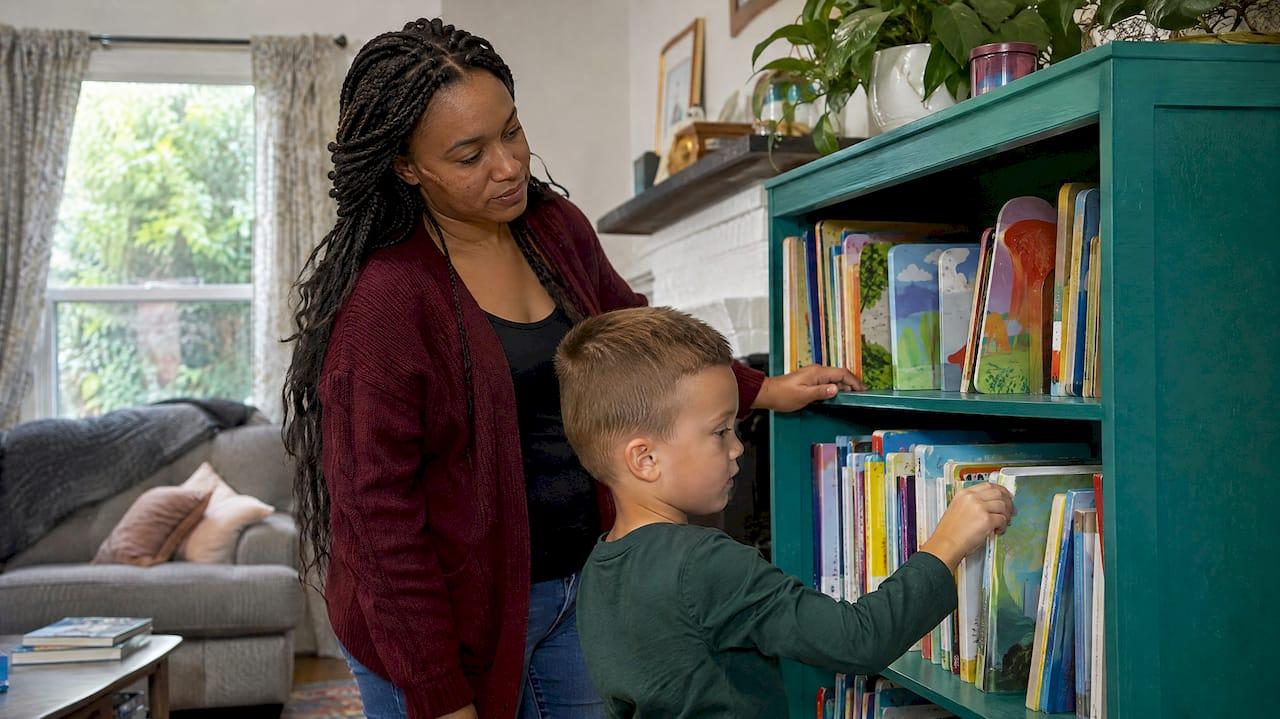
Start a kids' book collection by choosing a small first shelf that does different jobs: books that make your child laugh, books that calm the room, and books that help with big feelings. Then check the whole shelf for variety, and refresh it a few times a year. You do not need many books. You need a mix that fits the child in front of you.
This guide is for parents, grandparents and gift givers, and also for teachers, librarians, counselors and homeschool families building a shelf for a group. It covers ages 3 to 8, when children move from being read to toward reading on their own.
TL;DR
- Start with 10 to 15 books across different moods and formats, not a big pile of one kind.
- Include books about feelings and family moments: fear, mistakes, friendship, disappointment, trying something new.
- Audit the whole shelf, not single titles: can each child find themselves and also learn about other lives?
- Let the child choose, and review the shelf a few times a year to keep, donate or add.
- Add hands-on extras such as card decks and activities so a story becomes a conversation.
Table of Contents
- Decide what the collection is for
- Build a first shelf of 10 to 15 books
- Choose books that build emotional literacy
- Make sure every child can see themselves
- Check each book before it joins the shelf
- Shelves for classrooms, libraries and homeschool
- Organize the shelf and refresh it
- Add cards and activities to the shelf
- How we think about a kids' collection
- FAQ
- Sources
Decide what the collection is for
Before you buy anything, name the job of the shelf. A home shelf for a shy five-year-old has a different job than a classroom corner for twenty children, or a library display for a whole school.
A simple way to test a shelf is to ask three questions. Is there a book that makes the family laugh? One that calms everyone down at bedtime? One that builds courage before something hard, like the first day of school? If one answer is no, that is your next purchase.
The Children's Book Council's guide to building a home library recommends a range of genres, formats and subjects, from board books to picture books to graphic novels. It is written for parents, caregivers, librarians, teachers and booksellers alike. That range is a good rule for a first shelf: variety first, volume later.
Build a first shelf of 10 to 15 books
A starter shelf for ages 3 to 8 works well with a spread like this:
| Type of book | What it does | How many to start |
|---|---|---|
| Comfort and bedtime | Slows the day down, builds a routine | 2 to 3 |
| Funny and silly | Makes reading something to look forward to | 2 to 3 |
| Feelings and family moments | Gives words to fear, anger, disappointment, separation | 3 to 4 |
| Courage and trying new things | Prepares a child for change | 2 |
| Classics | Shared references with grandparents, friends and school | 2 |
| Wordless, rhyming or movable books | Builds language and storytelling in different ways | 1 to 2 |
The last row has professional backing. The American Library Association's core print collection guide for preschoolers organizes more than 300 titles by type, including wordless picture books, rhyming books and toy or movable books. The titles were chosen to build vocabulary, narrative skills, print awareness and sound awareness. Each type teaches something a little different, which is why a mixed shelf beats a themed one.
A worked example: a parent with a four-year-old who is nervous about preschool might choose two cozy bedtime books, two silly rhyming books, one wordless picture book to "read" together, two books about trying something new, and two about friendship. That is nine books, and every one has a clear job.

Choose books that build emotional literacy
Emotional literacy means being able to notice a feeling, name it and decide what to do next. For ages 3 to 8, picture books are one of the easiest ways to practice, because a character can feel the feeling first and the child can watch.
Researchers and educators often organize this work around the five competencies of social-emotional learning (SEL) set out by CASEL: self-awareness, self-management, social awareness, relationship skills and responsible decision-making. A 2022 study in the Journal of Early Childhood Literacy, indexed by ERIC, recommends building diverse booklists for preschool through third grade around those five areas. It also suggests ways to involve families, such as literacy bags that go home.

You can use the same idea at home. Pick one book for each competency and see which ones your child asks for again. A University of Northern Iowa content analysis mapped 51 picture books recommended for teaching emotional intelligence in grades K–5 to those five components. It found that 50 of them fit, which shows that most good feelings books touch more than one skill at once.
For sensitive or shy children
Sensitive and shy children often respond to stories where the feeling is shown, not lectured about. A character who hides, worries or goes quiet lets the child see their own experience without being put on the spot. Read the book, then ask one open question, such as "What do you think he needed right then?" Leave room for silence. Our guide to the benefits of reading emotional books to kids and our read-aloud feelings books guide for ages 3 to 8 go deeper on how to talk about a story afterward.
Add play to the reading
Stories stick when children act them out. The International Literacy Association's position statement on the preschool years says preschool programs should include story reading, dramatic play, storytelling and retelling. If you want to see how pretend play development in toddlers sets up this kind of retelling, it is a good place to start. For older children, a puppet, a drawing or a card game based on the book does the same job.
Make sure every child can see themselves
A good collection works like a mirror and a window. Mirror books show a child their own family, culture and experience. Window books show them lives that differ from theirs. Our explainer on the mirrors, windows and sliding glass doors framework covers the idea in detail.
The American Academy of Pediatrics makes the case plainly. Its HealthyChildren.org list of diverse and inclusive books, created with Reach Out and Read, says these books let children see themselves reflected and help them build kindness, compassion and empathy. It also gives pediatrician-selected titles by age band.
Three questions to ask of your shelf
The National Association for the Education of Young Children (NAEYC) offers a short audit in its chapter on children's books:
- Can children find themselves and their families in these books?
- Are the content and images accurate, authentic and current?
- Does the collection show variety within groups, not just one story per group?
NAEYC also advises looking at the whole shelf rather than judging one title at a time, because no single book can cover every identity. Look for a wide range of people by race, gender identity, family structure, economic class, culture, age and ability. Look, too, for stories of children being kind, making friends across differences and solving problems together.
The American Library Association's guide to inclusive children's books adds some patterns to watch for: characters of color who only appear in low-income settings, hobbies assigned by gender, and the nuclear family dominating every story.
For step-by-step help, see our guides on how to find inclusive picture books for children and building a diverse home library for kids ages 3 to 8. If you want the reasoning behind this, read why inclusive books benefit all children's growth.
Check each book before it joins the shelf
Once you have a few candidates, look at each one with a short checklist. The Anti-Defamation League's guide to assessing children's book collections starts with ordinary literary standards: plot, characters, setting, style, theme and point of view. It then adds accuracy, realistic lifestyles, believable characters, authentic language and whether the book suits the child's development. It also says to check the illustrations for stereotypes, not just the text.
In practice that means:
- Read it aloud once. Does the language flow? Would a six-year-old stay with it?
- Look at the pictures with the sound off. Do they tell the story and treat every character with respect?
- Match the age. A book can be about a feeling a three-year-old has and still be too long for a three-year-old.
- Ask what the book leaves with the child. A story that explains a feeling in a lecture is less useful than one that lets the child discover it.
School and public librarians who need a formal starting point can use Wilson's Children's Core Collection, a selective list for preschool through grade six. It includes reading-suitability indicators for each grade. Educators building SEL shelves may also like our SEL book selection criteria for educators and the broader criteria for inclusive children's book selection.
The Institute of Education Sciences also publishes a planning guide for joyful reading and creative expression. It asks whether a story affirms children as whole people and reflects their families' lives accurately. It pairs each book with an extension activity, such as creative writing, movement, mindfulness or an act of kindness.
Shelves for classrooms, libraries and homeschool
A shared shelf has to serve many children at once, so the audit matters more. A few habits help:
- Teachers and early childhood educators: keep a rotating display of 8 to 10 books at child height, and swap half every month or so. Pair each feelings book with a small activity.
- Librarians: curate by theme, such as "big feelings" or "new places", and mix mirror and window titles on the same display. Our guide to selecting inclusive books for library shelves walks through this.
- Counselors and therapists: keep a small set of short, indirect stories that open a conversation without naming the child's own problem.
- Homeschool families: use a feelings book as the start of a morning routine, then follow with drawing or a card game. See why homeschool families choose inclusive books.
Organize the shelf and refresh it
A collection that children can reach is a collection they use. Put the covers where a child can see them, keep favorites at child height, and let the child help sort. The advice to let children choose, organize and review the shelf a few times a year, keeping, donating or adding for the season, is well established among home-library guides.
A simple yearly rhythm:
- Every season: pull out books the child has outgrown and donate them to a school or library.
- Every few months: add two or three new books based on what the child is curious about now.
- Once a year: run the three NAEYC questions again and fill any gap.
For gift givers, the same logic applies. A book that fills a gap on the shelf, such as a feelings book or a story about a different kind of family, is a more useful gift than a fourth copy of a classic. Ask the parent what is already there.
Add cards and activities to the shelf
Books are the core, but a few hands-on items extend them. Card decks, printables and activity kits give children a way to act on a story: pick a card, name a feeling, make something. They are especially good for children who find it hard to talk straight away.
Our Duckwave Decks are themed card decks priced at $7, one-off. They come from the Duckwave Universe, our original story world, and sit alongside our picture books and activity kits. You can see the full range on our Duckwave Decks page and in the Icon Literary catalog.
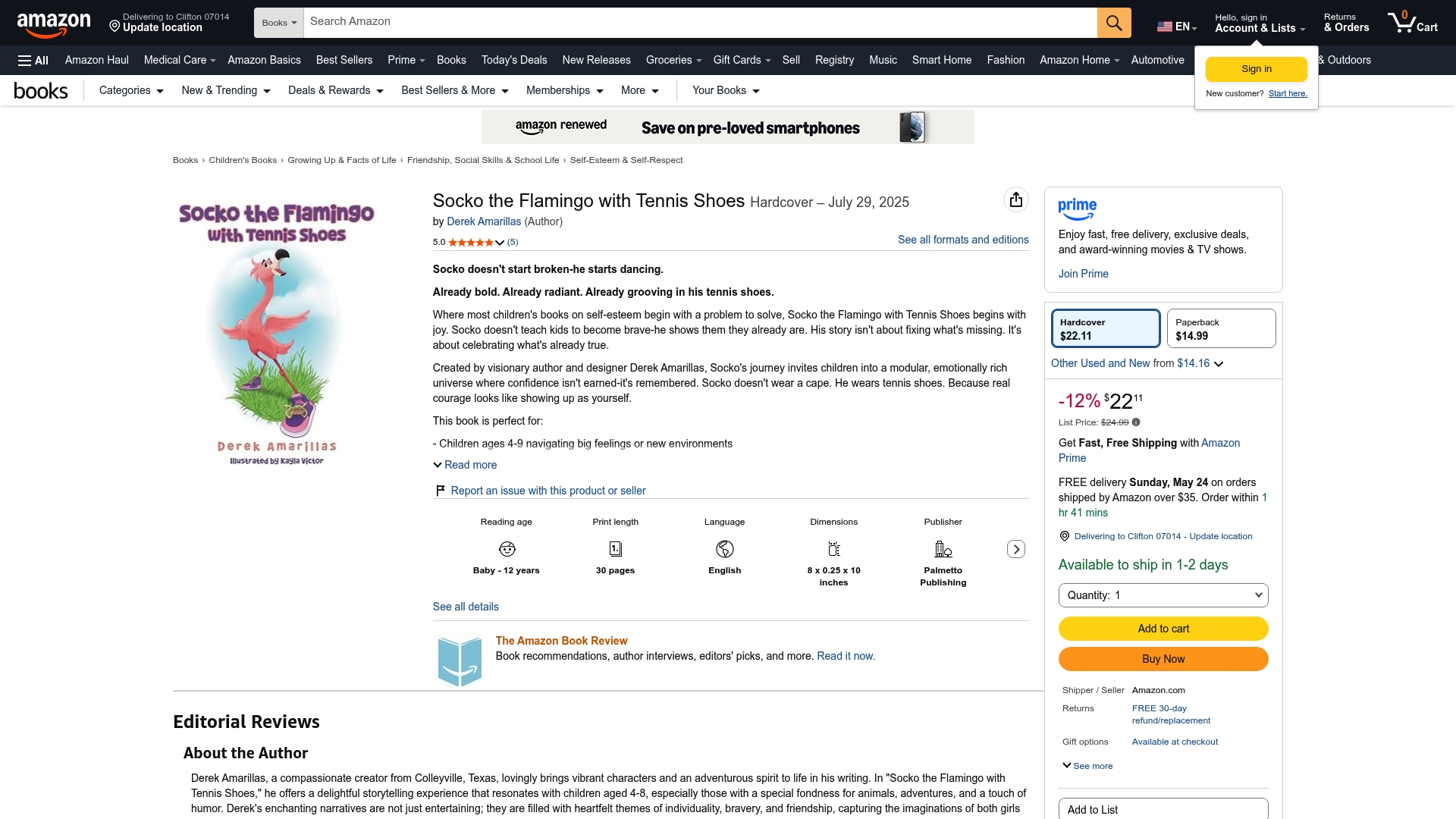
If you want printables and fresh content over time, our member site is the place to look.
How we think about a kids' collection
We build stories for children ages 3 to 8, and we think the best shelf is one a child wants to return to. That means design that feels special, characters with personality, and humor that makes room for real feelings.
Our approach is to let emotional themes arrive through story, not lecture. A child who laughs at a chaotic duck is already practicing how to sit with a big feeling. Our stories, decks and activities are designed to celebrate individuality and creative expression, and to be developmentally attuned and visually rich.
When you start a collection, we would put one of those character-driven worlds at the center of it. Around it, add the variety the research recommends: different families, different voices, different moods. A shelf built that way grows with a child.
Derek Amarillas
FAQ
How many books should a kids' collection start with?
Ten to fifteen is enough for a first shelf. Choose them to cover different moods and formats, such as comfort, humor, feelings and courage. Add a few books every season instead of buying a big set at once.
What are the best books for a shy or sensitive child?
Look for gentle stories where a character feels something similar and finds a way through, without a lesson attached. Read together, ask one open question and let your child decide how much to say. Our feelings read-aloud guide has more ideas.
How do I know if my collection is inclusive?
Use NAEYC's three questions: can children see themselves, are the books accurate and current, and is there variety within groups? Then look across the shelf at race, gender identity, family structure, class, culture, age and ability. Gaps tell you what to buy next.
Should I buy printed books or digital downloads?
Printed picture books are best for shared reading and for a shelf a child can reach alone. Printables and digital decks are a low-cost way to add activities, and they can be used again and again. Many families use both.
Sources
- Building a Home Library, Children's Book Council
- Building a Core Print Collection for Preschoolers, American Library Association
- Diverse Books for Diverse Children, ERIC EJ1330142
- Promoting Social-Emotional Development in Elementary Grades, University of Northern Iowa
- Literacy Development in the Preschool Years, International Literacy Association
- Recommended Reading: Diverse and Inclusive Books for Children, HealthyChildren.org
- Children's Books and Persona Dolls, NAEYC
- Thinking Money for ALL Kids, American Library Association
- Assessing Children's Book Collections Using an Anti-Bias Lens, Anti-Defamation League
- Children's Core Collection supplement, H.W. Wilson
- Joyful Reading and Creative Expression with Young Children, Institute of Education Sciences